
This EV Never Hit Peak Power. But It Still Beat Its Charging Claim
The 75-kWh Zeekr 7GT never came close to its claimed peak, but its impressive charging curve took it from 10% to full in 21 minutes.
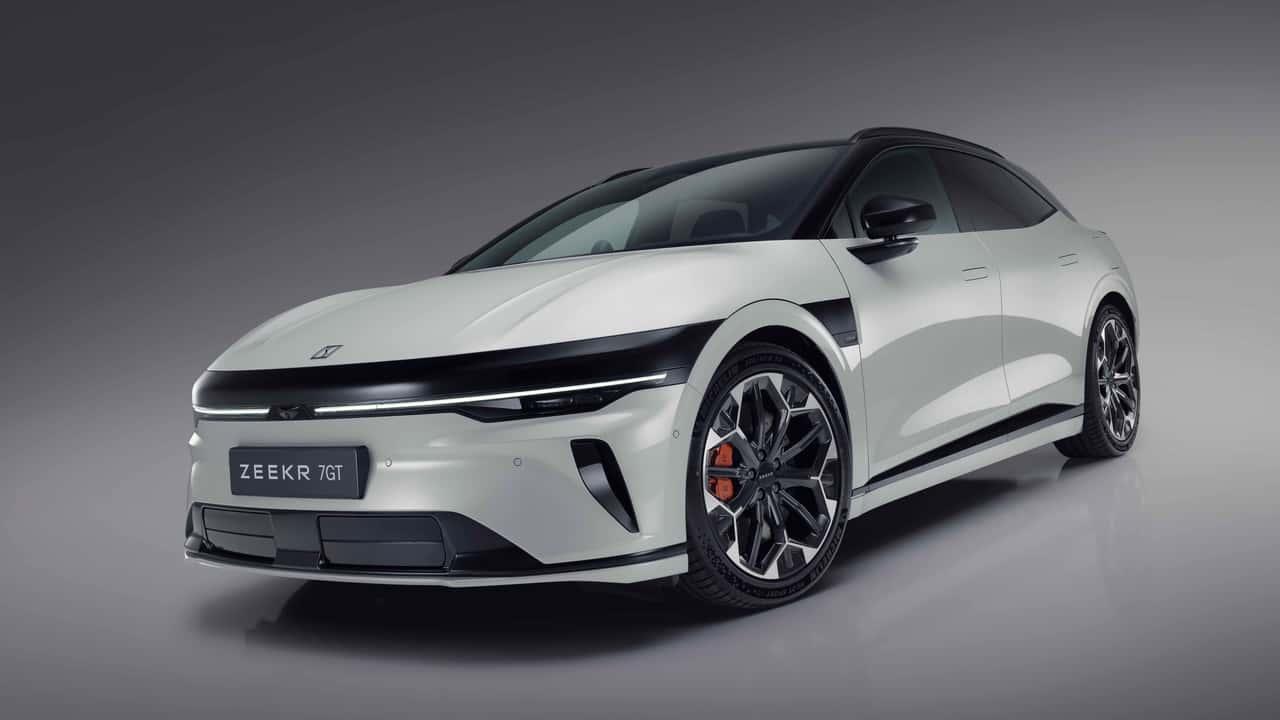

- The 75-kWh Zeekr 7GT charged from 10% to 80% in about 11 minutes, beating Zeekr’s own 13-minute claim.
- It peaked at only about 325 kW, but its unusually flat curve kept the charging power high very late in the session.
- At 90% charge, the LFP pack was still pulling roughly 165 kW and reached 100% in about 21 minutes.
China’s Zeekr 7GT currently has the highest claimed peak charging power of any EV sold in Europe. Its 800-volt architecture can theoretically accept up to 480 kilowatts, and Zeekr says the smaller of the two available batteries needs just 13 minutes to charge from 10% to 80%.
However, even without reaching that remarkable charging power, the 7GT equipped with the 75-kilowatt-hour LFP battery is still an absolute charging beast. A new real-world charging test shows why peak power alone doesn’t tell you how quickly an EV charges and why the shape of the charging curve really dictates how long you have to wait for it to top up.

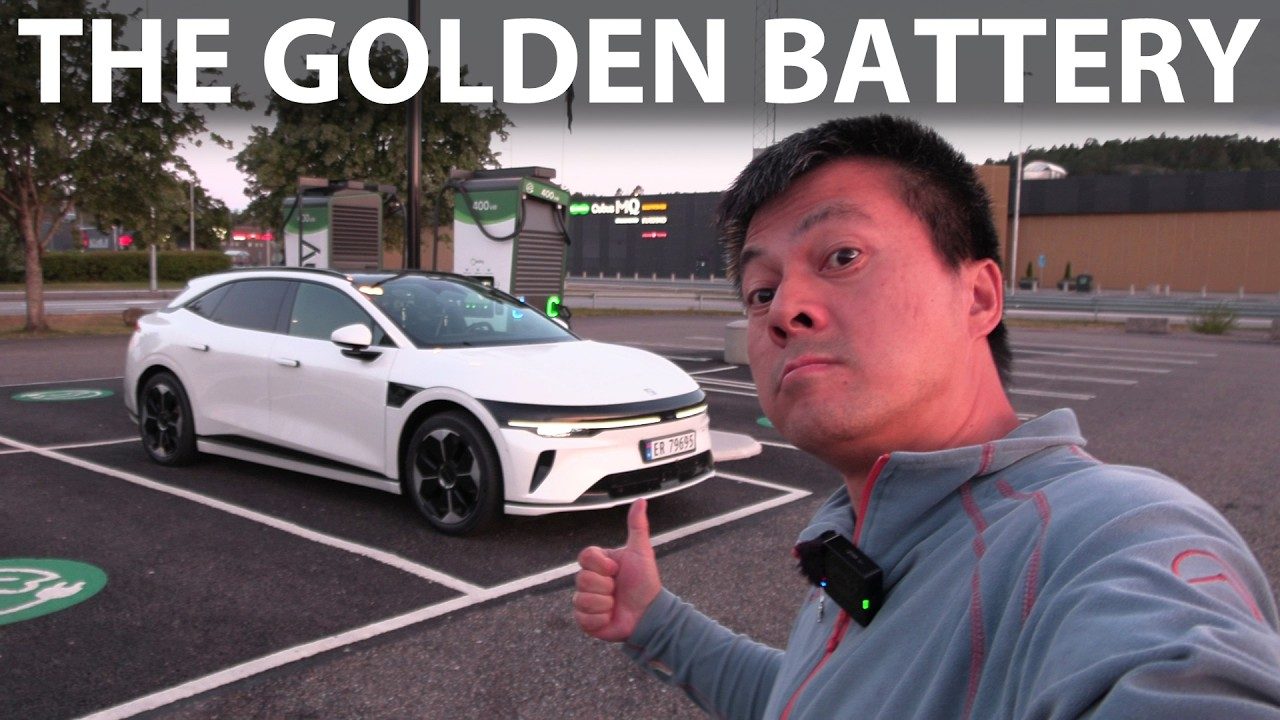
The rear-wheel-drive 7GT Core that Bjørn Nyland tested in this video never came close to its advertised maximum. Its 75-kWh LFP pack (featuring Zeekr’s in-house-developed second-generation Golden Battery technology) peaked at roughly 325 kW—more than 150 kW below the claimed figure—and this was on multiple chargers.
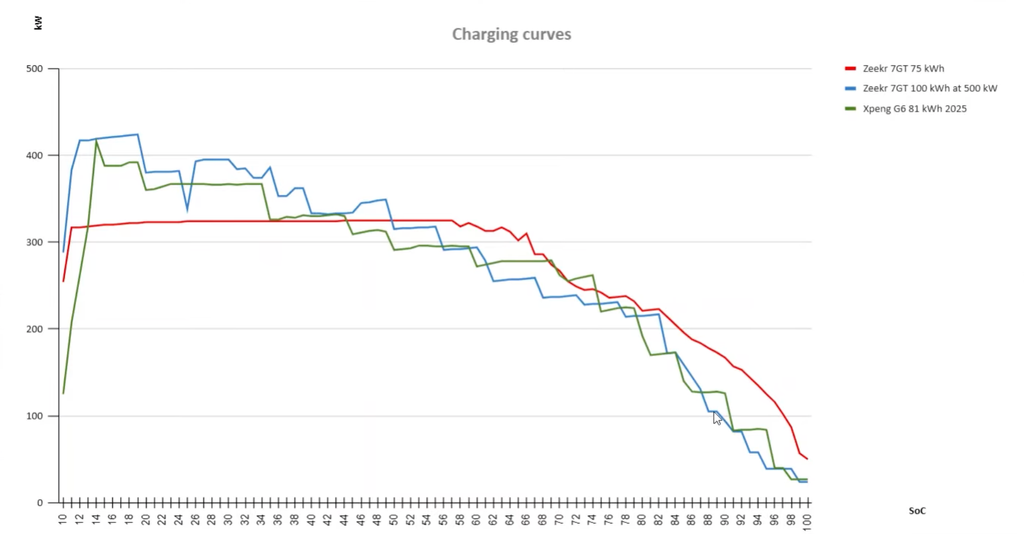
However, the resulting charging curve was arguably more impressive than a brief 480-kW spike would have been. The car charged from 10% to 80% in 11 minutes, less than Zeekr's own claim even without reaching its peak rated power. It took around 21 minutes to reach 100%, which is quicker than most other EVs take to go from 20% to 80%.
In most EVs, charging power tapers off after 80%, and you usually have to wait a long time for the last 5% to be added. So even in EVs that can accept over 300 kW, by the time they hit 80-90%, they’re usually pulling well below 100 kW.
Not the 7GT LFP, though, since it was still drawing 220 kW at 80% and 165 kW at 90%. That is remarkable, and it only dropped below 100 kW at 97% state of charge. This kind of charging performance makes leaving it to top up to 100% far more practical than it is in most other EVs, where the final 10% can take almost as long as the preceding 30%, if not longer in some cases.

The video also compared the smaller Zeekr to the long-range 7GT (rated at the same peak charging power as the LFP variant), which features a 100-kW NMC battery, and to an Xpeng G6 equipped with an 81-kWh LFP battery.
They both achieved much higher peaks. The Zeekr with the larger battery briefly went over 420 kW and maintained it from 12% to 20%, then dropped to 380 kW. The G6 reached a similar level early in its session, but it quickly dropped below 400 kW.
However, both began slowing earlier. The 100-kWh 7GT dropped below 100 kW near 90%, while the G6 was slightly better, accepting roughly 125 kW at the same state of charge.
More EV Charging Tests
The large-battery Zeekr still delivered more actual energy early in the session because every percentage point represented more capacity being replenished. But the 75-kWh car had the flattest curve of the three, and it finished charging first.
The result isn’t an isolated Zeekr one-time experiment. A 7X equipped with an earlier version of the Golden Battery charged from empty to full in just over 22 minutes. Zeekr is clearly looking at both headline-grabbing peak charging power ratings and the shape of the charging curve, and the results are impressive.
It’s worth stressing that this was an independent real-world test rather than a controlled manufacturer or laboratory validation, so the displayed times and power figures should be treated as indicative rather than definitive.
RECOMMENDED FOR YOU

New York City Is Finally Making EV Charging Easier With 600 New Curbside Chargers
Ford's Affordable Electric Truck Finally Has A Name And A Price
EVgo Is Adding Over 500 New Fast Chargers Where Millions Of Americans Already Shop
Ford's EV Sales Are Falling Off A Cliff In America
Florida Got $200 Million For EV Chargers. It Wants To Spend It On Air Taxis Instead
The Mercedes-AMG GT 53 EV Trades Power For Over 500 Miles Of Range
Dongfeng Just Unveiled A 1.5 MW EV Charger To Take On BYD. And It’s Just Getting Started