
Tesla Has To Fix Its Super-Bright Headlights. A New Law Could Change Things For Good.
Tesla called its uber-bright headlights "inconsequential" to safety. Now the feds are making it fix the problem.
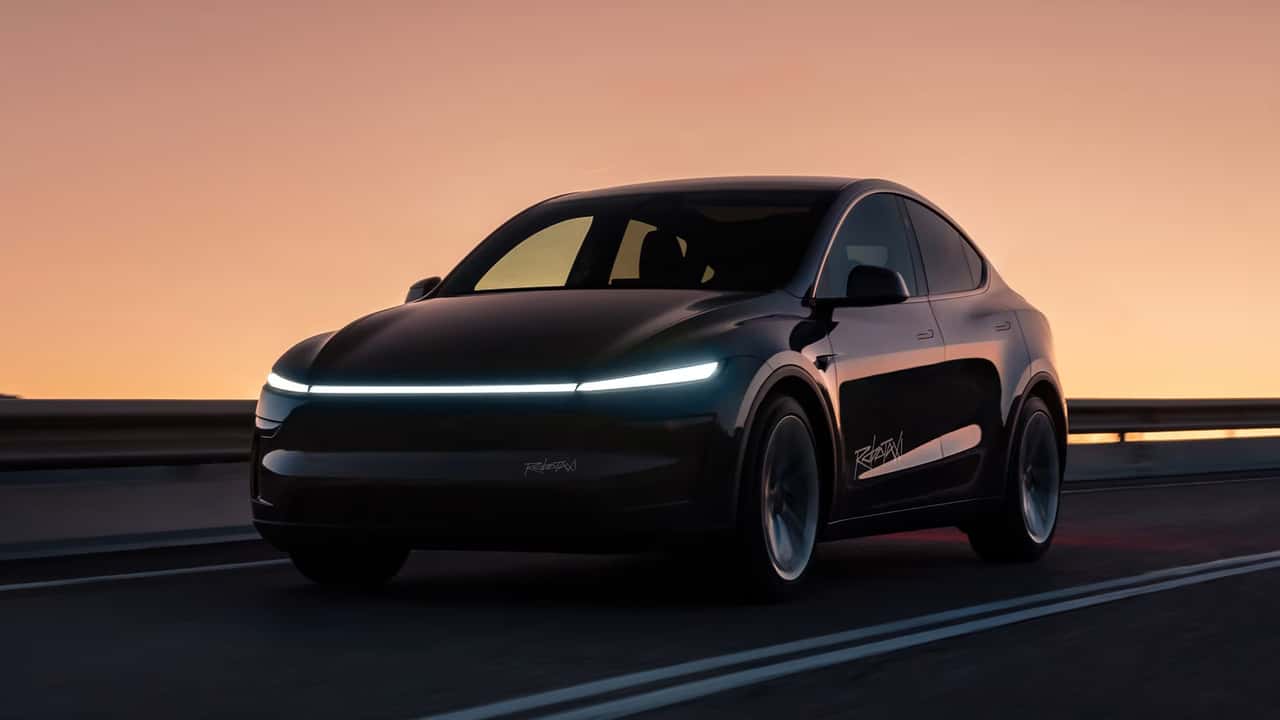

- Tesla is ordered to fix nearly 20,000 cars with ultra-bright headlights.
- Some cars have brightness levels that exceed the maximum allowable range by nearly double.
- The automaker tried to argue that the impact to safety was "inconsequential," but NHTSA wasn't having it.
If you've driven at night in the last few years, you've probably passed an oncoming car and had the same thought at least once: There's no way those headlights are legal.
Sometimes they belong to a lifted pickup that managed to perfectly align its headlights with your retinas, or other times it's a car with aftermarket LED bulbs stuffed into a reflector housing. And if it isn't one of those, there's a good chance that it's a Tesla—which is why the EV maker is now in the spotlight of federal regulators.

Technically Tesla was in the spotlight back in 2024. Tesla notified the U.S. National Highway Traffic Safety Administration that about 20,000 Model 3 and Model Y EVs had headlights that exceeded the maximum allowable brightness allowed by law in specific zones (in some cases, by nearly double).
Tesla's petition to NHTSA said that the defect was "inconsequential" to safety. Now, more than two years after the automaker tried to play off the lighting defect as no big deal, the feds have revisited the issue and denied Tesla's petition to avoid issuing a recall. Tesla has since been ordered to remedy the defect.
Tesla, like General Motors before it, couldn't argue its way out of having to take action on its uber-bright headlights. And if you've ever been blinded by one on the road, I'm sure you understand why. Heck, I couldn't even count the number of times that I've been flashed by folks who incorrectly assumed my Model 3's high beams were on.

There has been some progress on fixing the headlight issue more broadly. Adaptive beams, which automatically dim part of the beam so as not to blind oncoming drivers, are finally legal. And some U.S. lawmakers have set their sights on too-bright headlights.
A bill introduced into Congress earlier this year—the LIGHT (Limiting Intense Glare for Highway and Two-lane) Safety Act—directs the U.S. Secretary of Transportation to study and establish an overarching maximum allowable brightness for low-beam headlights in the Federal Motor Vehicle Safety Standards. Right now, there are rules around the intensity of headlights at different parts of the beam, but no limits on the overall brightness.
We'll have to see if that goes anywhere, because America's frustration around blinding headlights certainly isn't.
RECOMMENDED FOR YOU
They Bought A 78,000-Mile Tesla With An Unknown Past. Then They Tested The Battery
Critics Slam Tesla's Gamification Of FSD As Driver Hits 25,000-Mile Streak
The 17 Cheapest Electric Cars In 2026 (Updated)
This Is The World's Largest Electric Aircraft—And Its First Flight Cost Just $5
Tesla Recalls 20,000 Cars Over Uber-Bright Headlights
The 2027 Karma Gyesera Is $35,000 Cheaper Than The Revero It Replaces
Used EV Values Are Actually Rising. Why That's Good And Bad News.