
Ford's Skunkworks EV Tech Will Make It Into Hybrids Too
Gas cars used to be the base for EVs. Now, new EVs are helping automakers make more efficient hybrids.
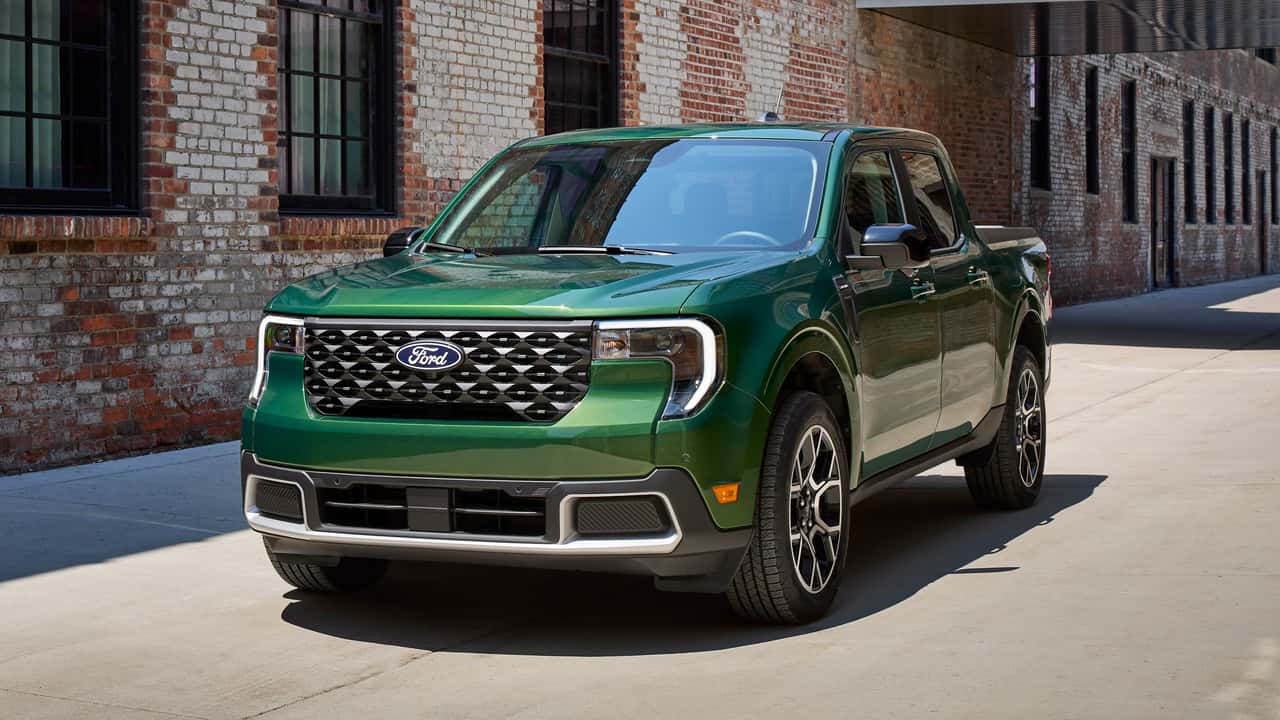

- Ford’s skunkworks EV team will help create more efficient hybrid models.
- Nearly 90% of the automaker’s global nameplates will offer electrified powertrains by the end of the decade.
- These cars will benefit from the breakthroughs that will be implemented in Ford’s upcoming $30,000 electric mid-size pickup.
Ford is betting big on hybrids after changing course on electric cars. But the American automaker’s upcoming electrified gas cars will benefit from the latest EV technology, possibly making them more efficient and more affordable.
Despite discontinuing the F-150 Lightning electric pickup and terminating the development of several next-generation EVs, Ford hasn’t backed out completely from the electric car race, putting all of its hopes on the Universal EV Platform, which has already yielded several breakthroughs.

Ford Universal EV Platform Pickup
And it's these breakthroughs that will make their way into Ford’s new hybrid models. The company said that by the end of the decade, nearly 90% of its global nameplates will offer electrified powertrains, including advanced hybrids, extended-range electric vehicles, and full-on EVs.
The Mustang Mach-E and E-Transit van are currently the only EVs that Ford still makes for the American market, but overseas, the company also has the Explorer EV, Capri, Puma Gen-E, E-Transit Courier, and E-Transit Custom.
The lessons learned from developing the high-efficiency electric motors in the upcoming $30,000 battery-powered mid-size pickup will make their way into Ford’s new hybrids. The company previously stated that the front and rear drive units of the UEV-based pickup, which were developed in-house, are the cheapest in the world, leading to plenty of cost savings.
If Ford wants to stay relevant in today’s uncertainty-filled global car market, it needs to step up its electrification game with the latest technology available. Chinese automakers, which have emerged as experts in plug-in hybrids and extended-range EVs, are gaining popularity across the globe thanks to their aggressive pricing policies and the promise of low fuel consumption.
Jim Farley, Ford’s CEO, went viral in 2024 for saying that he didn’t want to give up an imported Xiaomi SU7 EV because it was a great car to live with. But even before Farley got his hands on China’s “Apple Car,” Ford’s skunkworks EV team was hard at work developing the UEV platform.
More recently, Ford’s head honcho went on record, saying that Chinese EVs should be banned from the United States over the potential impact on domestic manufacturing. "There's no way this is a fair fight," he said, adding that China has the capacity to build enough cars to cover the entire U.S.
Related Stories
RECOMMENDED FOR YOU
Ford Converts Louisville Plant For The $28,000 Fathom Electric Truck In Under A Year
This 100-Year-Old EV Came With More Range Than The First Nissan Leaf
Ford’s New AI Assistant Can Read Your Car’s Manual And Diagnostics
Xiaomi's First EV Just Hit A Massive Milestone
Ford's Bronco EV Is Better Than It Has Any Right To Be. Why Isn’t It Sold In The U.S.?
LG Energy Solution's Newest Battery Megafactory Just Kicked Off Production
EV Reveals Have Gotten Way, Way Too Drawn Out. The Ford Fathom Proves It