
‘It’s Called Radiation’: L.A. Woman Sits In Charging Tesla. Then Her Friend In Health Care Says She Shouldn't
“Just put on a tinfoil hat and the frequencies will bounce off.”
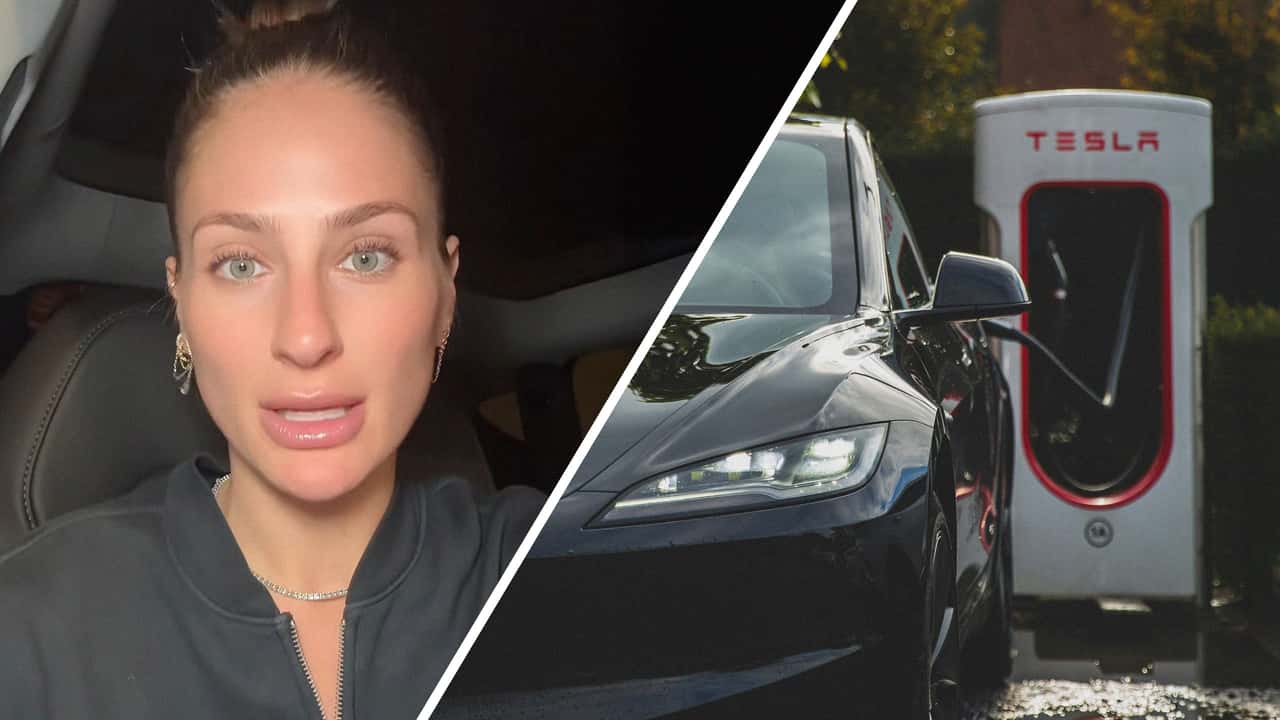

A Tesla owner says she’s concerned about the safety of sitting inside her vehicle while it’s charging, which sparked a conversation about whether electric vehicles and EV chargers emit any kind of harmful radiation. TikTok user Alexis Frank (@alexxisfrank) posted a clip airing her worries—but do these claims have merit?
“I really needed to come on to TikTok for this because every time I charge my car, my Tesla, I sit here and I think, ‘Should I get out of the car?’” She goes on to explain why she’s elected not to sit inside her vehicle when it’s actively powering up. “One of my friends who works in the health industry was telling me that it’s really bad to sit in your car while you’re charging it.”
Now Trending
But she does notice that a lot of folks idle in their Tesla as it charges. “Everyone else is sitting in their car. So I’ve been getting up and walking, but not every time. Do I wanna get out of my car? So, if you have a Tesla or if you know anything about this and you’re in the health industry, is it bad to sit in your car?”
So are these concerns about radiation founded, or nothing to worry about?
Commenters Sound Off
Replies to Frank’s video had varying opinions on her friend’s assertions. One user seemed convinced that there were pernicious side effects to sitting inside of a Tesla whilst charging. “Yes, it’s bad, it’s called radiation,” they wrote. “It always gives me a super headache to be in the car while it charges.”
A second commenter echoed the claim, writing, “Bad, you’re microwaving yourself.” Another simply said, “Scary.”
However, there were some who didn’t believe that sitting inside of an EV while juicing up could have any detrimental health side effects. “Electricity? Lmao,” one wrote. Another said, “Just put on a tinfoil hat and the frequencies will bounce off.”
Is All Radiation Bad?
While the word “radiation” may bring images of the Toxic Avenger to mind, the definition of this term is broader than some may realize. According to the International Atomic Energy Agency, radiation is defined as “energy that moves from one place to another in a form that can be described as waves or particles. Some of the most familiar sources of radiation include the sun, microwave ovens in our kitchens and the radios we listen to in our cars. Most of this radiation carries no risk to our health.”
FROM THE TRENDING NEWS DESK
Viral bits from across the social media landscape
Our team of experts tracks what's trending so you don't have to—from viral videos to online debates that have everyone talking.
In the case of charging Teslas, multiple sources say they’re safe to be around.
This Tesmag article distinguishes between ionizing and electromagnetic radiation. Ionizing radiation, which comes in the form of “alpha particles, beta particles, and gamma rays,” can “directly damage the molecular structures in living organism, such as DNA, and thus poses significant health risks.”
On the other hand, electromagnetic radiation, which is what Tesla batteries produce in low amounts while charging, is only harmful with “prolonged exposure or specific conditions.”
The Tesmag article indicates that the automaker has implemented several “radiation protection measures,” including electromagnetic shielding and low-radiation components, and goes on to state that Teslas output “relatively low electromagnetic radiation levels” compared to other common electronic devices, such as phones and computers.
More EV Radiation Studies
Many other authorities have ruled that the level of electromagnetic radiation emitted from EVs is not dangerous to humans. The Electric Vehicle Council of Australia wrote, “EVs emit low levels of electromagnetic radiation called extremely low frequency (ELF) radiation … a type of non-ionising radiation, which means that it does not have enough energy to break chemical bonds in DNA.”
An analysis by the National Library of Medicine also found that EVs emit ELF radiation, writing that “dominant frequencies of ELF … in various EVs did not exceed 300 Hz,” meaning they’re safe for humans to be around.
This Electrive article cites studies conducted by the German government that looked into the radiation frequencies given off by electric vehicles. Like the aforementioned sources, these levels were deemed to ultimately be “harmless” for humans to come into contact with. What’s more, the radiation levels in EVs are not found to be higher than those in internal combustion vehicles.
So while Teslas and other EVs give off radiation like any other electronic device, they’re rated as safe for human use.
InsideEVs has reached out to Tesla and Frank via email for further comment.

RECOMMENDED FOR YOU

This Low-Mileage 2025 Tesla Model Y Lost A Lot Of Range Fast
This Simple Trick Boosted My Plug-In Hybrid's Fuel Economy To 50 MPG
Tesla Apparently Won't Let Cybertruck Buyers Transfer FSD Without Spending Another $20k
Sodium Batteries And EVs That Power The Grid: Inside GM's Big Energy Push
This Tesla Model 3 Went Nearly 400 Miles In A Range Test, 30 More Than Its EPA Rating
Yes, EVs Really Are Cleaner Than Gas Cars. Here's By How Much
Teslas Are More Likely To Hit 250,000 Miles Than Almost Every Car Brand