
‘They Said Get A Tesla’: Florida Woman Gets A Tesla. Then She Tries To Charge It
Tesla still runs the most extensive fast-charging network in the U.S., but scale is not the same as ubiquity
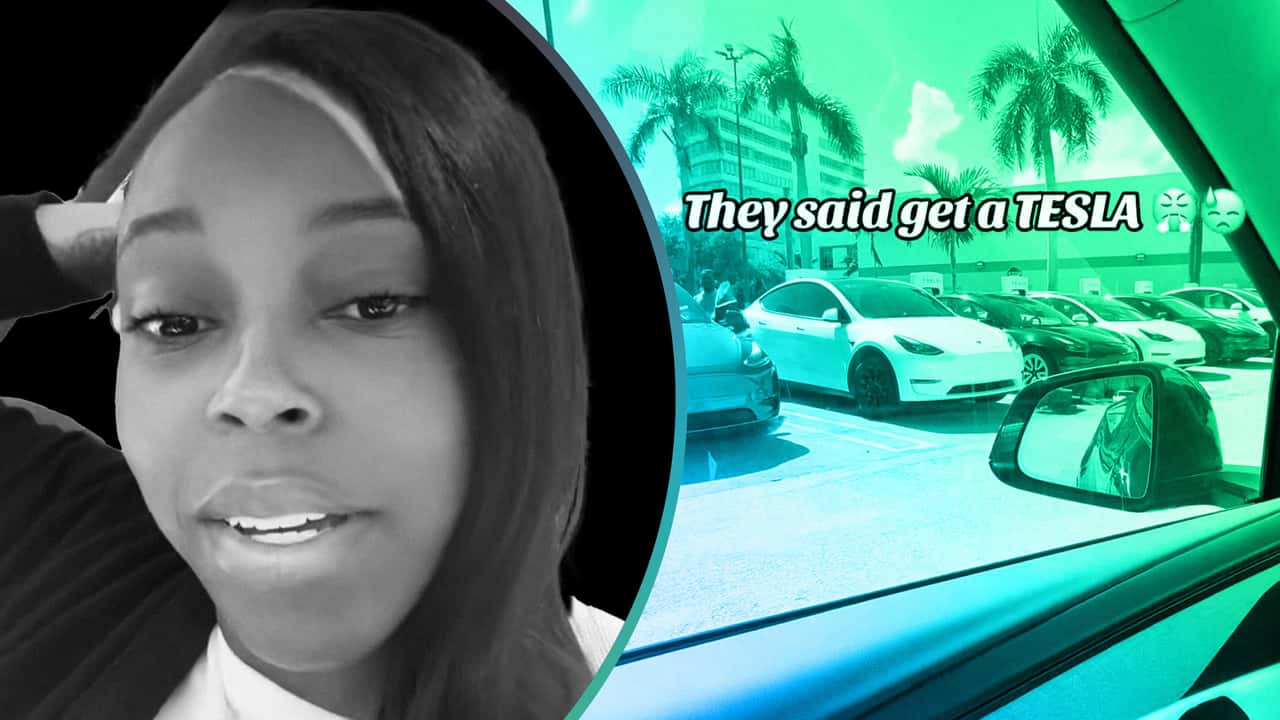

Buying a Tesla was supposed to solve a Florida driver’s gas station headaches. Instead, she found herself waiting in line and encountering a whole different level of frustration.
TikTokker @__theyloveelexis vented her anger in a recent TikTok about the struggle to find an open charging stall. The post, which has been viewed more than 5,000 times, has struck a nerve with new EV owners and raised a bigger question about whether Tesla’s once-flawless charging advantage is starting to show strain.
“It’s never no charger spots available then y’all get out y’all CARS go walking around when your car been DONE,” she explained in the caption, clearly showing that the new-car honeymoon period ended fast.
EV Lines Everywhere
The clip lands because it taps into something bigger than a single bad day at a crowded plaza. Florida is the second-largest EV market in the country, with roughly 255,000 electric vehicles registered by late 2023, so even small pockets of growth can stress local infrastructure at peak hours.
Now Trending
Tesla still runs the most extensive fast-charging network in the U.S., and globally it now counts more than 70,000 Supercharger connectors, with North America hosting over half of them. But scale is not the same as ubiquity, especially in dense metro corridors and tourist hot spots where several owners may arrive at once.
Across Florida, public charging has expanded quickly, more than doubling in the past four years to 3,600 stations and 11,200 ports, according to an Axios review of federal data. Yet demand has risen just as fast.
FROM THE TRENDING NEWS DESK
Viral bits from across the social media landscape
Our team of experts tracks what's trending so you don't have to—from viral videos to online debates that have everyone talking.
Part of what new owners discover is that the “EV fueling model” isn’t a one-for-one swap with gas stations. The Department of Energy says about 80% of all charging happens at home, with the remainder split among workplaces and public sites. That means drivers without a garage or reliable Level 2 access are more exposed to prime-time congestion at popular Superchargers.
Florida is a stress test for that reality. Rapid population growth and year-round tourism funnel many drivers to the same handful of convenient nodes near retail and highways.
Tesla’s own growth has created mixture effects, too: Opening parts of its network to other brands increased throughput at some locations. Ford owners, for instance, began accessing roughly 15,000 Tesla fast-charging plugs in early 2024 via an adapter program, with other automakers following on rolling timelines. Rivian announced access beginning in March 2024, with native NACS ports coming to its vehicles in 2025. Each brand’s on-ramp brings benefits for the ecosystem—and more cars to busy sites.
Where Are The Chargers In Florida?
Florida officials know what the TikTok shows. The state’s latest EV Infrastructure Deployment Plan, aligned with the federal NEVI program, specifically targets gaps along travel corridors and urban clusters to reduce wait times and improve geographic coverage. The plan ties station siting to traffic patterns, grid capacity, and equity goals, an acknowledgment that where chargers are located matters as much as how many there are.
Still, the near-term buildout is running into national headwinds. A Government Accountability Office review this summer found fewer than 400 ports had come online under the $7.5 billion federal charging initiative as of April 2025 amid policy pauses and litigation over funding. Whatever the political winds, the punchline for drivers is that new sites are coming—but not always on the timeline that viral frustration would like.
If you scroll through the comments on the clip, you'll see the split-screen view of EV life. Some veterans say they’ve never waited; others, especially without home charging, say certain hubs are “always slammed.” Both can be true. Congestion is highly local and time-dependent. Owner forums and Tesla’s app offer real-time stall availability, and the company has experimented with nudges such as congestion or idle-fee alerts to keep traffic moving. Those tools can help individual drivers plan around the crunch, but they don’t replace capacity in places where adoption outpaces hardware.
Florida ranks near the top nationally in the number of Supercharger stations and DC fast-charging ports. But “easy to find” isn’t the same as “always available right now,” particularly in busy zones around Miami, Orlando and Tampa, where many owners cluster. Third-party tallies put Florida among the top states for Supercharger locations, and the DOE’s station locator shows a dense web of public options statewide. Yet, localized bottlenecks still crop up at predictable times and places.
Florida has also prioritized corridor coverage in its NEVI planning documents, which should bring more high-speed plugs along the routes where new owners most often get stuck waiting. That won’t help a driver already in line tonight, but it indicates a positive direction for those willing to be patient.
InsideEVs reached out to @__theyloveelexis via direct message and comment on the clip. We’ll be sure to update this if they respond.

RECOMMENDED FOR YOU

Tesla Apparently Won't Let Cybertruck Buyers Transfer FSD Without Spending Another $20k
This Simple Trick Boosted My Plug-In Hybrid's Fuel Economy To 50 MPG
This Tesla Model 3 Went Nearly 400 Miles In A Range Test, 30 More Than Its EPA Rating
Sodium Batteries And EVs That Power The Grid: Inside GM's Big Energy Push
Teslas Are More Likely To Hit 250,000 Miles Than Almost Every Car Brand
EVs Are Cleaner Than Gas Cars. Your ZIP Code Decides By How Much
The Best EV Lease And Finance Deals In June 2026