Home
Tesla
News
Tesla Says Autopilot Is Getting Better. But It's Crashing More
Tesla claims Autopilot drivers are nine times less likely to crash than unassisted human drivers.
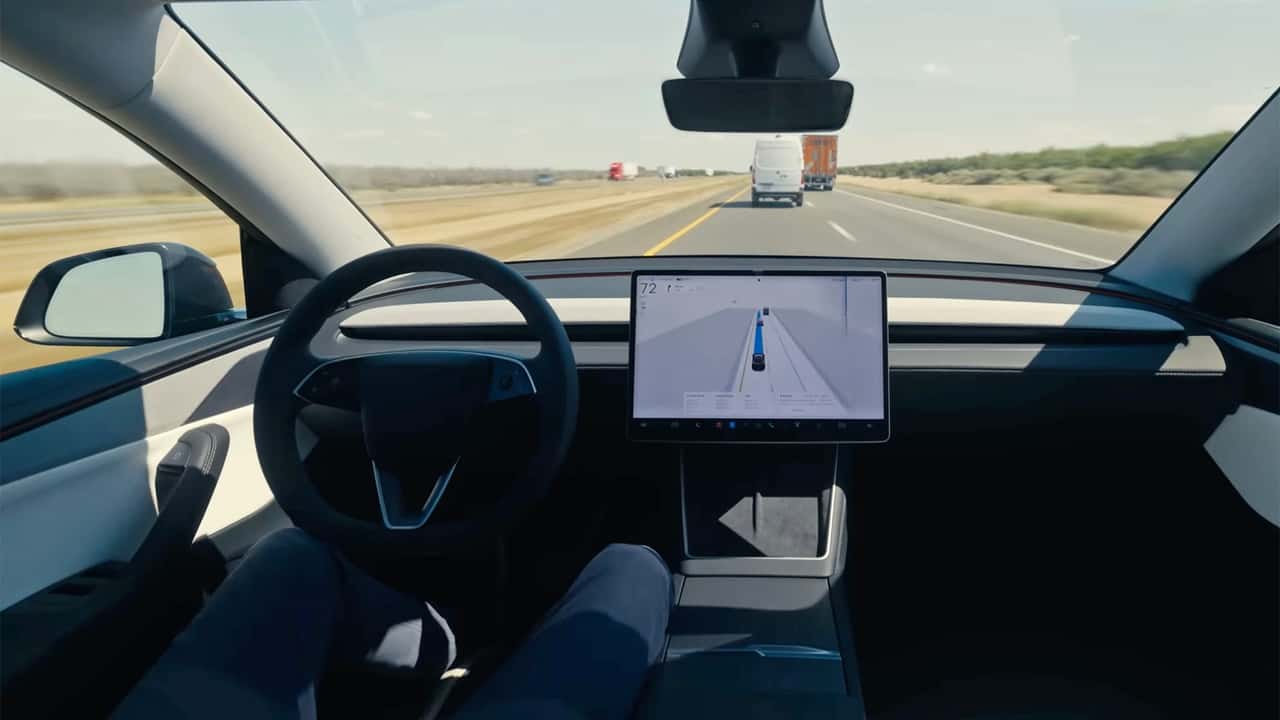
Photo by: Tesla
Andrei Nedelea 
By: Andrei Nedelea
Oct 23, 2025 at 1:01pm ET
Add InsideEVs as a preferred source in Google
- (https://twitter.com/intent/tweet?url=https%3A%2F%2Finsideevs.com%2Fnews%2F776774%2Ftesla-autopilot-safety-report-released%2F&text=Tesla%20Says%20Autopilot%20Is%20Getting%20Better.%20But%20It%27s%20Crashing%20More&via=InsideEVs)
- copy
Share
Comment
- Tesla’s new Autopilot safety report shows crashes rising for a third straight quarter.
- Tesla claims Autopilot users are nine times less likely to crash than unassisted drivers, but that’s down from ten times safer earlier this year.
- Tesla still withholds detailed Autopilot safety data, so we can't really have a clear picture of how safe it really is.
Tesla has never released a detailed safety report on Autopilot or Full Self-Driving (FSD), probably because it might paint the automaker-turned-autonomous-vehicle-and-artificial-intelligence company in a bad light. What it does share is a single statistic each quarter: how often drivers on Autopilot crash compared to how often U.S. drivers crash overall. But despite this highly favorable statistic, the company's most recent reports have actually shown a decrease in safety, and the latest one, released for Q3 2025, continues on a downward trend.
The headline sounds pretty good: Tesla says drivers who use Autopilot are around nine times less likely to crash compared to the U.S. national average. The manufacturer notes that its latest safety report shows “significant advancements in its Autopilot technology,” even though what it actually shows is falling numbers for a third consecutive quarter.
According to the new report, vehicles equipped with Autopilot experienced one crash for every 6.36 million miles driven. Tesla points to 2023 data from the National Highway Traffic Safety Administration (NHTSA) and the Federal Highway Administration (FHWA), which states that the national average of miles driven before a crash is around 702,000 miles.

Stay informed with our newsletter every weekday
back
Subscribe For more info, read our Privacy Policy & Terms of Use.
Big picture, the numbers have improved considerably since Q3 2018, when it filed the first such report. Back then, drivers who used Autopilot had one crash every 3.35 million miles, while those who didn’t use it drove 1.92 million miles before experiencing a crash and the national average was 481,000 miles.
However, looking at Tesla’s Q1 2025 safety report, it shows that Autopilot users drove 7.44 million miles before a crash, while those who didn’t use it crashed, on average, after 1.51 million miles. Autopilot’s peak safety quarter so far has been Q1 2024, with 7.63 million miles between crashes with Autopilot on and 955,000 miles with it off.
I would love to dig through more detailed Autopilot and FSD safety data. How many times does it disengage? How many times did drives have to take over to avoid a potential hazard? How many of these Autopilot miles were driven on the highway, and how many in town? These are just some questions that we can’t answer because—while Tesla likely has all of it in granular detail—it won't release it.
Tesla presents Autopilot as a way for drivers to enhance safety and reduce the workload, which it is. The system works well enough and helps take some of the workload out of driving. It is not fully self driving, however, and neither is Tesla's Full Self Driving package, despite the misleading name. Autopilot relies on Autosteer and what Tesla calls “Traffic-Aware Cruise Control,” which basically means it adjusts its speed depending on what’s in front of the car and around it and it steers to keep you in your lane.
 Tesla Has Big Robotaxi Dreams. FSD Is Running Red Lights
Tesla Tried To Reimagine Door Handles. Here's Where It Backfired
A Tesla Robotaxi Kept Driving In Circles, Stumped By A Parking Lot
Tesla Tells Feds To Stay Tight-Lipped On Robotaxi Safety Data
It really does take the strain out of driving, especially on long journeys, and that’s the key to putting Tesla’s safety report numbers into context. Most people will likely choose to use Autopilot for highway driving. Since there are no intersections with crosswalks, no bike lanes or other pieces of urban road infrastructure and little chance of pedestrians accidentally stumbling onto the road from behind a parked car, driving on the highway is generally safer and less eventful. That's why Tesla recommends only using Autopilot on closed highways, while FSD is designed to work everywhere.
What do you think?
View
Comments
So all those miles driven with Autopilot engaged, where it’s that much safer than the average for human drivers, is only part of the story. The national statistic includes driving on all types of roads, including in towns where the chance of having a crash is higher. And we also don’t know what qualifies as a crash for Tesla. Does a low-speed bump in city traffic count?
It will be interesting to see what future safety reports will show as people start to buy the new Standard versions of the Model 3 and Model Y, which don’t get Autopilot as standard. They will still maintain a safe distance to the car in front, but won’t keep the car centered in its lane if owners don’t pay $8,000 for the FSD package, which they probably won’t if they’re trying to save a buck by buying the cheapest available models. But the real test for Tesla's autonomous ambitions is whether it can safely remove drivers altogether with its robotaxi service, which has begun its slow roll-out. Musk says new cities are coming this year, so we should learn more soon.
Related Stories
Tesla Claims The Cybercab Is Coming In Eight Months—No Steering Wheel, No Pedals
Tesla’s Robotaxi Business Is Growing. But The Hard Work Is Far From Over
Tesla Earnings Are Today. The Big Question: Will Its Cheaper Cars Work?
'Radical Simplification': GM's Nvidia-Based Computing Platform Aims To Get On Tesla's Level
We want your opinion!
What would you like to see on Insideevs.com?
Take our 3 minute survey.
- The InsideEVs team
Share this Story
- (https://twitter.com/intent/tweet?url=https%3A%2F%2Finsideevs.com%2Fnews%2F776774%2Ftesla-autopilot-safety-report-released%2F&text=Tesla%20Says%20Autopilot%20Is%20Getting%20Better.%20But%20It%27s%20Crashing%20More&via=InsideEVs)
- copy
GO TO COMMENTS
(
)
Got a tip for us? Email: tips@insideevs.com
View all comments ( )
Trending
Kia EV3 Lease Deals Are Here, And It’s Cheaper Than The Chevy Bolt And Nissan Leaf
I Let Android Auto Plan My EV Roadtrip. Here’s How It Worked
This Chevy Bolt Has 470,000 Miles. Here’s How Much A New Battery Was
Here's What It's Like To Take Delivery Of A Rivian R2
latest articles
- The Boring Company Uses Tesla Model 3 Sleds To Shuttle Shipping Containers Through Its Tunnels Oct 20 - News -
- How Much Range Do EVs Lose When Parked? (And How to Stop It) Oct 20 - EV 101 -
- This Chinese EV Is Now Made In Europe. More Are Coming Oct 20 - News -
- GM Is Closing Its Detroit EV Battery Plant Oct 20 - Industry -
- The 2027 Lexus NX Plug-In Hybrid Gets A Bigger Battery And Fast Charging Oct 20 - Official -
- Kia EV3 Lease Deals Are Here, And It’s Cheaper Than The Chevy Bolt And Nissan Leaf Oct 20 - Pricing -
- Here's What It's Like To Take Delivery Of A Rivian R2 Oct 19 - News -
RECOMMENDED FOR YOU
Used EVs Hit A Record Share Of Overall Used Car Sales In September
How Much Range Do EVs Lose When Parked? (And How to Stop It)
The Roadster Will Have Tesla’s Most Advanced Battery Pack Yet
This Chinese EV Is Now Made In Europe. More Are Coming
Tesla 'Cannot Guarantee' Your Roadster Pre-Order Will Ever Be Delivered
GM Is Closing Its Detroit EV Battery Plant
Tesla Just Revealed The Roadster With A Truly Insane Demo. Here's What You Need To Know