Home
Tesla
News
Tesla Has Big Robotaxi Dreams. FSD Is Running Red Lights
The top federal road safety body is looking into scenarios where Teslas running "Full Self-Driving" broke traffic laws.
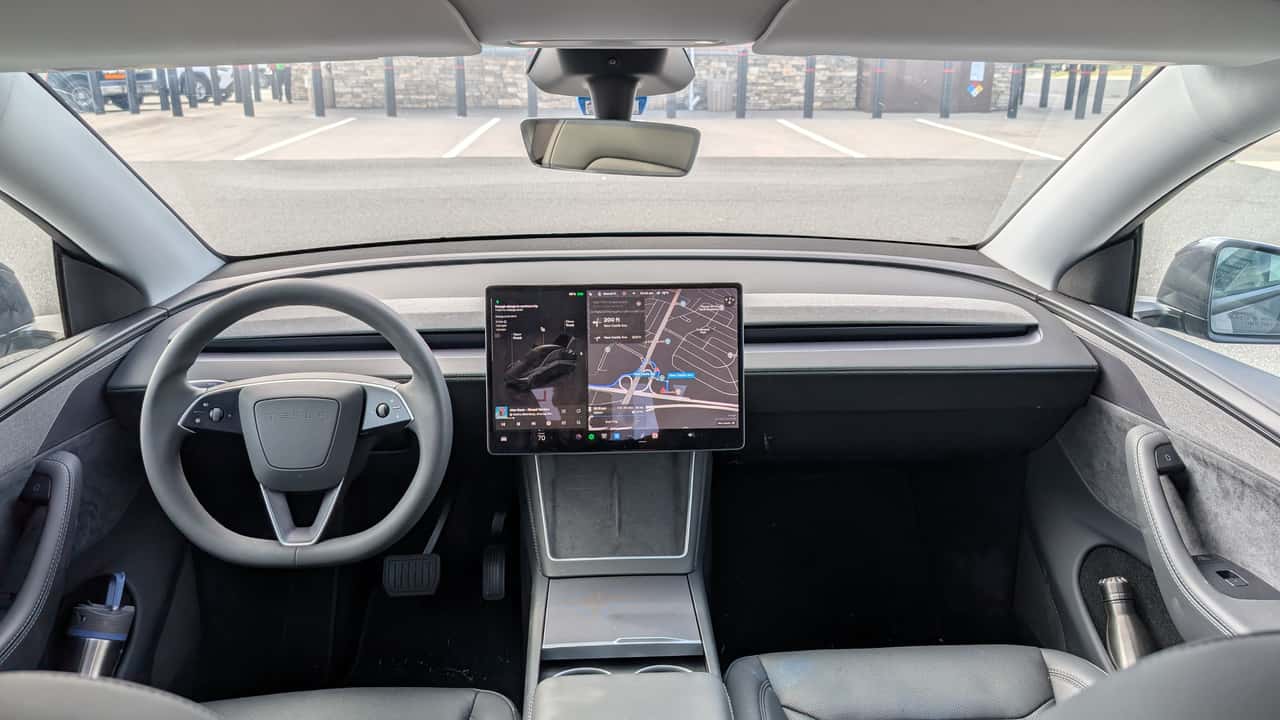
Photo by: Suvrat Kothari
Tim Levin 
By: Tim Levin
Oct 10, 2025 at 9:14am ET
Add InsideEVs as a preferred source in Google
- (https://twitter.com/intent/tweet?url=https%3A%2F%2Finsideevs.com%2Fnews%2F775291%2Ftesla-fsd-nhtsa-red-lights%2F&text=Tesla%20Has%20Big%20Robotaxi%20Dreams.%20FSD%20Is%20Running%20Red%20Lights&via=InsideEVs)
- copy
Share
Comment
- Tesla has pinned its future to mass adoption of autonomous taxis.
- Its "Full Self-Driving" feature, which requires full supervision, is allegedly violating traffic laws.
- The National Highway Traffic Safety Administration is looking into reports that FSD is piloting Teslas through red lights or drove into the opposing lane of traffic.
Tesla CEO Elon Musk says that, any day now, the company could have hundreds of thousands of autonomous taxis ferrying passengers all over the United States. Meanwhile, the company's "Full Self-Driving" software is apparently failing to obey basic traffic laws.
The National Highway Traffic Safety Administration has opened what it calls a "preliminary evaluation"—one step along the road to a potential recall—into reports of FSD running red lights and trying to change lanes into the opposing lane of traffic.
The agency "has identified a number of incidents in which the inputs to the dynamic driving task commanded by FSD induced vehicle behavior that violated traffic safety laws," it said in an early October filing. The 50-plus reports come from a mix of owner complaints, media reports and crash reports from Tesla directly.

Keep up with the fast-moving future of transportation straight from your inbox.
back
Subscribe For more info, read our Privacy Policy & Terms of Use.
FSD (Supervised) is Tesla's advanced driver-assistance system that, with the aid of cameras, pilots a car along any route selected by the driver. The $8,000 feature is supposed to react to pedestrians, traffic lights, local speed limits and the like while a driver supervises and intervenes if necessary. And a lot of the time, it does all of that impressively well. Over the years that FSD has been available to Tesla owners, though, its blind spots have been apparent too.
As for the red-light violations, NHTSA identified 19 instances in which a Tesla running FSD "failed to remain stopped for the duration of a red traffic signal, failed to stop fully, or failed to accurately detect and display the correct traffic signal state in the vehicle interface."
In six reports from Tesla under the agency's Standing General Order for Crash Reporting, vehicles running FSD ran red lights and crashed into other cars in the intersection. Some caused injuries. According to NHTSA, Tesla has "taken action to address the issue" at one intersection in Maryland, where multiple incidents happened.
We Think You'll Enjoy...
 Lyft Is Behind Uber In The Autonomous Taxi Race. Waymo Will Help It Catch Up
Amazon’s Zoox Robotaxi Goes Live In Las Vegas
Tesla Fan Attempts Coast-To-Coast FSD Drive, Ends Up With A $22,000 Repair Bill
Tesla’s ‘Dojo’ Supercomputer For FSD Is Dead
NHTSA also says it has identified over 20 instances in which a Tesla operating on FSD "entered opposing lanes of travel during or following a turn, crossed double-yellow lane markings while proceeding straight, or attempted to turn onto a road in the wrong direction despite the presence of wrong-way road signs."
Making cars that operate hands-free under human supervision reliably and safely is extremely difficult. Surely Musk, who has been promising autonomous Teslas anybody can buy for around a decade, would agree. It's especially challenging to do what Tesla is attempting with FSD: make cars that can drive themselves anywhere in the world, using no sensors apart from cameras.
But Tesla has backed itself into a corner here, and nailing that mission is more critical for the company than ever before.
Tesla has staked its future on autonomous driving, with Musk seeming perfectly happy to leave the boring business of mass-market electric cars to the likes of General Motors and Volkswagen. This week's lackluster reveal of two lower-cost Tesla trims made that much abundantly clear, if it wasn't already. The Model 3 Standard and Model Y Standard seem like a way to help Tesla's ailing car business coast along until the robots and robotaxis take off, not rocket fuel for a new vibrant phase of sales growth.
With no new mass-market cars in the pipeline apart from the steering wheel-less Cybercab, Tesla desperately needs its robotaxi vision to work out. It has started a pilot service with safety monitors in Austin—undeniably a major step forward. Almost immediately, the driverless Model Ys were spotted making some illegal and erratic maneuvers.
What do you think?
View
Comments
Tesla aims to launch robotaxis in numerous U.S. cities over the next year. But if it can't iron out the kinks in its self-driving system fast enough, it may want to dust off those old Model 2 plans it has kicking around.
Contact the author: Tim.Levin@InsideEVs.com
We want your opinion!
What would you like to see on Insideevs.com?
Take our 3 minute survey.
- The InsideEVs team
Share this Story
- (https://twitter.com/intent/tweet?url=https%3A%2F%2Finsideevs.com%2Fnews%2F775291%2Ftesla-fsd-nhtsa-red-lights%2F&text=Tesla%20Has%20Big%20Robotaxi%20Dreams.%20FSD%20Is%20Running%20Red%20Lights&via=InsideEVs)
- copy
GO TO COMMENTS
(
)
Got a tip for us? Email: tips@insideevs.com
View all comments ( )
Trending
Lucid Is Slashing $15,000 Off The Gravity, But The Deal Won’t Last Long
The Remnants Of The Electric Saab That Never Was Are Going Up For Auction
What We Both Thought After Driving The Rivian R2
Aptera Finally Built Its First Car For Customer Delivery
Latest Stories
- BYD's Latest SUV Can Hide Its Steering Wheel When You Don't Need It Nov 20 - China -
- What We Both Thought After Driving The Rivian R2 Nov 20 - Podcast -
- Hyundai’s N Vision 74 Was One Of The Coolest Car Designs In Recent Memory. Now It's Shelved Nov 20 - News -
- The Remnants Of The Electric Saab That Never Was Are Going Up For Auction Nov 20 - News -
- This Might Be The World's First Rivian R2 With A Two-Inch Lift, And It Looks Badass Nov 20 - SEMA Show -
- The Volkswagen ID. Polo GTI Clubsport Is A Two-Seat Track-Ready EV Nov 20 - Concepts -
- Lucid Is Slashing $15,000 Off The Gravity, But The Deal Won’t Last Long Nov 20 - Pricing -
RECOMMENDED FOR YOU
The Best EV Lease And Finance Deals In November 2026
Hyundai’s N Vision 74 Was One Of The Coolest Car Designs In Recent Memory. Now It's Shelved
Tesla's Driverless Cybercab Is Now Available In Dallas
The Remnants Of The Electric Saab That Never Was Are Going Up For Auction
Americans Bought More Used EVs In October. Fewer Of Them Were Teslas
This Might Be The World's First Rivian R2 With A Two-Inch Lift, And It Looks Badass
Nearly 1 In 5 Tesla Model Ys Failed Their First German Inspection