Home
News
Manufacturing / Production
Keeping Battery Prices Low May Require EV Makers To Get Into Mining
The magic number is below $100/kWh: Tesla may be preparing to do that right now.

Gustavo Henrique Ruffo 
By: Gustavo Henrique Ruffo
May 5, 2020 at 7:58am ET
Add InsideEVs as a preferred source in Google
- (https://twitter.com/intent/tweet?url=https%3A%2F%2Finsideevs.com%2Fnews%2F419980%2Fkeeping-battery-prices-low-mining%2F&text=Keeping%20Battery%20Prices%20Low%20May%20Require%20EV%20Makers%20To%20Get%20Into%20Mining&via=InsideEVs)
- copy
Share
Comment
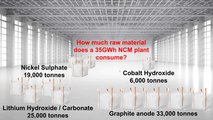
Electric cars are different from combustion-engined ones for more reasons than what powers them. While a regular car just needs a fuel tank, an EV depends on a battery pack that is a significant part of its price and production costs. According to Benchmark Mineral Intelligence, that may push anyone willing to sell EVs not only to establish long term contracts with cell producers. They may also start mining.
The magic number for electric vehicles is to reach a cost of $100/kWh. When we get there, EVs will have a production cost parity with ICE cars. That means government subsidies will not be crucial for them to be competitive.
More EV Mining News:
 It Appears Tesla May Get Into The Mining Business
Scientists Warn: Battery Components May Become A New Type Of Oil
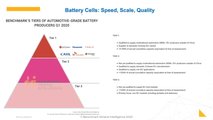
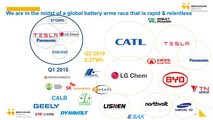
In July 2019, we said Tesla was getting involved with a mining consortium in Indonesia along with Daimler and Volkswagen. We also know that Tesla’s next step is to produce its own batteries, probably already at that sweet cost spot. Benchmark Mineral Intelligence explains that those things are connected.
The only way to ensure lithium-ion batteries will cost less than $100/kWh would be to have control of the raw materials they demand, according to the company. Although we are talking about commodities, manufacturers in control of the source for raw materials would be in a much more stable situation than the ones that rely on contracts for that. Check what Simon Moores, managing director of Benchmark Mineral Intelligence, has to say about that.
“If an automaker owned their own lithium mine, they would be pressured by the cost of production, not the market price. Let’s say the cost of production is $5,000 to 6,000 for each ton of lithium hydroxide. The market price is $10,000 to $12,000 right now. So they are still in the clear providing they own a tier-one asset because the cost of the battery cell is 79 percent raw materials. We talk so much about cheaper batteries below $100/kWh but to keep them under $100/kWh long term, the only sure-fire way is to own the key raw materials.”
Think about it: if batteries are such a crucial part of electric vehicles, automakers have to make sure their prices are stable. Just like legacy carmakers care for the costs and reliability of their combustion engines and gearboxes, electric vehicle producers have to be concerned about the core of their products.
Gallery: Low Battery Prices May Depend On EV Makers Getting Into Mining
7



Tesla does not have that much legacy to deal with, which makes it a much more flexible car company than others. This corporate culture may be another hindrance for traditional manufacturers, as Moores stresses.
“Automakers won’t want to do that. Culturally, it’s not what they will do. They will want JVs (joint ventures) with battery plants or long-term contracts using our pricing as an index. But it’s still a contract that can be changed. Whereas if you own the source, that price is fixed. Lithium and nickel will be the biggest issues.”
As legacy automakers have started to copy Tesla to be competitive in the EV market, Moores believes they may also follow if Tesla starts mining its own raw materials for batteries. Especially because Benchmark Mineral Intelligence predicts a shortage for them by 2030.
What do you think?
View
Comments
“If one automaker makes a lithium move, the rest will follow, and you’ll have a rush akin to oil 100 years ago. It’s a dilemma that comes around every two years.”
Tesla is yet to release its news on batteries on the Tesla Battery Day, but all evidence points to it getting rid of its joint venture with Panasonic. It has bought Maxwell and Hibar Systems. It is filing patents for a million-mile battery. The next step may be to announce getting control of the means to do them. And these means are raw materials.
We want your opinion!
What would you like to see on Insideevs.com?
Take our 3 minute survey.
- The InsideEVs team
Share this Story
- (https://twitter.com/intent/tweet?url=https%3A%2F%2Finsideevs.com%2Fnews%2F419980%2Fkeeping-battery-prices-low-mining%2F&text=Keeping%20Battery%20Prices%20Low%20May%20Require%20EV%20Makers%20To%20Get%20Into%20Mining&via=InsideEVs)
- copy
GO TO COMMENTS
(
)
Got a tip for us? Email: tips@insideevs.com
View all comments ( )
Trending
I Drove Volvo’s Long-Range Plug-In Hybrid XC60. It’s A Great Stepping Stone To An EV.
I've Driven Dozens Of Chinese Cars. Americans Are Missing Out On These 4 Features
I’m Thankful For My Electric Car
$30,000 Ford Fathom: Inside The Structural LFP Battery That Makes It All Possible
Latest Stories
- $30,000 Ford Fathom: Inside The Structural LFP Battery That Makes It All Possible Nov 28 - Battery Tech -
- I've Driven Dozens Of Chinese Cars. Americans Are Missing Out On These 4 Features Nov 28 - China -
- EVs Outsold Gas And Diesel Cars Combined In The EU In October Nov 27 - News -
- This Audi E-Tron EV Has 125,000 Miles. Replacing Its Battery Was A Huge Pain Nov 27 - Repair / Maintenance -
- Rivian's Winter Sale Is Live: Save on Chargers, Accessories, And More Nov 27 - Pricing -
- I Drove Volvo’s Long-Range Plug-In Hybrid XC60. It’s A Great Stepping Stone To An EV. Nov 27 - First Drives -
- A Used Cybertruck Is Selling A Month Faster Than A Ford F-150 Nov 26 - News -
RECOMMENDED FOR YOU
Volvo Is Bringing Humanoid Robots Into Its Factories. Here's When They'll Start Working
$30,000 Ford Fathom: Inside The Structural LFP Battery That Makes It All Possible
BMW Can't Build Its New iX3 Fast Enough. Now It's Adding The iX4
I've Driven Dozens Of Chinese Cars. Americans Are Missing Out On These 4 Features
VW’s Cheap EVs Are So Popular, Buyers Face Wait Times Of Nearly Two Years
EVs Outsold Gas And Diesel Cars Combined In The EU In October
The EV Charging Company That’s Quietly Conquering America Is Building A New U.S. Factory