Home
Tesla
Model 3
News
Check Out Similarities Between Supercharging And Filling a Gas Tank
This video finds two of them. And, unfortunately, a big disadvantage on the EV side.

Gustavo Henrique Ruffo 
By: Gustavo Henrique Ruffo
Dec 2, 2019 at 4:48pm ET
Add InsideEVs as a preferred source in Google
- (https://twitter.com/intent/tweet?url=https%3A%2F%2Finsideevs.com%2Fnews%2F385651%2Fsimilarities-between-supercharging-filling-tank%2F&text=Check%20Out%20Similarities%20Between%20Supercharging%20And%20Filling%20a%20Gas%20Tank&via=InsideEVs)
- copy
Share
Comment
Have you ever seen a comparison between supercharging and filling up a gas tank? The DennisCW YouTube channel decided to shoot this video to check out how these things compare in terms of money. Still, it ended up showing two similarities and a significant disadvantage on the EV side of the story. In fact, the similarities are not good news either.
Gallery: Similarities Between Supercharging And Filling a Gas Tank Are Not Good

10

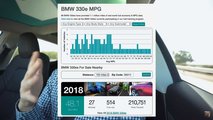
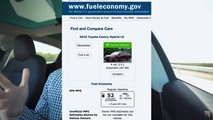

Dennis Wang, the video presenter, is lucky to have a way to charge his Tesla at home, without any rush. Using Supercharger is only indicated if you are traveling, since that may harm the battery longevity. Anyway, and before he bought his Model 3, he thought about the range of two other cars, the BMW 330e and the Toyota Camry Hybrid.
More Tesla Supercharger News:
Thanksgiving Turns Yellow Light On For Tesla Supercharger Availability
Despite Falling Behind, Tesla Is Heavily Rolling Out V3 Superchargers
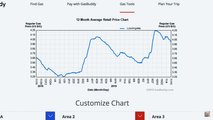
The German sedan has a real-life fuel economy of 47 mpg to 51 mpg. The Camry Hybrid would get 50 mpg to 51 mpg. With gas prices at around $4 in Los Angeles, Wang would spend that much for 51 mi of range in the best possible situation.
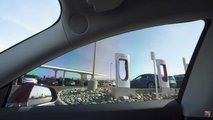
Wang then decides to stop at the Tejon Ranch Supercharger Station for $4 of Supercharging to see how many miles he would get with the Tesla. The counter jumps to $4.20, and he gets 55 mi of additional range.
Doing the math, the cost of Supercharging is $0.07636 per mile. The cost of the hybrids would be $0.07843 per mile. In other words, you would pay $3.97 to run 51 mi with a Tesla instead of $4. Not even in the long run that translates into a reasonable amount of money.
Let’s take the one-million-mile (621,371 mi) Tesla Model S as an example. If it did not have Supercharger free for life, and if Hansjörg Eberhard von Gemmingen had used solely Supercharging to reach one million km – which he didn’t – he would have saved $1,286.24 along all this time.
In 621,371 miles, his Model S would have spent $47,447.89 at $0.07636 per mile. The hybrids would have burned $48,734.13 in gas at $0.07843 per mile. The difference is just 2.7 percent of the amount spent on putting juice in the batteries. Or 2.6 percent of filling the gas tank on the hybrids. That does not cover the price gap between a Tesla and the hybrids.
With such a small difference, we can say Supercharging expenses are almost the same as a hybrid vehicle would have for a given distance. That said, cost and range are the similarities, but we did not mention how long Wang took to add 54 miles to his Model 3: He stayed 17 minutes at the Supercharger station.
That is a major drawback, even more than it would be predictable. When he arrives at the station, Wang says it is really crowded. He then complains that the charging starts very slowly. So much so that he changes to another charging point. When another Model 3 leaves, speed immediately increases. That implies a Supercharger without so many cars would be much faster.
When you remember that Thanksgiving saw big lines in Superchargers, that makes matters even worse. With all charging points busy, speed falls drastically, and it takes much longer than it usually would for everybody in line to charge.
By asking a high fee for supercharging, Tesla demotes people of using them very often. The own company says that it could be harmful to batteries. But why offer that to some Model X and Model S for life if the goal was to make people avoid that?
Does it make sense to charge so much for Supercharger use that it is equivalent to filling up a gas tank? Especially when it takes 17 minutes to do what a gas pump would take less than a minute to complete? Obviously not. And that concerns us.
Forget about emissions or saving the planet. That will be a valid argument for very few, mostly the early EV adopters. For the average Joe, EVs will have to make financial sense for a change to happen. Saving the planet would be a welcome plus. The Supercharger starts to show it may not be the ideal model, even if currently prevalent.
We have already discussed here at InsideEVs that not every manufacturer believes in fast charging. On the contrary: Toroidion thinks EVs must have swappable batteries that work at a maximum of 48V.
What do you think?
View
Comments
That way, they would be able to charge slowly, as they should. You could have multiple sorts of battery packs for each sort of use. Battery swapping would be faster than filling a tank. It would be much cheaper, as well. On the other hand, battery degradation and issues would be a liability for the companies, not for the customers – as they are today.
What is the best model to follow? Could Tesla use its EV lead to set the standard for swappable batteries? Does it believe in the model it is currently using, or is it temporary? These are questions EV supporters should discuss to find a sustainable model. One that makes EVs really attractive, safe, and environmentally friendly while respecting personal mobility. The company that is able to offer this package will lead the market.
We want your opinion!
What would you like to see on Insideevs.com?
Take our 3 minute survey.
- The InsideEVs team
Share this Story
- (https://twitter.com/intent/tweet?url=https%3A%2F%2Finsideevs.com%2Fnews%2F385651%2Fsimilarities-between-supercharging-filling-tank%2F&text=Check%20Out%20Similarities%20Between%20Supercharging%20And%20Filling%20a%20Gas%20Tank&via=InsideEVs)
- copy
GO TO COMMENTS
(
)
Got a tip for us? Email: tips@insideevs.com
View all comments ( )
Trending
Kia EV3 Lease Deals Are Here, And It’s Cheaper Than The Chevy Bolt And Nissan Leaf
I Let Android Auto Plan My EV Roadtrip. Here’s How It Worked
This Chevy Bolt Has 470,000 Miles. Here’s How Much A New Battery Was
Here's What It's Like To Take Delivery Of A Rivian R2
latest articles
- Waymo Plans To Have 20,000 Cars By The End Of 2027 Oct 20 - News -
- The Boring Company Uses Tesla Model 3 Sleds To Shuttle Shipping Containers Through Its Tunnels Oct 20 - News -
- How Much Range Do EVs Lose When Parked? (And How to Stop It) Oct 20 - EV 101 -
- This Chinese EV Is Now Made In Europe. More Are Coming Oct 20 - News -
- GM Is Closing Its Detroit EV Battery Plant Oct 20 - Industry -
- The 2027 Lexus NX Plug-In Hybrid Gets A Bigger Battery And Fast Charging Oct 20 - Official -
- Kia EV3 Lease Deals Are Here, And It’s Cheaper Than The Chevy Bolt And Nissan Leaf Oct 20 - Pricing -
RECOMMENDED FOR YOU
The Longest-Range EVs You Can Buy In 2026
Kia EV3 Lease Deals Are Here, And It’s Cheaper Than The Chevy Bolt And Nissan Leaf
The Tesla Model 3 And Model Y Can Now Power Your Home In A Blackout
Here's What It's Like To Take Delivery Of A Rivian R2
The Tesla Model 3 Gets A Range Bump And A New Screen In The U.S.
Used EVs Hit A Record Share Of Overall Used Car Sales In September
The Tesla Model 3 Gets A Big Upgrade, But The U.S. Is Left Out