
'Fairly Lazy Explanation’: Rivian's CEO Doesn’t Think Americans Are Anti-EV
Just two models make up around 50% of EV sales in the U.S. To RJ Scaringe, that's "not a reflection of a healthy or well-served market."


The U.S. is lagging behind other developed countries in EV markets. Some blame regulators. Some blame oil-industry lobbying and misinformation. Others blame our propensity for over-buying and driving long distances. But however you explain it, it’s happening.
Electric vehicles made up just under 8% of the U.S. car market last year, according to Cox Automotive. In Europe, that number was 19%, per the International Council on Clean Transportation. But if Europe is pulling ahead, China has left the U.S. in the dust: Around a third of all cars sold there in 2025 were battery-electric, according to the International Energy Agency.
So why are we so far behind? Many argue it’s a reflection of a fundamental truth about American car buyers: They just don’t want EVs. To Rivian CEO RJ Scaringe, that’s a load of hogwash.
“So there are sort of two sides, the way you can present what’s causing this. So one, as you say, is that customers don’t want EVs. I view that as a fairly lazy explanation for what’s happening,” Scaringe told reporters during a media roundtable at the R2 launch in early June.
“I think it’s much more the fact that there are very few great choices,” he said. “And I use the descriptor ‘great’ importantly there. I think that’s not to say there are no EV choices, but to say that they are great, or highly compelling to the extent that you would move out of an ICE vehicle and move out of a hybrid vehicle, there’s just a vacuum of choice.”
While there are plenty of EVs on sale, Scaringe argues that few have taken true advantage of the possibilities that software-defined electric vehicles offer. Many existing EVs use a more traditional approach to software and manufacturing, which means they can’t match the price-to-capability ratio and seamless user experience of SDVs like the Tesla Model Y.

The Tesla Model Y utterly dominates its competitors on the sales charts. With around 317,000 units sold last year, it also dusts some of the most popular gas SUVs.
But clearly that concept is compelling to consumers; Tesla has sold over 300,000 Model Ys per year in the U.S. for the last three years straight. Even last year, when the Tesla brand was politically toxic, the Model Y lapped popular models like the the Subaru Outback, Toyota Camry, Ford Explorer, Chevy Equinox, and Toyota Tacoma. It was the seventh best-selling vehicle in the country overall. To Scaringe, the Model Y’s dominance is a sign that most electric models aren’t hitting the mark.
The Model 3 may have a new face and an updated interior, but it rides on a platform that's nearly 10 years old. So why can't competitors get close to it on the sales charts?
“Today in the United States, around 50% [of EV] market share is two vehicles from one brand, on one platform. The Model 3/Model Y platform,” Scaringe said. “That’s not a reflection of a healthy or well-served market. It’s a reflection of a wildly underserved market.”
It’s worth noting, too, that the Model 3 went on sale in 2017. The Model Y used the same platform and mostly the same tech when it launched in 2021. That means that a near-decade-old platform accounts for almost half of all EV sales in the U.S. today. You can see why Scaringe thinks this market is ripe for disruption. He notes that there’s a natural limit to what one or two products can do; not everyone likes the brand, or the design. Some want to do things the Model Y can’t, like go off-roading on more technical trails.
His argument, then, is that consumers need more great choices. And, as the CEO of Rivian, he naturally thinks the R2 is the answer. With its boxier styling, adventurous branding, and dirt-trail capability, the Rivian appeals to a new set of buyers, while still capturing much of the range, price, and tech advantages that put the Model Y on top. I loved the thing when I drove it last week.
Gallery: 2027 Rivian R2: First Drive
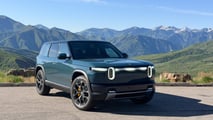
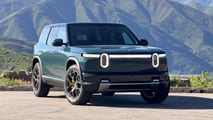
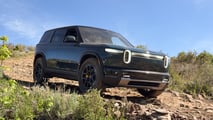
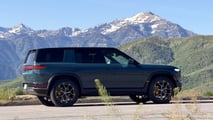
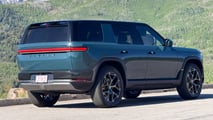
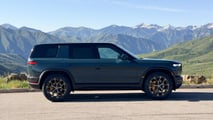
But even Scaringe knows that it alone won’t be enough to get the U.S. to keep pace with Europe or catch up to China. He highlighted that Rivian formed a joint venture with the Volkswagen Group to help the automaker make its forthcoming software-defined EVs more competitive. He said that “more choice is ultimately going to help the space.”
“It’s going to lead to broader customer adoption of electric vehicles. It’s going to lead to broader build out of things like infrastructure for charging,” he said. “But the end state to us is really clear. It is going to be nearly 100% electric. It’s just a question of when, not if, in our eyes.”
Contact the author: Mack.hogan@insideevs.com
Related Stories
RECOMMENDED FOR YOU
Everyone Is Afraid Of EV Battery Degradation. It's All The Nissan Leaf's Fault
Volkswagen's E-Bike Tries To Keep You Safe With A Rearview Camera And Smart Helmet
Is The $25K Slate Truck Just Too Basic? I Rode In One To Find Out.
The 2027 BMW i5 Gets More Range Just As The Tesla Model S Fades Away
The Xiaomi SU7 Made Me Understand How Xiaomi Conquered China
Pilot's EV Charging Network Isn't Slowing Down. It Just Hit 300 Locations
This Simple Trick Boosted My Plug-In Hybrid's Fuel Economy To 50 MPG