
Can You Extend An EV's Range With Portable Battery Banks? This Guy Is Trying It.
A DIY Extended Range EV using power banks? It's more likely than you think.
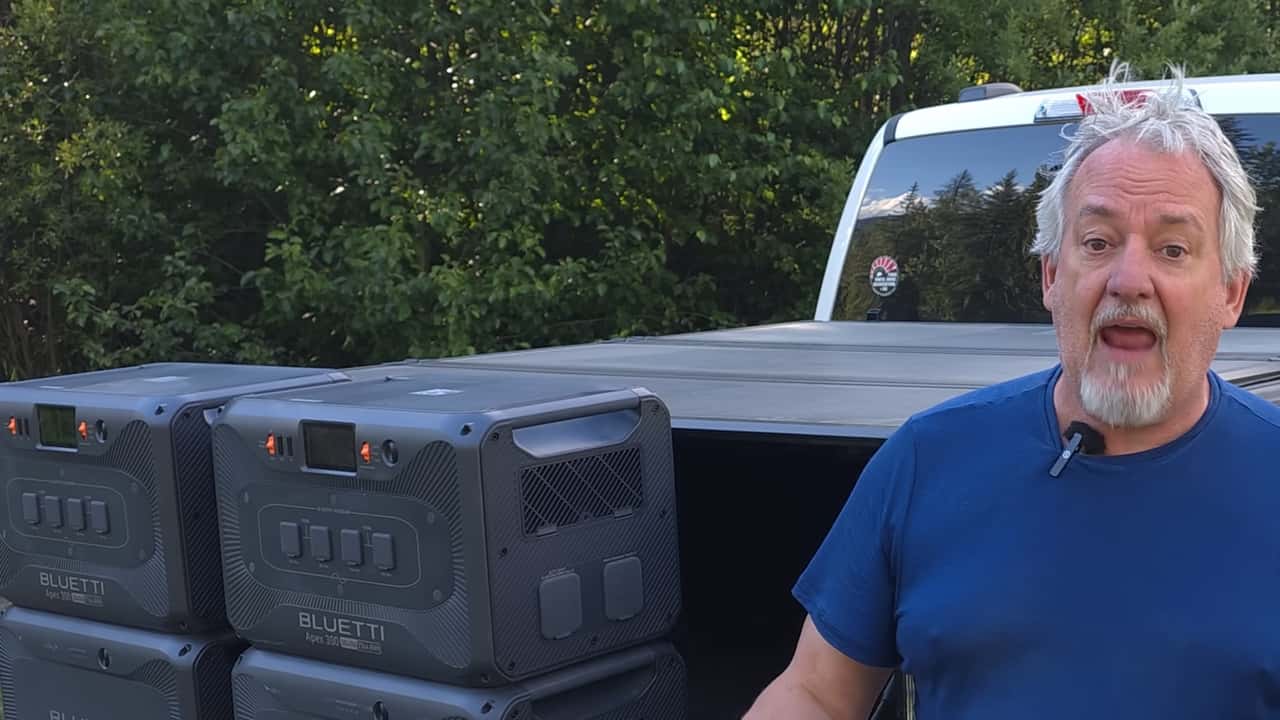

- A YouTuber found a way to power his truck with portable battery banks.
- The battery packs were hooked up to a new prototype product that links the batteries into the truck's AC charging system.
- Here's how it affected the overall range.
Extended Range EVs are all the rage right now. BMW did it, Chinese automakers are doing it, Scout even prioritized it over BEVs. Arguably, it might just be the next evolution of what hybrids will become. But what about existing EVs on the road?
It turns out that range anxiety sparked some innovation in the EREV industry. And Simon Lindley of the Trucked Up EVs YouTube channel wanted to test if a new product could enable him to turn his Ford F-150 Lightning into a makeshift EREV by charging the truck with big battery banks while he drives.

Now, I know what you're thinking. We're not talking about rigging up some plug to the vehicle's charge port as it drives down the road. Instead, he's using a prototype system called EverDrive that taps directly into the car's high voltage system.
Essentially, the system adds an auxiliary J1772 port to the vehicle. The F-150 Lightning has the port mounted in the bed by drilling a hole in the bed liner and the adjoining power cables snaked below the truck. Next, the cables are run to the front of the truck where it's spliced into the EverDrive prototype and, ultimately, the truck's onboard chargers using a series of relays and a micro controller.
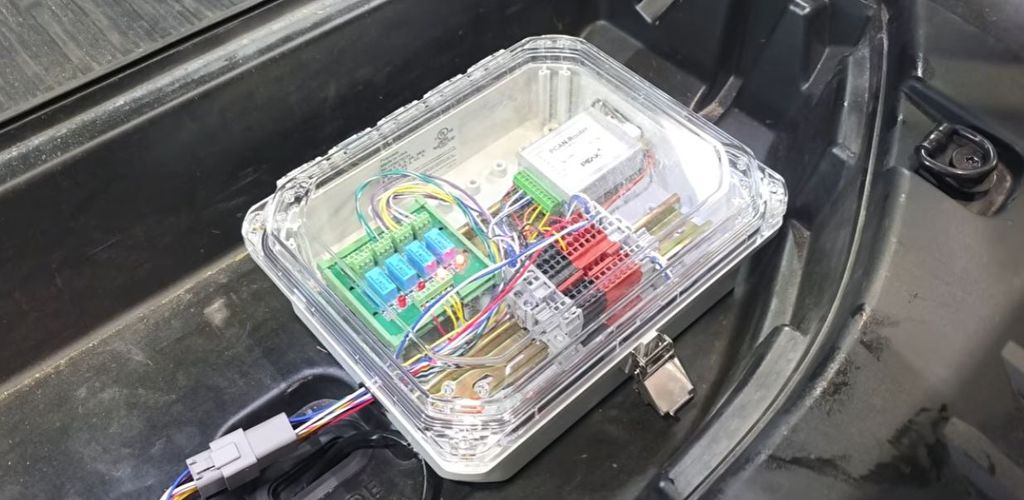
The "brain" of the system is a microcontroller manufactured by PEAK. The controller sends custom-programmed CAN messages to the truck, which, when combined with the relays, is the secret sauce that allows the system to charge the truck while it's being driven.
Now that the system is installed, Lindley packed the bed of the Lightning with 16k Wh worth of Bluetti battery packs and set off on a drive to test the system out.
Don't get it twisted, this isn't a cheap project. The battery system alone cost around $7,500 from Bluetti directly on its U.S. site, though Lindley shows that he paid about $5,300, or $7,499 CAD, for the system. Then there's the EverDrive system, which isn't yet available, though a post on Facebook from the creators say that they are targeting a price of around $2,000 when it is released.
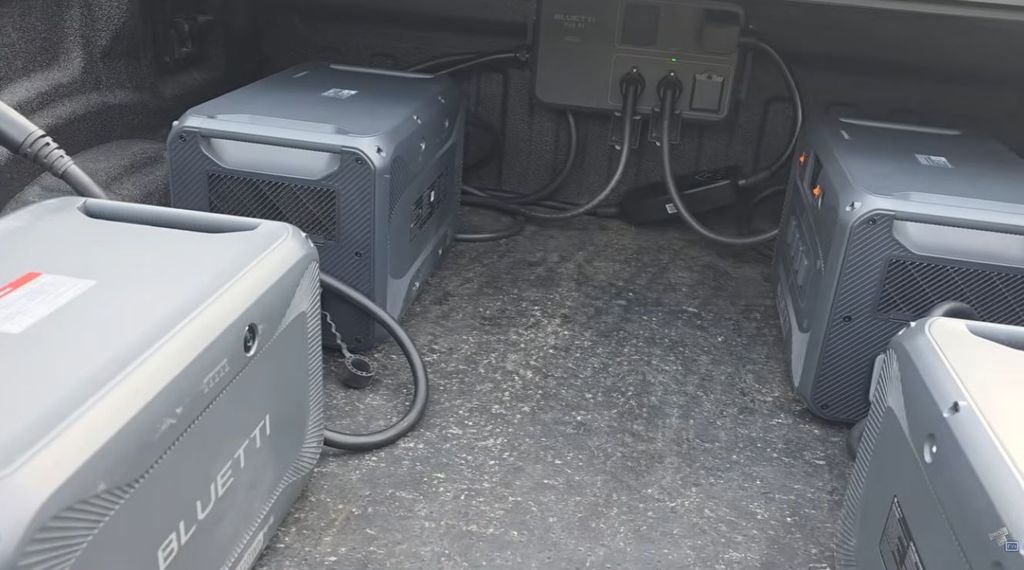
That's $9,500 for an extra 15.8 kWh—plus the add-on solar panels that Lindley has using to feed his batteries. For comparison, the cancelled Tesla Cybertruck range extender was estimated to cost $16,000 for an estimated 47 kWh of battery power.
Lindley's test didn't exactly go as planned, in-part because his battery storage configuration didn't drain as expected and became imbalanced (leaving about 8% of the Bluetti's power unable to be delivered to the truck).
It's far from a failure, though. Lindley sat down and crunched the numbers to figure out just how much more juice he squeezed from the batteries and what range that netted him on his road trip. In all, Lindley estimates that the battery setup gave him an estimated 34 miles of extra driving range on his trip.

Sure, that might not seem like a lot, but that's not the point. The EverDrive system opened up the F-150 Lightning's ecosystem to the aftermarket community and those who like to tinker. In an emergency, hooking up a generator or battery system like Lindley did could be beneficial.
Is is worth nearly $9,500? That's for you to decide—but the cool factor is definitely worth something.
More EREV News
RECOMMENDED FOR YOU

Buying A Ford EV Still Comes With A Free Home Charger
The SkyNomad N90 Is Xiaomi’s Gas-Burning Adventure Rig
The Best EV Lease And Finance Deals In July 2026
What's The Best EV We've Ever Tested?
Ford’s $30,000 Electric Pickup's Size, Explained
The Rivian R2 Is Getting Launch Mode. It'll Be Quicker Than A Tesla Model Y Performance
Ford Recalls 43,000 Mustang Mach-E EVs Over Diffs That May Go ‘Bang’