
The EU Wants To Use Satellites To Automatically Prevent Your Car From Speeding: Report
If the satellite-based detection system realizes your car is speeding, regulators want it to automatically reduce your car's power output.
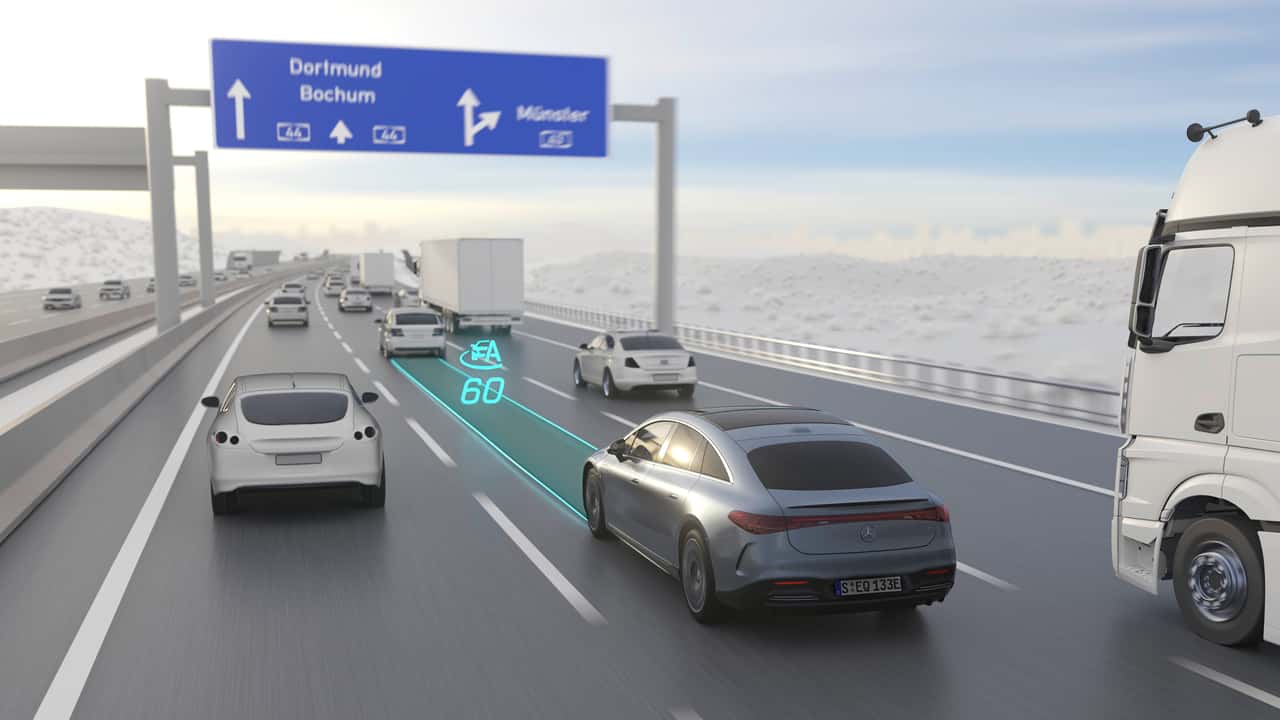

- The EU is exploring satellite-enforced speed limits, but there is no official plan to mandate them yet.
- Current ISA systems already misread speed limits, which becomes a bigger issue if cars can slow themselves down.
- Public backlash could be strong if the EU officially announces these new speed limits.
The Intelligent Speed Assistance (ISA) system is mandatory on all cars sold in the European Union. It displays the speed limit, emits a sound if you go over, and adjusts your speed on cruise control. But the EU wants to go further by mandating that all cars sold after 2030 have a satellite-enforced speed limit, The Daily Mail reported last week.
The proposal reportedly under consideration aims to go beyond simply having the car tell you the speed limit. Instead of simply warning drivers, the system could use satellite positioning and onboard sensors to determine the car's location, compare it with the local speed limit, and reduce power if the driver is speeding.
Supporters believe this kind of technology could significantly reduce road casualties. But drivers likely wouldn't welcome it.
Today’s ISA systems typically use a combination of cameras, GPS data, and maps to determine the speed limit. Since July 2024, all new cars sold in the EU have had to be fitted with ISA. In its current form, drivers can override or disable it, although it typically turns itself back on whenever the car restarts.
These systems usually work well enough as a warning layer, but they are not infallible and sometimes do get the speed limit wrong. That can be significant in a car that is no longer just telling you what it thinks the speed limit is, but actively enforcing it. A misread sign or a bad map update is annoying today, but it could become a safety problem tomorrow if this technology is implemented.
The obvious nightmare scenario is a car traveling at highway speed suddenly deciding it has entered a 30 mph zone.
Thatcham Research, cited in the original report, warns that the current approval test does not fully reflect how these systems behave in the real world. A car can pass the EU’s distance-based ISA test while still making repeated mistakes at actual speed limit changes.
Under the current EU approval process, ISA systems are judged by their accuracy over a driven distance, but Thatcham says that does not reflect what drivers experience when the limit changes. In its real-world testing, the worst-performing car scored 91.3% accuracy by distance, but only 74.3% when judged at each speed-limit change, meaning it showed the wrong limit roughly one time in four. Even the best car fell from 98.39% distance-based accuracy to 90.3% event-based accuracy.

Thatcham also found cars displaying impossible speed limits in the UK, such as 5 mph and 100 mph, warning that repeated errors can make drivers stop trusting (and using) the system. That is bad enough when the system only alerts the driver, but it becomes much more serious if it can slow the car down.
The EU has already required new cars to carry more safety tech, including speed warnings, drowsiness detectors, distracted driving warnings, and event data recorders. It now even mandates that all new cars come with wiring for an alcohol-detecting interlock. Consumer groups, automakers, and enthusiasts have all decried these proposals as "nanny tech" and pushed back against what they consider overreach.
That makes it unclear whether Europeans would accept this proposal. The EU has no official plan to mandate satellite-enforced speed limits yet, and if it ever tries, it will potentially face serious political and public pushback. Drivers already complain about cars that beep all the time; they will really dislike cars that force them to slow down, even more so if it’s to adapt to an incorrect speed limit.
RECOMMENDED FOR YOU

Another Chinese EV Player Just Landed In North America
The Cadillac Optiq Is Getting A China-Developed EV Platform: Report
Fiat's $13,995 EV For America Is Cute, But Barely A Car
The Best EV Lease And Finance Deals In July 2026
The Alpine A110 EV Has One Job: Prove Electric Sports Cars Can Be Light
Ford Recalls 43,000 Mustang Mach-E EVs Over Diffs That May Go ‘Bang’
Mercedes' New Production Plan Could Make The 'Baby' G-Class EV Far Cheaper