
This Flaw Keeps Sabotaging Solid-State Batteries. Scientists Found A Solution
Tiny metal spikes can short-circuit a solid-state battery. Researchers at MIT found a way to avoid them.
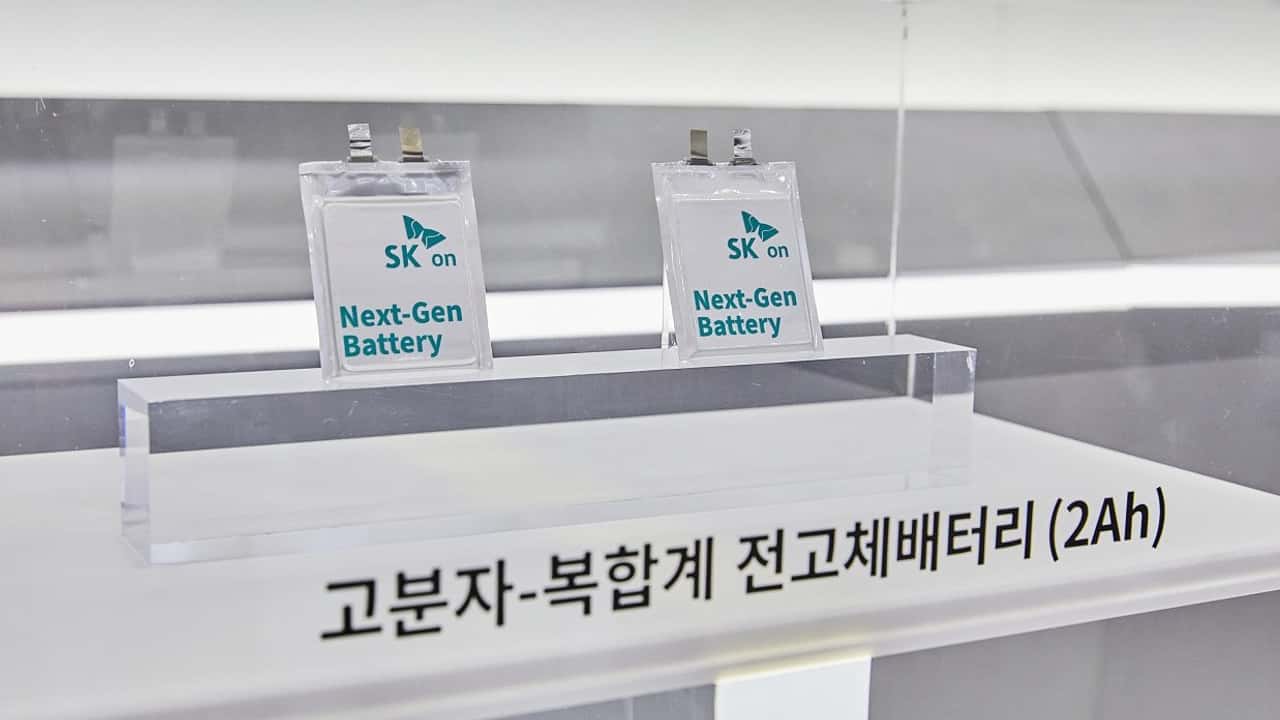

- Solid-state batteries suffer from a key technical challenge that can cause them to short circuit.
- Researchers were able to diagnose the root cause, and develop a solution for it.
- Solid-state batteries promise to revolutionize electric vehicles, but have remained largely elusive.
Solid-state batteries have spent years stuck in an all-talk, no-show phase. We hear about breakthroughs constantly, yet there's still no production electric vehicle on the road that's actually available for you to buy. But researchers haven't given up, and a new MIT study might explain why solid-state batteries keep stalling out, and what can be done to make them viable.
Automakers say EVs powered by solid-state batteries can drive farther, charge faster, and eliminate the fire risk that comes with liquid electrolytes. But their development has seemingly been moving at glacial pace, and one of the reasons is a stubborn defect called dendrites, the tiny spikes of lithium metal that grow inside the battery, causing damage.
Researchers at MIT and the Technical University of Munich say they've pinned down a major cause of these metal spikes and a potential solution to prevent their growth.

QuantumScape QSE-5 solid-state battery cell
They say solid electrolytes—the material that facilitates the movement of ions between the anode and cathode—are made of countless microscopic grains packed together. Each one of these grains is separated by what they call a “grain boundary.” Those boundaries are apparently a big part of the problem.
In a paper published in the academic journal Nature Nanotechnology, the researchers wrote that grain boundaries carry a hidden electrical imbalance, which makes it harder for lithium ions to move within the battery and causes electrons to gather at these boundaries, leading to an imbalance that promotes dendrite formation.
"Grain boundaries are like the weather," Harry Tuller, a materials science professor at MIT, said in a blog post. "Everyone talks about it, but nobody does anything about it. In this paper, we've decided to do something about grain boundaries."
The team studied a solid electrolyte called “lithium lanthanum zirconate” using AI and other specialized techniques to map how current flows across these boundaries. Once they understood the imbalance, they adjusted how the electrolyte is processed to minimize damage, allowing lithium ions to move more freely without dendrite formation and reducing energy loss.
The payoff was apparently huge, with a current density more than “300% higher than a baseline sample.” In other words, the battery can charge and discharge faster than traditional solid-state designs, and also has a longer usable life.
Factorial Energy solid-state battery cell
To be clear, this was a lab experiment. Automakers and battery companies are working on their own proprietary solutions to remove the defects in solid-state batteries before readying them for mass production in EVs and other applications.
These tiny metal spikes aren’t the only obstacle for broader growth of solid-state batteries. Experts have previously told InsideEVs that bringing costs down and manufacturing these batteries at scale without defects are also big challenges that battery companies are trying to overcome.
Still, discoveries like this suggest there might be more than one way to eventually make solid-state batteries work. If battery makers are stuck, it can provide them with a blueprint to work from, and potentially even bring this elusive technology to the market.
Contact the author: suvrat.kothari@insideevs.com
Related Stories
RECOMMENDED FOR YOU
Why The Slate Truck Will Use LFP Batteries After All
Another Chinese EV Player Just Landed In North America
Honda Has A New Partner For Solid-State EV Batteries
2028 BMW iX5 Hydrogen: Why BMW Won't Give Up On A Technology Stuck In Neutral
Forget Solid-State. This EV Battery Breakthrough Is Ready To Upend The Market Now
Fiat's $13,995 EV For America Is Cute, But Barely A Car
The 2027 BMW iX5’s Monster Battery Pack Dwarfs The Competition