
California's New EV Incentive Is Almost Here—With Special Benefits For Rivian And Lucid
One key restriction on the $135 million incentive program won't apply to vehicles from California-based EV brands.

- California's lawmakers and governor have agreed to spend $135 million on new electric vehicle incentives.
- The program will be available only to first-time EV buyers.
- Price caps are $50,000 for a new vehicle and $25,000 for a used one, but those don't apply to California-based EV companies.
With the federal EV tax credit of $7,500 long gone, California is working up a program to fill the gap. The state's lawmakers and governor have agreed on a new budget that includes $135 million for a new EV incentive for car buyers. Bills are working their way through the legislature now.
The discounts will be available as cash on the hood, meaning buyers and lessees won't have to apply for a tax credit later on. They'll be reserved only for first-time EV buyers, "as confirmed by a buyer attestation," the bill outlining the program says. Similar to the latest version of the federal EV tax credit, there will be price caps.

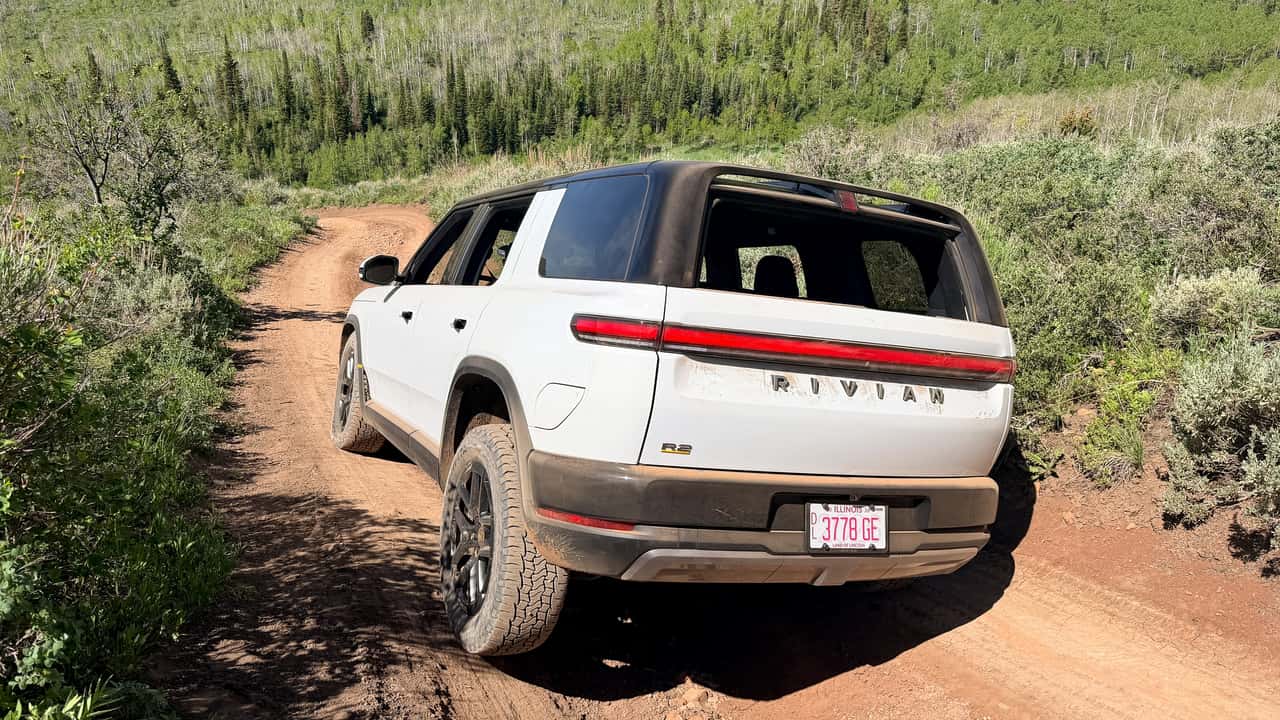
2027 Rivian R2
A qualifying new EV's manufacturer-suggested retail price can't exceed $50,000 in order for it to quality. And a used EV can't sell for more than $25,000. But there's a wrinkle to those rules, and it's good news for anyone looking to save a bit on a vehicle from one of America's EV startups. Here's the full text of the relevant section:
(1) An incentive shall not be provided under the program for a new vehicle with a manufacturer’s suggested retail price exceeding fifty thousand dollars ($50,0000) [sic], or for a used vehicle with a sales price exceeding twenty-five thousand dollars ($25,000).
(2) Notwithstanding paragraph (1), incentives under the program shall be provided to California-headquartered zero-emission vehicle companies regardless of the vehicle manufacturer’s suggested retail price or sales price.
So a used or new SUV or truck made by Rivian, which is based in Irvine, would qualify for the incentive, despite the fact that Rivian doesn't sell a new vehicle for less than $50,000. At launch, the R2 costs $57,990 for the Performance model with Launch package, though an entry-level version is on the way for $45,000. Lucid, headquartered in the San Francisco Bay Area, will also benefit from the carve out. Its Air sedan and Gravity SUV start from $70,900 and $79,900, respectively. A smaller, lower-priced crossover called the Cosmos is supposed to start shipping in the U.S. next year.
Tesla was founded in Silicon Valley and still makes cars at its original Fremont, California, factory. But in 2021 Elon Musk moved the carmaker's headquarters from Palo Alto to Austin, Texas, so it won't get the benefits of the special carve-out. Many versions of its new cars fall under the price cap anyway.
But Tesla and other automakers may take issue with the special status given to California-based companies. State lawmakers seem to expect some pushback, clarifying in the bill: "If a court of competent jurisdiction holds that the application of paragraph (2) is invalid, the remainder of this section shall remain in force and effect as if this section had not included paragraph (2)."
2026 Lucid Gravity
Since President Trump took office, the government has erased most policies that were pushing for cleaner vehicles at the federal level. Congress gutted fuel-economy rules by dropping the fines to automakers to zero, and the Environmental Protection Agency stopped regulating greenhouse-gas emissions from tailpipes. California, which leads the country in EV sales by far, lost its authority to set stricter rules than the EPA in a controversial move by Congress. So the state's policy requiring car companies to sell escalating numbers of zero-emission vehicles over time is off the table for now.
California Governor Gavin Newsom said the state would step in if Trump got rid of the EV tax credit, which happened in September. The federal program, which doled out $7,500 for new-EV purchases and $4,000 for used ones, would have shelled out billions through 2032.
The budget law directs California's Air Resources Board (CARB) to design the new incentive program, including the dollar amounts buyers can receive. It specifies that participating car manufacturers will foot half the bill for each incentive. In May, E&E News reported that CARB was targeting $3,500 for new vehicles ($1,750 from the state and $1,750 from the manufacturer) and half that for secondhand EVs.
EV and environmental groups praised the new EV incentive program. "Market research shows that more than 80 percent of first-time drivers who buy or lease an electric vehicle become permanent EV drivers," the American EV Jobs Alliance said on Friday, "making first-time buyer incentives one of the most efficient ways to grow long-term demand and strengthen American EV manufacturing."
California's new budget also directs $135 million to boost sales of heavy-duty electric trucks and buses.
Contact the author: Tim.Levin@InsideEVs.com
More EV News
RECOMMENDED FOR YOU
What Rivian And Lucid's Latest Earnings Say About The EV Startup Race
After Driving Over 25 Chinese Cars, These Are The 6 I Would Buy
Rivian Is Adding A Second Shift To The R2 Assembly Line. Here’s Why It Matters
The Hyundai Ioniq 5 N Has A Range Problem. Smaller Wheels Helped A Lot
EVs Don’t Need This Gas Car Feature. So Why Do So Many Still Have It?
Ford's Bronco EV Is Better Than It Has Any Right To Be. Why Isn’t It Sold In The U.S.?
The Ferrari Luce EV Proves The Haters Wrong