
I Had High Expectations For The Rivian R2. It Still Blew Me Away
Legacy automakers have been promising to match the Tesla Model Y for almost a decade. Rivian actually did it.
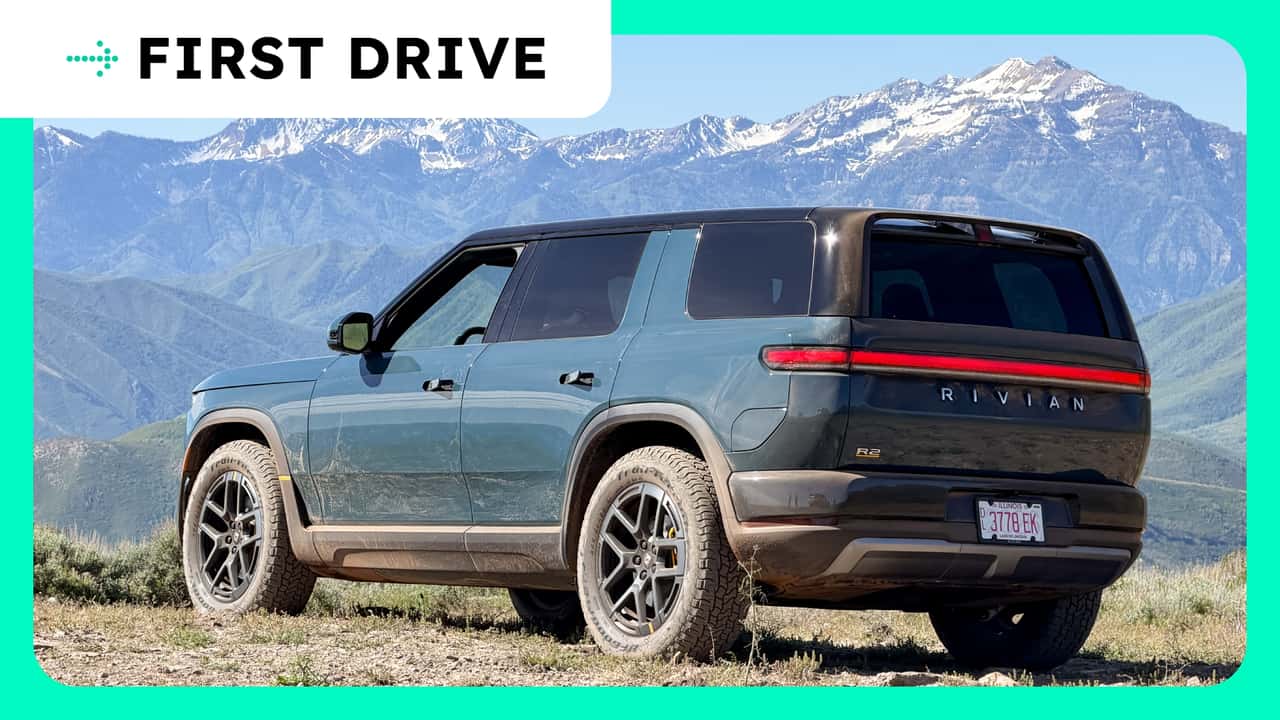

Rivian had me in its sights. When it set out to make a mass-market software-defined EV that’s as capable off-road as it is fun on-road, the company had me dead to rights. Equal parts EV enthusiast and off-roading hooligan, I’ve been waiting for something like this for a long, long time. But after plunking down $100 for a reservation on the R2, I was mostly just worried. I wasn’t sure if Rivian would hit its target.
But it did. The company struck me right through the heart. With an unparalleled blend of incredible performance, cutting-edge software, and off-road chops, the R2 is the do-everything machine I’ve always dreamed of. I want one, badly.
Let’s talk about why.
(Full disclosure: Rivian flew me to Park City, Utah and put journalists up in a swanky hotel for the launch of the R2. Meals and test cars were provided.)
Gallery: 2027 Rivian R2: First Drive

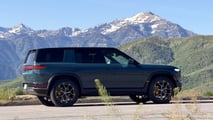
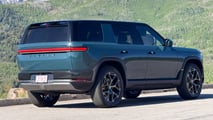
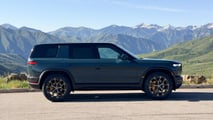
An “Impossible” Mission
Designing a car is about compromises. Being good at one thing often makes you worse at another. A car with a soft, plush suspension is usually floppy and unsettled when cornering hard. And those 33-inch tires that are awesome for off-roading? They ruin ride comfort, ding your efficiency, and make the car far louder.
So if you want to make something that’s awesome on a rutted dirt trail, comfortable on your commute to work, and fun to drive on a twisty road, you’re asking for a lot. Too much, usually.
The only vehicles that have solved this equation before have typically been nearly six-figure monsters. The Land Rover Range Rover comes to mind, but the true king is the Rivian R1. With a trick active roll stabilization system like the one you’d find in a McLaren supercar and air suspension on all four corners, the R1 can change between a 1,000-hp canyon missile and a competent rock crawler with a few taps on the screen. For the R2, the goal was to bring that do-everything competency to a much lower price point, without relying on ultra-pricey suspension tech and a blank-check approach.
The Rivian R2 isn't designed to be as capable as the R1, but it can still handle whatever dirt trails it takes to reach your favorite campsite.
“And, you know, [R2 Chief Engineer Max Koff] would say ‘that’s impossible,’” RJ Scaringe told reporters at the R2 launch. “And we’d say, ‘well, yeah, but that’s kind of the point.’ That’s what we want to deliver: A product that has so much capability that you sort of question, well, how are they doing this at this price point?”
Consider that job done. After a day of blasting up mountain roads and then crawling loose-rock dirt-trail descents, I couldn’t quite believe how well the R2 does, well, everything.
Rivian R2: Key Specs
Before I dive into its impressive display, let’s run over the basics. The Rivian R2 will eventually be offered in single-motor RWD guise with around 275 miles of range for $46,485 with destination. There’s also a pricier RWD version and what I assume will be the volume trim—the $55,485 R2 Premium AWD version—arriving later. But for now, all R2s will be Performance models with the Launch package, priced at $59,485.
R2 Performance models come fully loaded. The only options are Autonomy+ access (included with the Launch Package), all-terrain or regular tires, and certain paint colors. This one—Catalina Cove—is a $2,000 upcharge.
The Launch Package includes a dark green anodized key fob, available Launch Green paint, the tow package with 4,400 lbs of capacity, and a lifetime subscription to Autonomy+. Autonomy+ currently includes “universal hands-free,” Rivian’s lane-centering system, but will eventually offer a point-to-point, hands-off driving assistant akin to Tesla’s current Full Self-Driving (Supervised).
All R2 Performance models have the same specs regardless of whether you get a Launch Package model or a later, standard version. You’ll get 656 horsepower, 609 lb-ft of torque, and 330 miles of EPA range. With a 0-60 time of 3.6 seconds, you can comfortably blow the doors off of anything else you’ll see on a dirt trail. You’ll gap 4Runners and Outbacks so hard you’ll end up in different time zones.
2027 Rivian R2 Performance w/Launch Package Specs
How Does The Rivian R2 Drive?
The spec sheet implies a car that can match the Tesla Model Y in most EV-specific areas and outmaneuver most any other crossover off-road. After all, with 9.6 inches of ground clearance and enough torque to uproot the Chrysler Building, it’s not looking like a fair fight with your average RAV4.
But the real magic isn’t in the specs. It’s in the way Rivian ties all of this together. The car truly feels equally comfortable tip-toeing down rocky grades as it does dusting gas-powered sports sedans on tarmac. In either arena, the R2 remains quiet, composed, and generally relaxing.
That’s aided by the silent powertrain and airy cabin, which you can make all the more airy by dropping all four windows and the tailgate class with a single, roof-mounted switch. Do that, and you’ll be able to enjoy the killer benefit of the R2, and all other electric off-roaders: Effortlessly climbing through rutted trails while listening to the wind rustle the leaves and the birds call out for companionship. There’s no grumbling engine to drown out the sounds of the forest. It’s just a lovely experience.
But unlike a 4Runner or a Jeep, you don’t pay for this off-road bliss with on-road annoyance. The R2 is happy to knock off highway miles, with a hands-free driving assistant, an ultra-quiet cabin, a Dolby Atmos-capable stereo, and an utterly refined ride. Years of sampling Subarus, Toyotas, Audis, and Fords convinced me that you couldn’t get a seamless-feeling on- and off-road experience for much less than $100,000. Rivian changed my mind in an afternoon.
The drop-down rear glass is one of the best features of the R2. Plus, you can drop or raise all four windows and the rear glass with one roof-mounted switch.
How’s The Rivian R2’s Tech?
The tech in the Rivian R1 has always been considerably more polished than anything from a legacy automaker. For the American market, Rivian is really the only company that’s in the same league as Tesla when it comes to software-defined vehicles.
For the R2, the company takes a few steps forward and one step back. The control menu in the top right of the central screen has been swapped for a “fish stick” control menu on the left side, making it easier to reach for the driver. And the shortcut for settings is now contextual, which means if you have the music screen open, and tap settings, audio settings pop up. But when you’re on the navigation screen, the same button loads you right into the navigation settings.
“We’re obsessed with minimizing taps,” Rivian's Chief Software Officer Wassym Bensaid told me.
Rivian's software is as snappy and intuitive as Tesla's. But I find Rivian's graphic design to be a lot more compelling.
The R2 also gets a few handy new tricks, like a pet camera function that allows you to keep an eye on your dog when you leave them inside with pet mode’s climate function engaged. Wary of suspicious spouses and negligent parents, however, Rivian made it so the function won’t work if the car detects a human inside. Furry friends only. (Both pet mode and the pet camera function won’t be available until a month after launch, Bensaid confirmed to InsideEVs.)

And as I mentioned, the R2 is on a path towards hands-off and, eventually, eyes-off autonomy. So it gets better cameras than the R1, with a Lidar sensor coming to later-build R2s.
The R2 also gets a new onboard charger that’s capable of bidirectional charging. That means you can send a full 11-kilowatts of AC power out of the vehicle, allowing you to feed directly into home and grid power without the need for a pricey offboard inverter. It’s one of the first cars in the U.S. to offer this tech, which is fundamental to any true vehicle-to-X aspirations. Combined with a camping mode that allows you to run external power and interior HVAC all night, and an available mattress accessory for the rear cargo area, the R2 packs everything you need for a glamping adventure.
The steering-wheel mounted "Halo" scroll wheels are a neat concept, and they feel great. But they still need some more fine-tuning, as I found it hard to use them without occasional misclicks and confusion.
The one downgrade, at least for now, comes in the user interface department. Rivian has swapped the normal array of steering wheel buttons for two “Haptic Halo” scroll wheels. They’re a neat bit of technology—with the ability to click side to side, say, to skip tracks, scroll up and down, press in, and press out by clicking from behind. They’re also contextual and feel great to use, as you feel the wheel “bottom out” and add resistance when you get to the top or bottom of a menu.
But in practice, they feel like the sole rough edge on an otherwise perfectly polished car. I specifically found it very hard to click in from behind—which you need to do to, say, swap drive modes—without pushing the wheel up or down and, thus, triggering the scroll function before my rear click could register. When going hard on a back road or negotiating a technical part of the trail, I also found it easy to brush the wheels up or down when I repositioned my hand, something that doesn’t happen with traditional buttons.
Rivian also has an AI assistant available in the R1. The company says it'll be added to the R2 via an over-the-air update later this summer. The company also says an FSD-like "point-to-point" hands-free driving assistant will become available for all R2s later this year.
All of which is to confirm what most of you already know: If you want a traditionally designed vehicle complete with plenty of hard buttons and physical controls, Rivian’s corporate team would politely tell you to kick rocks. The R2 still has touch-screen-controlled vents, it still has power-deploying door handles, and it is still representative of a company that is all-in on the belief that voice commands and AI, not physical switches, are the best solutions for controlling functions in cars. If you don’t buy that, then you shouldn’t buy this.
Early Verdict: Rivian R2
The Rivian R2 arrives at a weird time for EVs, and in a hotly contested market. With the Tesla Model Y as a reigning champ with a lower starting price, and the BMW iX3, Volvo EX60 and Mercedes GLC arriving soon with 800-volt architectures and more range, some readers have publicly mused that the R2 could find itself outflanked.
I’m happy to say they’re wrong. A fully-loaded R2 Performance tops out at less than the starting price of those other cars, and while they may nail the luxury SUV brief, nothing else anywhere near this price point meshes that level of luxury with the capability of a Subaru Outback Wilderness and the performance of a sports sedan. It does everything I’d ever want to do in an SUV, and does it with more charm, more speed, and more thoughtful flourishes than any competitor.
It is not the fastest-charging, the cheapest, nor the quickest electric SUV ever made. But for my money, it’s absolutely the best. It is the holistic fulfilment of an impossible promise, and proof positive that Rivian is here to stay.
Contact the author: Mack.Hogan@insideevs.com.
Related Stories
RECOMMENDED FOR YOU
I Drove Slate’s $25,000 Electric Truck. It Could Be A Real Game-Changer
The Hyundai Ioniq 5 N Has A Range Problem. Smaller Wheels Helped A Lot
The Mercedes VLE Is A Brave Gamble. Will It Pay Off?
What Rivian And Lucid's Latest Earnings Say About The EV Startup Race
I Drove The 2027 Volvo EX60 And Think It's The Best Volvo Ever. All Because It’s Electric.
Ford's Bronco EV Is Better Than It Has Any Right To Be. Why Isn’t It Sold In The U.S.?
The Mercedes-Benz C-Class EV Is Not What I Expected