
Waymo Says Its Next-Gen Ojai Robotaxis Are Ready For Prime Time
You'll soon be able to hitch a ride in the high-tech Zeekr vans, which Waymo is using to expand its robotaxi fleet.
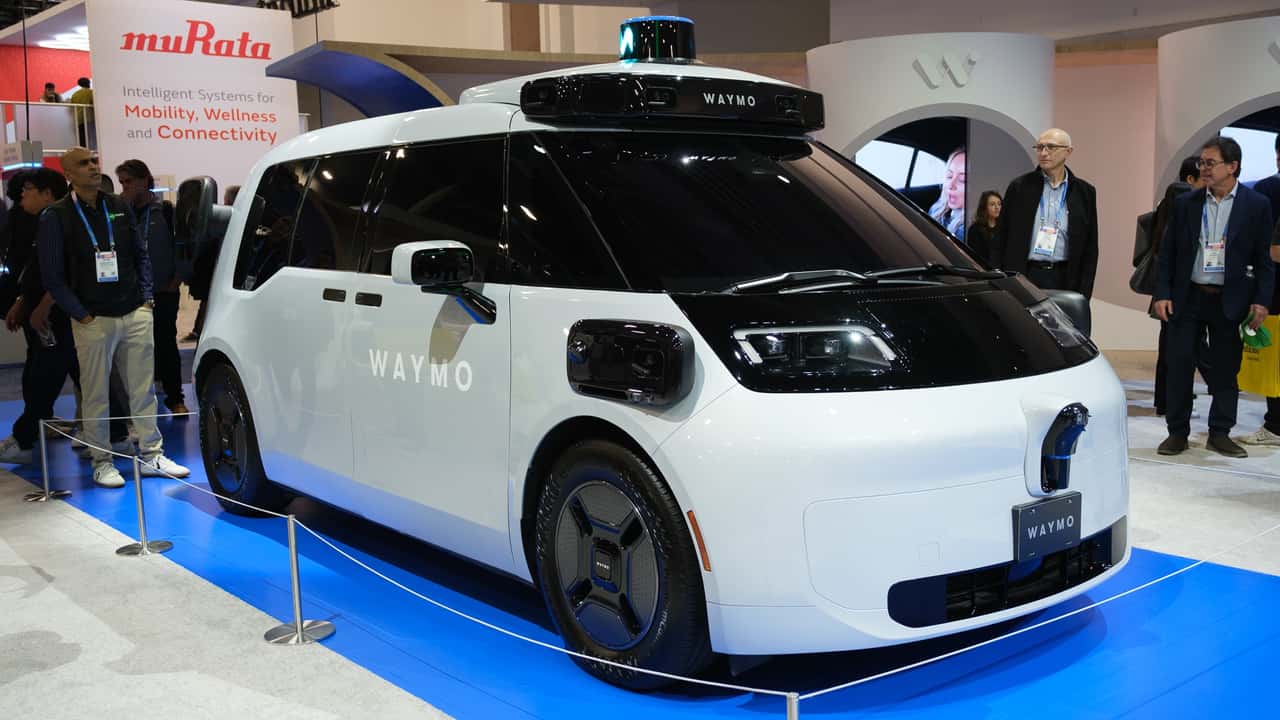

- Waymo's new Ojai robotaxis will soon be available for public rides in three U.S. cities.
- The vans are made by Chinese carmaker Zeekr and retrofitted with Waymo's proprietary hardware and software.
- The company says they will more accessible, roomier, and more high-tech.
Waymo announced Thursday that it is officially introducing its next-generation Ojai robotaxi to the public. The large, light blue electric vans will launch soon in San Francisco, Los Angeles, and Phoenix as part of a free initial program before paid rides begin.
While the current Jaguar I-Pace crossovers will continue to be in service, the Ojai should offer an improved ride experience and better performance in tricky weather, according to the company.
Waymo said the Ojai has a low step and a flat floor, with elevator-style sliding doors for easy ingress and egress. It also has a roomy cabin with large windows enabling expansive outside views.
Gallery: Waymo Zeekr Robotaxi


It will have three screens inside, one at the front and two at the back allowing riders to customize things like climate and audio. They will also be more accessible, with embedded braille and screen-reader compatibility integrated into the seat handles.
The race to deploy autonomous ride-hail vehicles is heating up in the U.S., with several players such as Zoox, Tesla, and Uber gearing up to grow their robotaxi footprint. Waymo’s expansion has been the most successful so far, with its robotaxis now operational in 11 U.S. cities with over half a million paid weekly rides.
It plans to expand to 20 more cities in the coming months. However, Waymo’s aggressive expansion has not been without hiccups. Its service was recently suspended in six cities as the robotaxis struggled to navigate flooded roads. But this year it's planning to enter markets that get regular snow for the first time.
To aid the company's ambitions, the Ojai will debut Waymo’s sixth-generation autonomous driving technology, which uses fewer sensors. It has 13 cameras, four lidars, and six radars, which Waymo says are designed to better handle harsher weather conditions, including snow.
The Waymo Driver will now use new 17 megapixel cameras, which the company claims are a generation ahead of current automotive cameras with better resolution, dynamic range and low-light sensitivity.
Gallery: Waymo at CES 2026






The Ojai is actually a heavily modified version of an EV developed by Zeekr, a premium EV brand owned by Chinese automotive giant Geely. But the custom-built version of the Zeekr RT represents Waymo's shift away from retrofitting mass-market passenger cars, and moving toward a purpose-built robotaxi fleet.
The U.S. currently has walled off Chinese-made EVs with high-tariffs, and imposes sweeping restrictions on Chinese-origin connected vehicle software and hardware. Waymo has bypassed these roadblocks cleverly, though, clearing the way for the Ojai to operate on our roads.
Zeekr builds the physical chassis (the platform, body, battery, and motors) at its factory in Ningbo, China. But crucially, Waymo says the vehicles are configured without Chinese-origin telematics or connected systems that would run afoul of U.S. restrictions. In regulatory filings, Waymo calls these unconnected “base vehicles.”
Zeekr then ships the stripped-down "gliders" to Waymo’s facility in Mesa, Arizona. There, engineers install Waymo's proprietary sensors, computing platforms, and connectivity hardware. It's a bit of a win-win for the company, as it benefits from efficient and high-tech Chinese EV manufacturing without violating U.S. regulations.
Waymo is also planning to roll out Hyundai Ioniq 5 robotaxis, which the Korean automaker assembles in the U.S. So at least theoretically, it should have fewer regulatory hurdles compared to the Chinese-built Zeekr vans. It may be a while before Waymo Ioniq 5s are available, but the Ojais are coming online much sooner.
Contact the author: suvrat.kothari@insideevs.com
Related Stories
RECOMMENDED FOR YOU
Self-Driving Trucks Are Already Hitting The Road In California
Rivian Is Recalling Over 30,000 R1S And R1T EVs Over Faulty Indicators
In A First, U.S. Clears Zoox's Steering Wheel-Free Robotaxis For Paid Rides
Home EV Charging Has A Hidden Cost. Here’s How To Reduce It And Lower Your Bill
Waymo's Robotaxis Have A Parking Problem—And It's Costing Thousands
Who Needs Leather? Bentley's First EV Will Offer Merino Wool Seats
Aurora's New Autonomous Truck Hardware Is Designed To Last One Million Miles