Home
Toyota
Highlander
News
The 2027 Toyota Highlander Gets An EV Feature Most Teslas Don't Have
Toyota is getting far more serious about EVs, and the Highlander's bidirectional charging proves it.
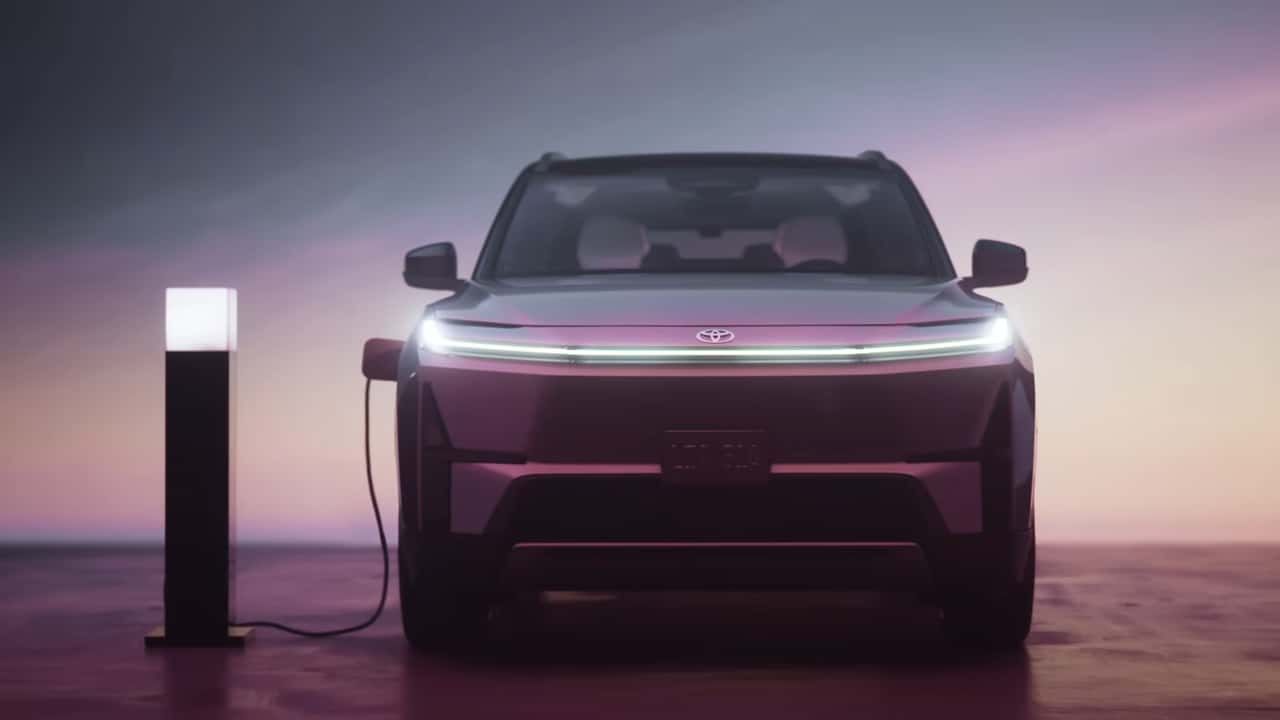
Photo by: Toyota
Tim Levin 
By: Tim Levin
Feb 12, at 2:35pm ET
Add InsideEVs as a preferred source in Google
- (https://twitter.com/intent/tweet?url=https%3A%2F%2Finsideevs.com%2Fnews%2F787176%2Ftoyota-highlander-ev-bidirectional-charging-2026%2F&text=The%202027%20Toyota%20Highlander%20Gets%20An%20EV%20Feature%20Most%20Teslas%20Don%27t%20Have&via=InsideEVs)
- copy
Share
Comment
- The 2027 Toyota Highlander is going electric.
- It'll offer up to 320 miles of range and an NACS charging port.
- It's the first Toyota EV in the U.S. to offer bidirectional charging, for backing up your home or powering other devices.
Toyota's electric-vehicle game hasn't been the strongest to date. The bZ4X arrived a few years ago to less-than-glowing reviews, and company messaging drove home the automaker's faith in hybrids as a better solution than full-on battery power.
In 2026, things are changing. An updated bZ4X, now just dubbed bZ, is on sale with more range and a Tesla-style NACS plug. The C-HR and BZ Woodland are hitting the market soon. And Toyota's making one of its most popular SUVs, the Highlander, all-electric for the 2027 model year. On top of that, the three-row EV will be Toyota's first with bidirectional charging capability.
Also known as vehicle-to-load, or V2L, the feature will allow Highlander owners to power up coffee makers on a camping trip, a TV or induction cooktop while tailgating, or a fridge during a blackout. V2L is becoming more and more popular in the EV market for good reason; if you own a giant, expensive battery, why not take full advantage of it?

The 2027 Toyota Highlander is Toyota's first EV for the U.S. with bidirectional charging capability.
Photo by: Toyota
The Highlander offers a smaller, 77-kilowatt-hour pack along with a large 95.8 kWh battery. The latter will be good for 320 miles of range in an AWD SUV, Toyota says.
It joins a growing field of V2L-capable EVs, including the Hyundai Ioniq 9, Kia EV6, Tesla Model Y Performance and Chevrolet Silverado EV.
It's still not ubiquitous, though. The Cybertruck became the first Tesla EV to offer both V2L and V2H (vehicle-to-home). The Tesla Model 3 doesn't have it at all. Neither did the outgoing Model S and Model X. Most trims of Model Y don't have it. It may be catching on more and more, but Toyota is actually ahead of the curve here.
The feature, and especially V2H, has been a lifesaver during extreme weather events across the U.S. in recent years. It's part of a wider push from automakers into home energy products. General Motors, for example, now sells stationary batteries and bidirectional charging setups that work with its EVs.
What do you think?
View
Comments
The Highlander goes on sale at the end of 2026. We expect to learn more about Toyota's bidirectional charging accessories and the SUV's V2L capability closer to then.
Contact the author: Tim.Levin@InsideEVs.com
We Think You'll Enjoy...
GM’s Next-Generation EVs Are A Big Reset. Here’s What We Know
Volvo Can Finally Build A Proper Electric Wagon. Here’s Why
We Finally Know How Fast The Tesla Semi Will Charge: Very, Very Fast
Freezing Temps Crush Range. But Kia's Newest EV Dominated This Test
We want your opinion!
What would you like to see on Insideevs.com?
Take our 3 minute survey.
- The InsideEVs team
Share this Story
- (https://twitter.com/intent/tweet?url=https%3A%2F%2Finsideevs.com%2Fnews%2F787176%2Ftoyota-highlander-ev-bidirectional-charging-2026%2F&text=The%202027%20Toyota%20Highlander%20Gets%20An%20EV%20Feature%20Most%20Teslas%20Don%27t%20Have&via=InsideEVs)
- copy
GO TO COMMENTS
(
)
Got a tip for us? Email: tips@insideevs.com
View all comments ( )
Trending
Kia EV3 Lease Deals Are Here, And It’s Cheaper Than The Chevy Bolt And Nissan Leaf
I Let Android Auto Plan My EV Roadtrip. Here’s How It Worked
This Chevy Bolt Has 470,000 Miles. Here’s How Much A New Battery Was
Here's What It's Like To Take Delivery Of A Rivian R2
latest articles
- This Chinese EV Is Now Made In Europe. More Are Coming Oct 20 - News -
- GM Is Closing Its Detroit EV Battery Plant Oct 20 - Industry -
- The 2027 Lexus NX Plug-In Hybrid Gets A Bigger Battery And Fast Charging Oct 20 - Official -
- Kia EV3 Lease Deals Are Here, And It’s Cheaper Than The Chevy Bolt And Nissan Leaf Oct 20 - Pricing -
- Here's What It's Like To Take Delivery Of A Rivian R2 Oct 19 - News -
- Used EVs Hit A Record Share Of Overall Used Car Sales In September Oct 19 - Sales -
- Nio's Little Electric Car Has A Cool Party Trick: Upgradeable Range Oct 19 - News -
RECOMMENDED FOR YOU
Toyota’s New Hydrogen Bus Has 50% More Range
Kia EV3 Lease Deals Are Here, And It’s Cheaper Than The Chevy Bolt And Nissan Leaf
Over 60% Of Toyotas Sold In Q3 Were Electrified
Here's What It's Like To Take Delivery Of A Rivian R2
A ‘Roller Coaster Ride’: What Toyota Got Right (And Wrong) About EVs, According To An Executive
Used EVs Hit A Record Share Of Overall Used Car Sales In September
‘Cannot Give Up’: Hyundai’s R&D Boss On The Solid-State Battery Bet