
China Is Cracking Down On Too-Quick EVs
Proposed legislation would lock the default 0-60 mph times behind an artificial 5-second wall.
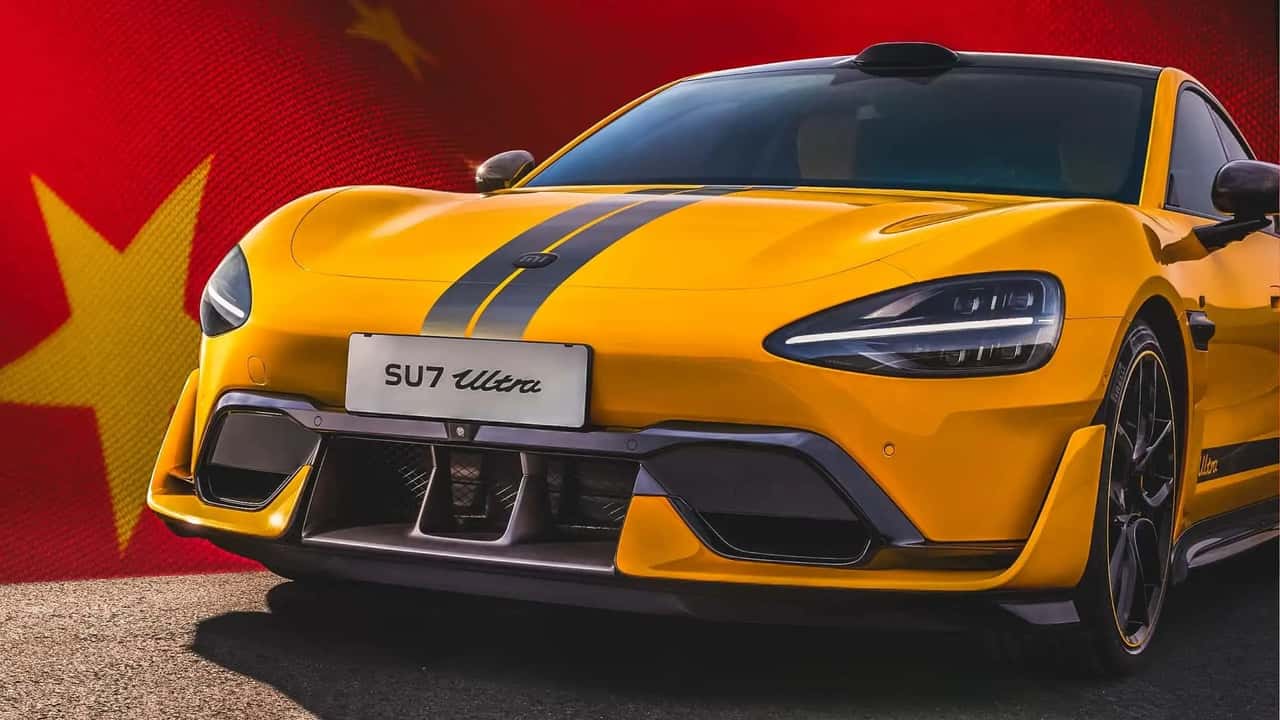

- Regulators in China are proposing limiting the zero-to-60 mph speed of cars.
- This would require owners to disable the acceleration restriction with each new drive.
- The limitation would be for all powertrains, not just EVs.
China's regulators have decided that cars might be getting a bit too frisky for public streets. No, they're not limiting how fast a car can go, but they are proposing limiting just how fast the cars get up to highway speeds with each new drive.
According to CarNewsChina, the proposed regulation would limit cars, regardless of powertrain, to a default five second zero-to-60-mph sprint. Not permanently, just at key-on when the driver might forget just how fast of a machine that they have the controls to.

The idea isn't really as wild as it sounds. And before you come at me with pitchforks raised, let me explain exactly what regulators are proposing:
After each power on/ignition of a passenger vehicle[...], the vehicle should be in a state where the 100 km/h acceleration time is not less than 5 seconds.
A better way to think of this tech might be the auto-start-stop feature of a gas car. Basically, every time you start a new drive, the car would default to the performance-bottlenecked setting. Drivers will then need to toggle on the faster performance in order to break that five-second 0-60 MPH barrier.
This would affect performance EVs sold in the market like the Tesla Model S Plaid, Model 3 and Model Y Performance, BYD Yangwang U9, Xiaomi SU7 Ultra and many others.
China's EVs won't be the only vehicles targeted with this proposed legislation either. Legacy ICE cars will also be nerfed should it become law. However, it's pretty clear that the regulation is targeted at EVs, which deliver effortless performance thanks to instantaneous torque.
The proposal is also part of a larger safety framework that would detect pedal misapplication, limit torque spikes and cut power if a car suddenly changes speed too quickly. It's effectively a way to design cars that understand human fallibility and that owners aren't always prepared for the sudden acceleration shove—or aren't always paying attention, for that matter.
While it might seem like a nuisance (anyone who has owned a car that forces you to press the auto-start-stop button at each startup understands), regulators are convinced that it will makes a big deal in crowded parking lots, city streets and places where fractions of a second could be the difference between accidentally busting through the front of a shop or being used as an intentional weapon.
But on the flip side, it almost gives companies a marketing opportunity—like a turbo or track mode that makes owners feel special by unlocking a new performance mode in their vehicle. I can imagine this would be particularly cool to tie to a physical button, though that seems unlikely given the minimalist approach many car companies are taking today.

Global regulators are watching China. Should the regulation produce meaningful data that it's increasing safety, we could easily see similar proposals pop up across the world. But mandatory acceleration limiters in the U.S.? Under this administration? It seems unlikely.
More EV Performance News
RECOMMENDED FOR YOU
Tesla Breaking Off Its China Business? Musk Calls It 'Absurdly Fake News'
I Experienced The World’s First Electrostatic Speakers In A Production Car. Now I Can't Go Back
‘Largest Supply Disruption In History’: High Oil Prices Drove Record EV Sales In 50 Countries
Florida Got $200 Million For EV Chargers. It Wants To Spend It On Air Taxis Instead
Ford CEO Thinks Chinese EVs Could Hit The U.S. Within 5 To 10 Years: Report
The Ferrari Luce EV Proves The Haters Wrong
Audi's U.S. Hybrid Push Is About To Get A Lot Bigger