
‘Don’t Replace the Whole Thing’: Tesla Driver’s Battery Makes It to 300K. Now What?
'Still cheaper than a new car.'
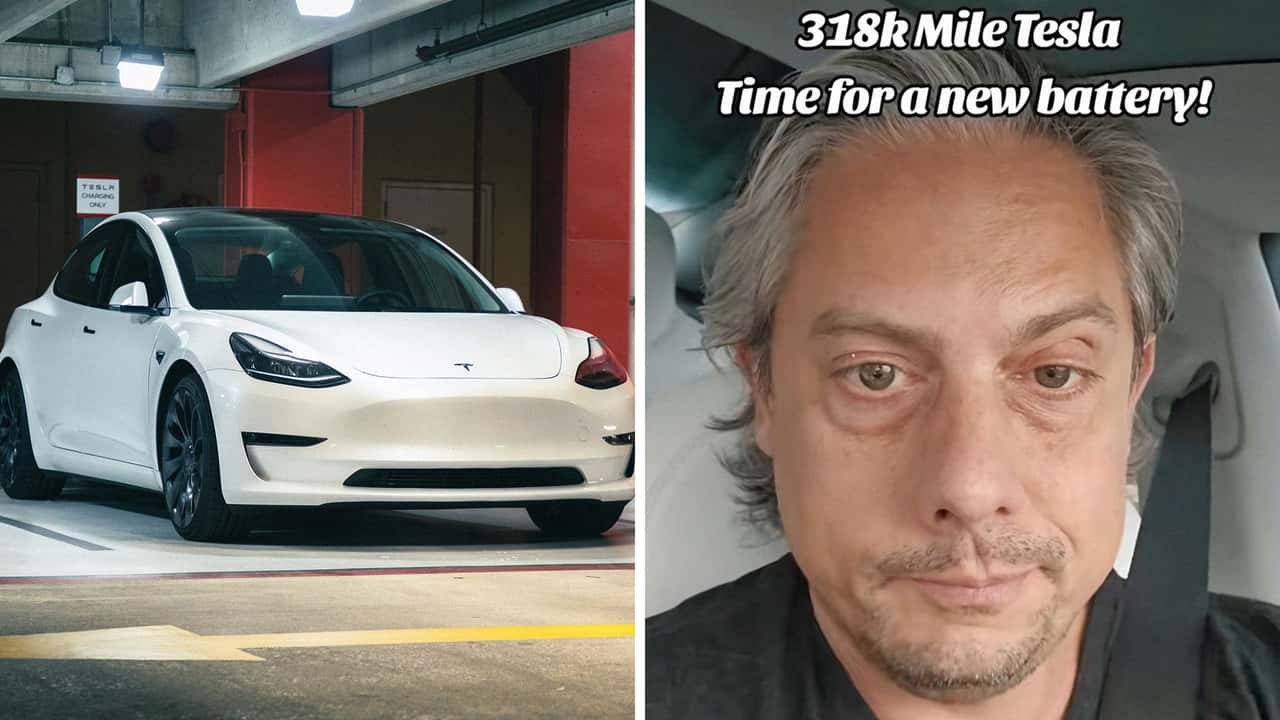

At more than 318,000 miles, the battery in one Tesla Model S is finally nearing the end of the road—but the car itself isn’t done quite yet.
In a viral clip, the owner and creator of The 300K Mile Tesla (@300k.mile.tesla) account documents a cryptic battery warning and a charging restriction that signals what many EV drivers fear: It’s almost time for a new battery. But is it worth the cost, or smarter to just move on?
After more than 318,000 miles, the car throws up a warning—BMS_A074—which restricts charging behavior and signals that internal degradation has reached a tipping point.: “Your vehicle is able to charge when the state of charge is below 50%. Charging will not start if the state of charge is already above 50%,” the alert reads.
This is a software-controlled safeguard by Tesla’s Battery Management System designed to protect a pack showing voltage imbalance or aging cells. The practical result? You can only add juice if you’re below half capacity.
Now Trending
The owner notes that at a full charge, his range now tops out around 200 miles, which is a far cry from the 265 to 300 miles his Model S likely offered when new, depending on configuration. He begins a charging session, but the rate quickly drops off and makes him unsure whether it’s worth continuing.
Though still drivable, the car is no longer predictable. Energy calculations mid-drive fluctuate, and the owner observes his projected reserve drop from 13% to 4% with 30 miles left on a trip.
FROM THE TRENDING NEWS DESK
Viral bits from across the social media landscape
Our team of experts tracks what's trending so you don't have to—from viral videos to online debates that have everyone talking.
In some followup videos, we learn that the owner has opted to replace the battery and hang onto an otherwise trustworthy car. As of the most recent clip, he was headed just outside of San Francisco for what appeared to be a third-party swap out.
This isn’t a catastrophic failure, but it is Tesla’s version of limp mode to prevent drivers from making long trips with a suboptimal battery.
Should I replace my Tesla’s battery?
For most EV owners, the term “battery replacement” can be anxiety-inducing. Replacing the full high-voltage battery pack in a Model S can run between $10,000 and $20,000, depending on battery size, service location, and labor costs. Some quotes for newer long-range packs exceed $22,000 out of warranty.
Tesla no longer offers factory refurbishments for older battery packs in most legacy Model S vehicles, leaving owners with three main options:
- Pay for a full new pack through Tesla.
- Source a used or reconditioned pack through a third-party.
- Pursue a partial repair, which is what the TikToker appears to be referencing when he says: “Don’t replace the whole thing.”
So what does that mean?
Some shops specialize in diagnosing specific battery faults and replacing only failed modules, control boards, or connectors—often at half the cost or less than a full swap.
Other options include:
- BMS board replacement
- Cooling loop or contactor repairs
- Firmware/software adjustments to re-enable charge access
Still, these aren’t officially sanctioned by Tesla and may come with limited warranty coverage, if any.
New battery vs. new car? The economic case
For Tesla owners staring down a degraded battery after hundreds of thousands of miles, the question becomes less about mileage and more about money. When a pack begins to fail through charging restrictions or diminished range, owners face three main choices: replace it, repair it, or move on.
A full battery replacement through Tesla can cost anywhere from $5,000 to $20,000, depending on the model and service location. While the investment could breathe another 8-10 years of life into the vehicle, it’s a high price to pay for a car that may already be a decade old. For owners with well-maintained vehicles and no major mechanical concerns, a new pack can restore lost range and even boost resale value. But others may hesitate, knowing the car could soon require additional high-mileage repairs unrelated to the battery.
The second option is to sell or scrap the vehicle altogether. Market value for an early model, high-mileage Tesla with a failing battery is limited. Some owners may find interest from EV conversion shops, salvage yards, or DIY tinkerers looking for parts or donor vehicles. Still, resale can be complicated if the car’s charging is already restricted, as it was in this case.
The third, increasingly popular option is to pursue a partial battery repair or install a reconditioned pack through a third-party EV specialist. Specialty shops claim high-mileage Teslas can be brought back to life for a fraction of the cost of a full pack swap, often between $4,000 and $8,000, depending on the issue.
These partial repairs don’t come with a factory warranty, and they rely heavily on the skill and reputation of the shop doing the work. For cost-conscious owners who aren’t ready to part with their vehicle, a targeted fix may offer the best return on investment, especially if they catch the problem early.
Inside EVs reached out to the owner via direct message.

RECOMMENDED FOR YOU

Tesla Is Giving Away Free Supercharging. Here's How To Win.
Slate Truck Vs. Chevy Bolt Vs. Nissan Leaf: Which Affordable EV Actually Wins?
This Ex-Rental Tesla's Battery Was Heavily Degraded. Then The Decline Slowed
The Peaq Is Peak Skoda. Too Bad America Can’t Buy It
Tesla FSD Finally Reached Europe. Now Speed Limits May Slow Its Expansion
Why The Slate Truck Will Use LFP Batteries After All
A Tesla Model Y Battery Test Looked Bad. Then The Degradation Almost Stopped