Home
Tesla
News
Tesla Apparently Ends ‘Wet Towel Trick’ At Superchargers
Years later, Tesla tweaked some things under the hood of its Superchargers. A known hack no longer works for safety reasons.
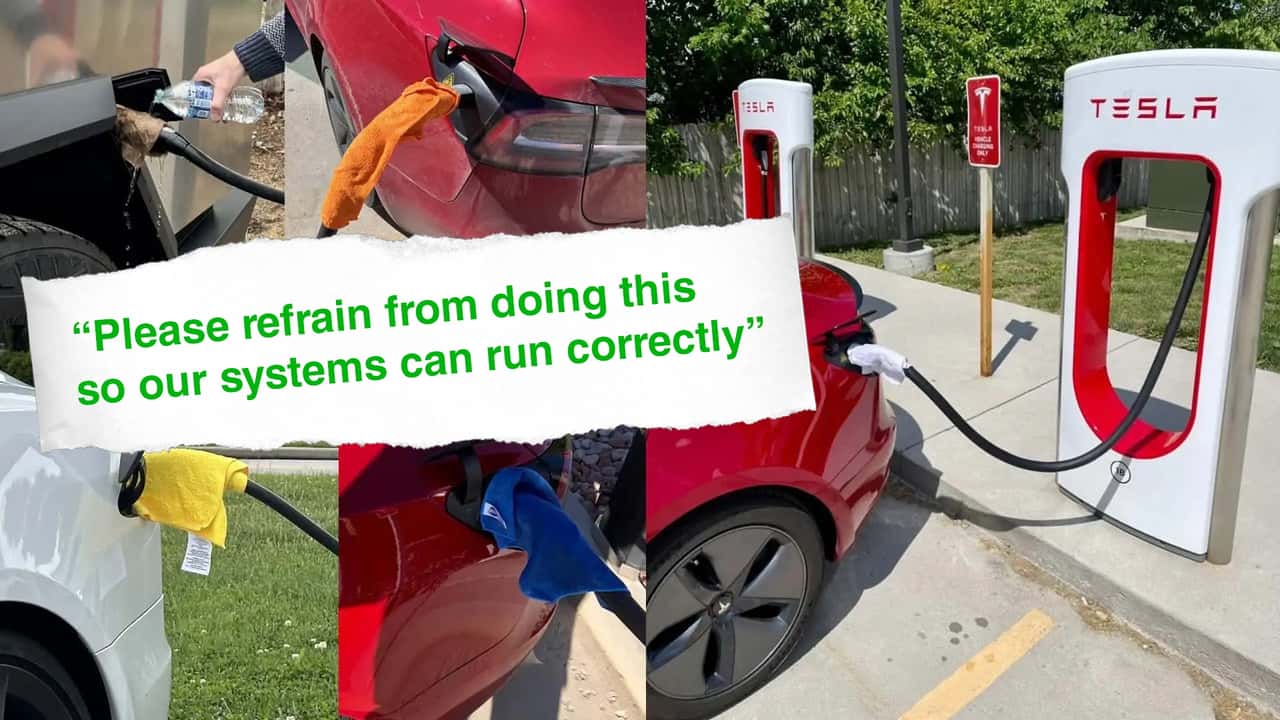
Photo by: InsideEVs
Iulian Dnistran 
By: Iulian Dnistran
Jul 29, 2024 at 7:16am ET
Add InsideEVs as a preferred source in Google
- (https://twitter.com/intent/tweet?url=https%3A%2F%2Finsideevs.com%2Fnews%2F728170%2Ftesla-wet-towel-charging-ends%2F&text=Tesla%20Apparently%20Ends%20%E2%80%98Wet%20Towel%20Trick%E2%80%99%20At%20Superchargers&via=InsideEVs)
- copy
Share
Comment
For almost a decade, some Tesla owners have been putting wet towels or other types of cloth on top of Supercharger cable handles to keep them cool on hot summer days. That trick improved charging speeds, especially at older V2 stalls, resulting in shorter stops.
While potentially dangerous because it fed a false temperature reading back to the stall, Tesla never said anything about it, even after we published our story two months ago detailing how it all started and what results some owners experienced.
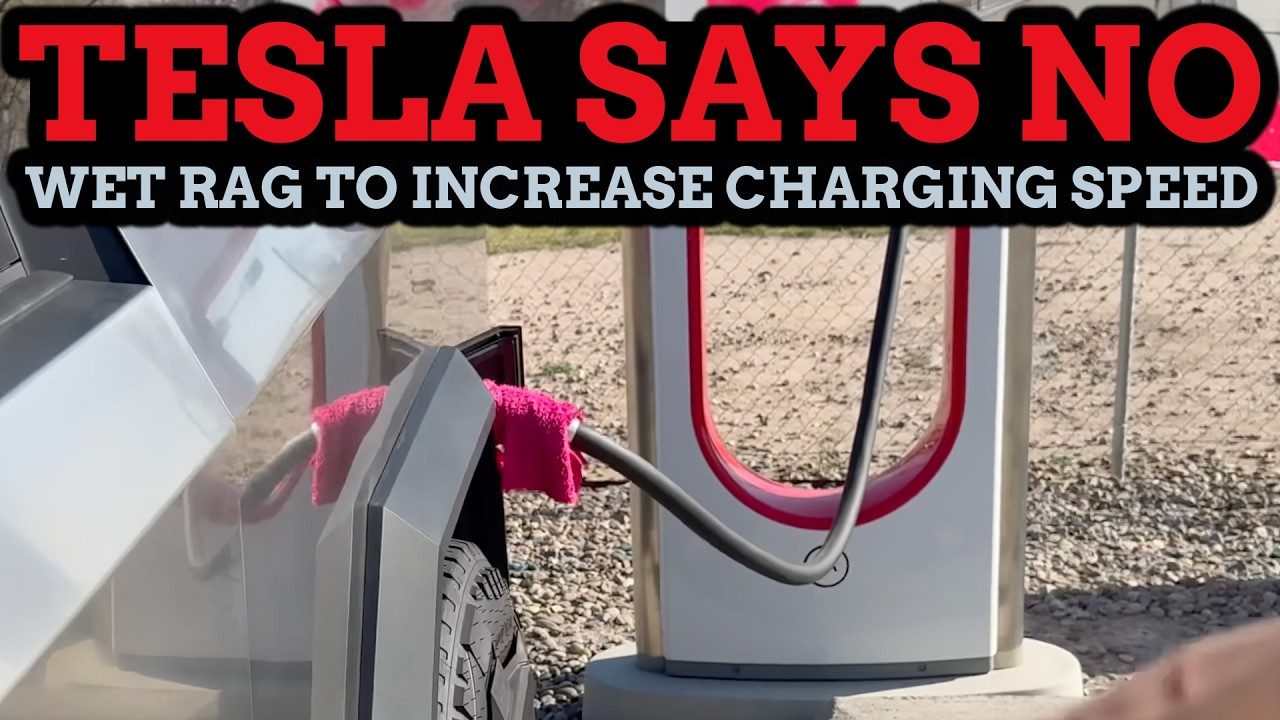
However, in a rare public response from the company’s charging division on its official X account to our May article, Tesla put its foot in the door and said that the so-called “wet towel trick” doesn’t actually increase charging speeds and that people should stop using it. Here’s what changed and what you should expect going forward.
Get Fully Charged
How the "Wet Towel Trick" worked
Tesla Superchargers have several sensors that monitor things like temperature, current and voltage. On V2 stalls, the cable handle that goes into the NACS connector on the car has a temperature sensor that can cause the station to decrease the charging speed if it senses it's too hot. This helps the handle remain cool to the touch, but as some owners figured out some eight years ago, a wet towel can lower the temperature of the handle and increase the charging speed.
“Placing a wet cloth on Supercharger cable handles does not increase charging rates and interferes with temperature monitors creating [a] risk of overheating or damage,” the automaker’s charging arm said in the X reply embedded below. “Please refrain from doing this so our systems can run correctly, and true charging issues can be detected by our systems.”
More EV Charging Stories
 Weird: Jaguar I-Pace Charges Faster If You Put The Hazard Lights On
Rivian Just Dramatically Cut Charging Time With A Software Update
Watch A Chinese EV Charge Faster Than Any American Car
Fisker Recalls Every Single Car Sold In The U.S. Again
But it only takes a few scrolls to get to the comments section and see the responses of several people who claim the contrary—that the trick does juice charging speeds. So what’s happening? In short, it used to work but doesn’t work anymore.
As avid EV and charging tester Kyle Conner from Out of Spec said in the podcast embedded below, Tesla seems to have changed the way Superchargers interpret the data from all the sensors roughly eight weeks ago, rendering the “wet towel trick” useless.
As a side effect, the stalls might lock themselves at a lower charging speed pretty early during the session and the only way to get around this limitation is to unplug the EV, drive to another stall and plug in again.
What do you think?
View
Comments
Now, many people in the comments say Tesla should either build canopies over its Supercharger locations to prevent the cable handles from getting too hot in the first place, or that the handles themselves should be improved. It’s also worth noting that V2 stalls don’t have actively cooled cables, whereas newer versions do, making the towel trick unnecessary from the get-go–unless you’re trying to recharge a Cybertruck—that needs a higher amperage compared to the rest of EVs in Tesla’s portfolio due to its 800-volt battery pack.
In any case, if you were thinking of carrying around a towel and a water bottle in your EV during hot, sunny summer days hoping you could slash a few minutes from the next recharge, you can probably forget about it. It wasn’t recommended to begin with and now it’s downright useless on Tesla’s Supercharger cable handles. The more we know, the better.

Get the best news, reviews, columns, and more delivered straight to your inbox.
back
Subscribe For more info, read our Privacy Policy & Terms of Use.
We want your opinion!
What would you like to see on Insideevs.com?
Take our 3 minute survey.
- The InsideEVs team
Share this Story
- (https://twitter.com/intent/tweet?url=https%3A%2F%2Finsideevs.com%2Fnews%2F728170%2Ftesla-wet-towel-charging-ends%2F&text=Tesla%20Apparently%20Ends%20%E2%80%98Wet%20Towel%20Trick%E2%80%99%20At%20Superchargers&via=InsideEVs)
- copy
GO TO COMMENTS
(
)
Got a tip for us? Email: tips@insideevs.com
View all comments ( )
Trending
Kia EV3 Lease Deals Are Here, And It’s Cheaper Than The Chevy Bolt And Nissan Leaf
I Let Android Auto Plan My EV Roadtrip. Here’s How It Worked
This Chevy Bolt Has 470,000 Miles. Here’s How Much A New Battery Was
Here's What It's Like To Take Delivery Of A Rivian R2
latest articles
- This Chinese EV Is Now Made In Europe. More Are Coming Oct 20 - News -
- GM Is Closing Its Detroit EV Battery Plant Oct 20 - Industry -
- The 2027 Lexus NX Plug-In Hybrid Gets A Bigger Battery And Fast Charging Oct 20 - Official -
- Kia EV3 Lease Deals Are Here, And It’s Cheaper Than The Chevy Bolt And Nissan Leaf Oct 20 - Pricing -
- Here's What It's Like To Take Delivery Of A Rivian R2 Oct 19 - News -
- Used EVs Hit A Record Share Of Overall Used Car Sales In September Oct 19 - Sales -
- Nio's Little Electric Car Has A Cool Party Trick: Upgradeable Range Oct 19 - News -
RECOMMENDED FOR YOU
Used EVs Hit A Record Share Of Overall Used Car Sales In September
The 2027 Lexus NX Plug-In Hybrid Gets A Bigger Battery And Fast Charging
The Roadster Will Have Tesla’s Most Advanced Battery Pack Yet
Kia EV3 Lease Deals Are Here, And It’s Cheaper Than The Chevy Bolt And Nissan Leaf
Tesla 'Cannot Guarantee' Your Roadster Pre-Order Will Ever Be Delivered
Here's What It's Like To Take Delivery Of A Rivian R2
Tesla Just Revealed The Roadster With A Truly Insane Demo. Here's What You Need To Know