Home
Ford
Lightning
News
Want Home Backup Power? Don't Buy A Tesla Powerwall, Buy A Truck
A comparison of the Ford F-150 Lightning to the Tesla Powerwall leads to a surprising conclusion.

Mark Kane 
By: Mark Kane
Jan 23, 2022 at 11:11am ET
Add InsideEVs as a preferred source in Google
- (https://twitter.com/intent/tweet?url=https%3A%2F%2Finsideevs.com%2Fnews%2F562428%2Fhome-power-backup-powerwall-truck%2F&text=Want%20Home%20Backup%20Power%3F%20Don%27t%20Buy%20A%20Tesla%20Powerwall%2C%20Buy%20A%20Truck&via=InsideEVs)
- copy
Share
Comment
Tesla has already installed more than 250,000 Powerwall home energy storage systems (as of November 2021), but is it a good idea to buy one or a few when you can buy an electric pickup truck?
At first, it might bring confusion as to what a pickup has to do with a stationary home energy storage system (ESS).
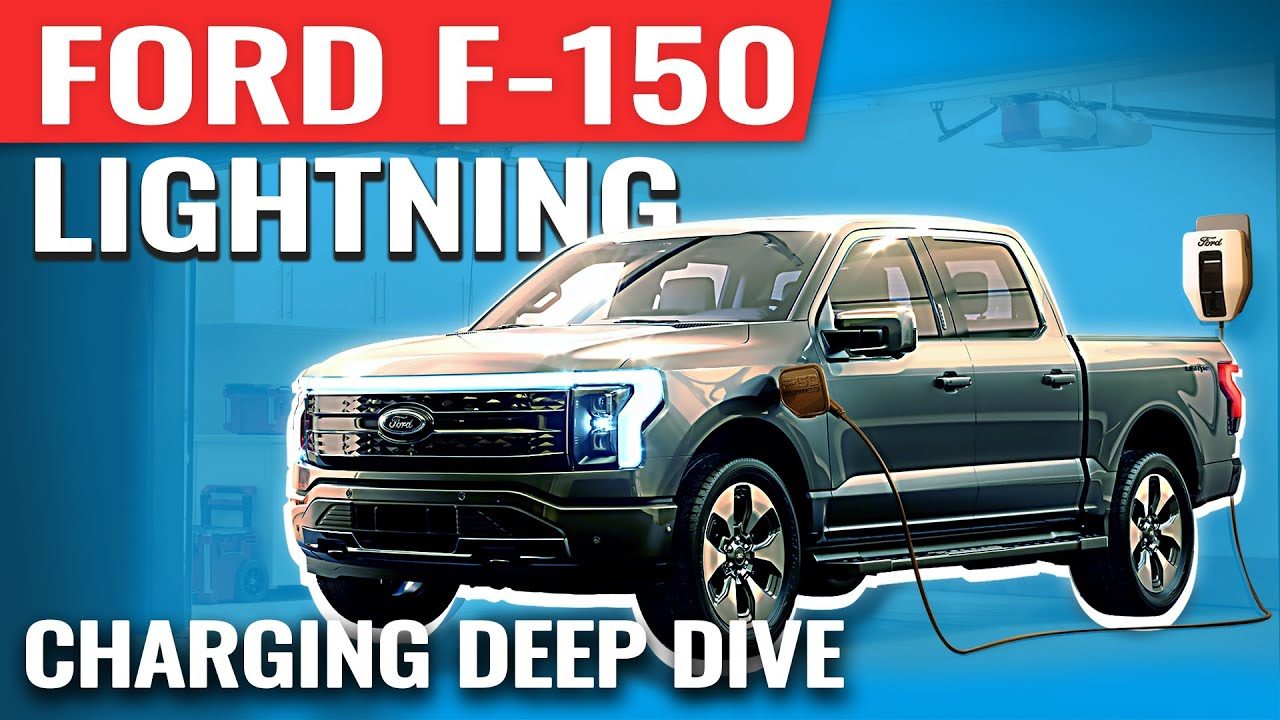
Well, the all-new, all-electric Ford F-150 Lightning offers a special feature: Intelligent Backup Power capability (9.6 kW), so it can act as a power source for the entire home (as long as there is an 80A Ford Charge Station Pro). It's an energy storage system on wheels.
In an interesting video, Engineering Explained figured out that the Ford F-150 Lightning not only can provide backup power or work together with a solar system, but it might be less expensive than multiple Tesla Powerwalls. Intriguing.
Let's do the math for a system designed to provide several days of electricity. The 13.5 kWh Tesla Powerwall cost is about $7,500 and can provide up to 5.8 kW continuous (10 kW peak backup).
In the case of the Ford F-150 Lightning (entry-level Pro), there are two battery versions:
- Pro SR: 98 kWh usable from $41,669 (MSRP + DST, without incentives)
- Pro ER: 131 kWh usable from $51,669 (MSRP + DST, without incentives)
Assuming that one would like to have a similar battery capacity, 7 Tesla Powerwalls ($52,500) would be needed as an equivalent to the SR battery, and 10 ($75,000) as an equivalent to the ER battery.
The costs of the entire system are of course higher in both cases, including one Tesla Powerwall+ with an inverter and the other infrastructure required (transfer switches and installation).
Anyway, the difference in battery cost is tremendous, respectively: $10,831 and $23,331 for a similar battery capacity that would be good for several days of backup power (without saving).
In the case of the Tesla Powerwall, the power output will be much higher - 10 kW per each unit (but actually not necessarily needed for a house). In the case of Ford, it not only cost less, but we get a fully functioning truck. One can decide whether to keep it idle/connected forever (in this theoretical example) or use it from time to time to drive.
What do you think?
View
Comments
It's quite amazing and surprising that the Ford F-150 Lightning would undercut one of the most popular home energy storage systems in the case of installations bigger than average (we guess that in most cases customers need just 1 or maybe 2 Powerwalls for basic needs and solar arrays).
If you are interested in Ford F-150 Lightning charging, check out the recent Tom Moloughney article How To Charge The Ford F-150 Lightning: Everything You Need To Know.
See also
 Ford F-150 Lightning: Everything You Need To Know Before Ordering
Ford F-150 Lightning Vs Rivian R1T: Price, Range, Specs Compared
We want your opinion!
What would you like to see on Insideevs.com?
Take our 3 minute survey.
- The InsideEVs team
Share this Story
- (https://twitter.com/intent/tweet?url=https%3A%2F%2Finsideevs.com%2Fnews%2F562428%2Fhome-power-backup-powerwall-truck%2F&text=Want%20Home%20Backup%20Power%3F%20Don%27t%20Buy%20A%20Tesla%20Powerwall%2C%20Buy%20A%20Truck&via=InsideEVs)
- copy
GO TO COMMENTS
(
)
Got a tip for us? Email: tips@insideevs.com
View all comments ( )
Trending
Lucid's $50,000 Tesla Model Y Rival Is Getting Closer To Production. Here's The Latest
Mercedes' Answer To Tesla FSD Requires Hands On The Wheel. Does That Make It Better Or Worse?
This Mercedes Went 539 Miles On A Charge. Is Range Anxiety Finally Dead?
Lucid's CEO Said The EV Startup 'Underinvested In Service.' Here's How It's Fixing That
latest articles
- The AI Boom Is Creating A New Supply Chain Headache For Automakers Nov 10 - News -
- This Mercedes Went 539 Miles On A Charge. Is Range Anxiety Finally Dead? Nov 10 - Range / Efficiency -
- Lucid's $50,000 Tesla Model Y Rival Is Getting Closer To Production. Here's The Latest Nov 10 - Manufacturing / Production -
- Mercedes’ EV Charging Network Hit 100 Locations After 3 Years In The U.S. Nov 10 - Charging -
- Lucid's CEO Said The EV Startup 'Underinvested In Service.' Here's How It's Fixing That Nov 10 - Repair / Maintenance -
- Polestar’s Next EVs Will Borrow From This Gorgeous New Concept Nov 10 - Concepts -
- PlugShare Gets A Major Redesign, Adds Dark Mode And iPhone Duo Support Nov 10 - Software -
RECOMMENDED FOR YOU
Ford's Radical New EV Manufacturing Process Is Already Building Trucks
The AI Boom Is Creating A New Supply Chain Headache For Automakers
Ford Tested 36,000 Mustang Mach-E Batteries. Here’s How They Held Up After 100,000 Miles
This Mercedes Went 539 Miles On A Charge. Is Range Anxiety Finally Dead?
They Wanted The Fiesta ST To Beat These EV Hot Hatches. It Came Last
Lucid's $50,000 Tesla Model Y Rival Is Getting Closer To Production. Here's The Latest
Ford's Privacy Promise Includes A 'Quasi-80s Mode' To Dumb-Down Connected Cars