Home
Features
Features
This Invention Spelled The End For EVs' First Golden Age
The period around World War II was a lull in EV development. But it still had fascinating experiments that feel relevant today.

Photo by: InsideEVs
Andrei Nedelea 
By: Andrei Nedelea
Sep 23, 2024 at 3:00pm ET
Add InsideEVs as a preferred source in Google
- (https://twitter.com/intent/tweet?url=https%3A%2F%2Finsideevs.com%2Ffeatures%2F733196%2Fhistory-electric-vehicles-the-downfall%2F&text=This%20Invention%20Spelled%20The%20End%20For%20EVs%27%20First%20Golden%20Age&via=InsideEVs)
- copy
Share
Comment
After several decades when electric vehicles were a real alternative to combustion engine cars, most companies that made EVs had gone out of business by the 1920s. In the 1930s, there were hardly any new electric passenger cars on offer, although you could still put in a special order for a Detroit Electric, which shipped its last vehicle in 1939.
Around that time, gasoline-powered vehicles exploded in popularity because of the proliferation of electric starter motors that eliminated the need to hand-crank engines, and as a result—not to mention a world shaken up as it prepared to eventually go to war—EV development stalled out quite a bit.
The story of the electric vehicle is one of fits and starts. The period before and around World War II falls into the former category. But that doesn't mean it wasn't full of fascinating experiments that still feel relevant today.
(Welcome to The History of Electric Vehicles, where we'll cover the many ways that EVs have been a part of more than 150 years of automotive history. In this installment, we'll look at EVs' role in the earliest days of the horseless carriage. See parts one and two.)
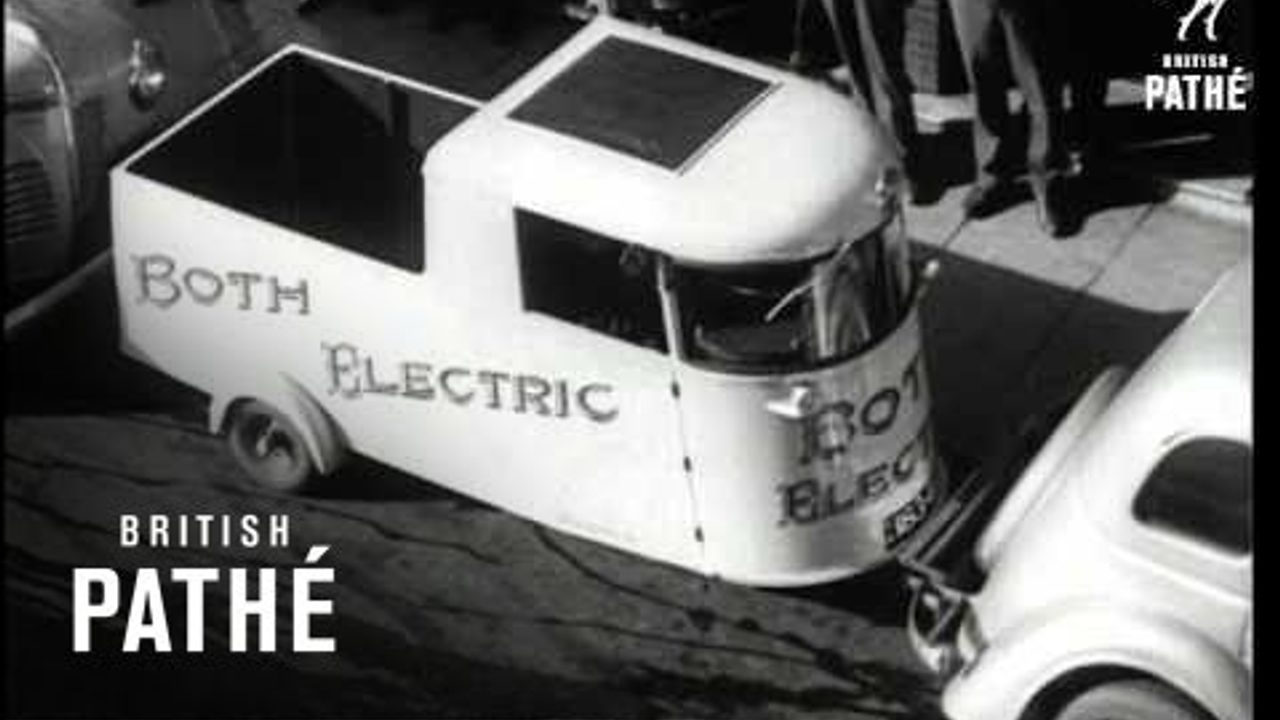
Europe: Electric Taxis And Delivery Vehicles
More electric vehicles were probably made in Europe than in the U.S. after the 1930s, although they were still present in both regions and most were small vans designed for last-mile transport duties. The German postal service had a fleet of various electric vans that it used from the 1920s through the mid-1950s when they started to be replaced by combustion engine mail vans.
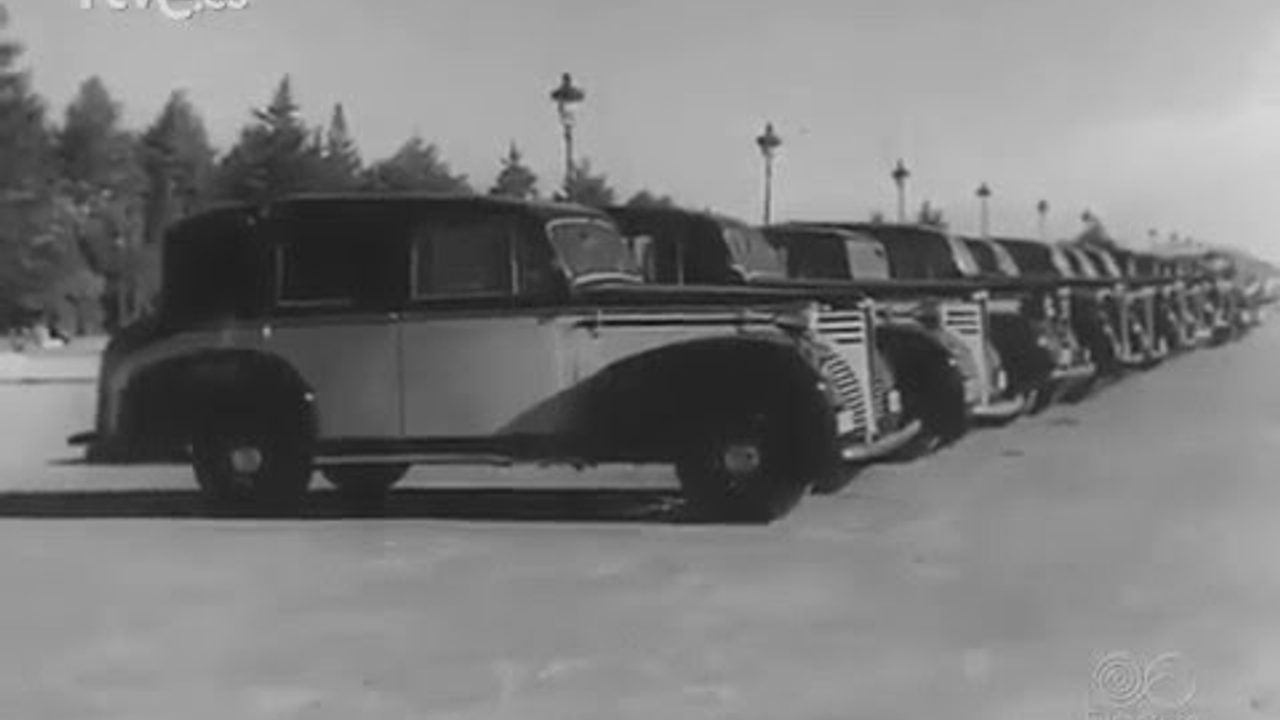
Barcelona ran a small fleet of ten electric taxis with swappable battery packs. Electric power wasn’t chosen because it was cleaner or more advanced than gasoline but rather because of the crisis that Spain was going through during that decade. It was recovering from civil war and a world war was raging in Europe, making fuel scarce and expensive.
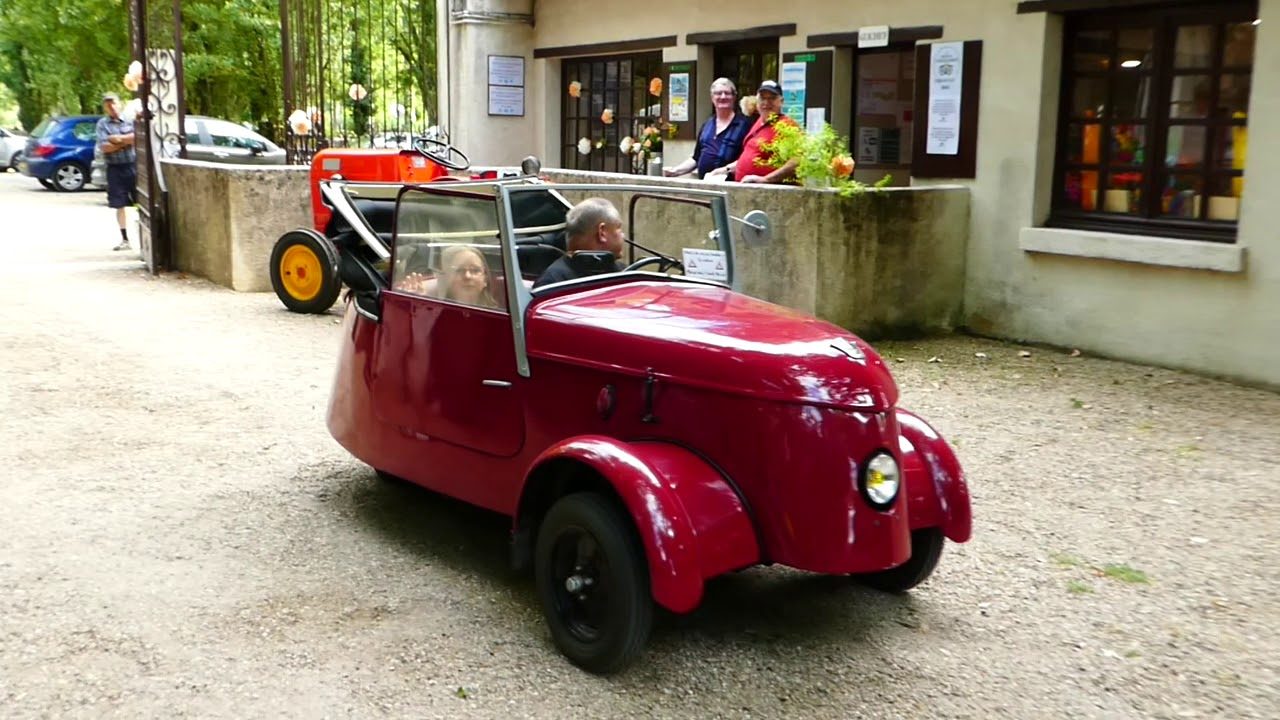
Picking up where the American EV manufacturers of the early 1900s left off was Peugeot, which today has an entire lineup of electric vehicles including a wagon. It launched its Voiture Legere de Ville (or VLV), which meant Light City Car, in 1941. It was a tiny fully electric car with a top speed of 22 mph and a range of about 45 miles.
Some 377 VLVs had been built by the end of its production in 1945. Just like the EV taxis of Barcelona, these small convertible Peugeots were electric to avoid the effects of the fuel shortage plaguing France and most of Europe at the time.
The United Parcel Service (UPS) had electric vans in its fleet in the mid-1930s. Walker Electric Trucks, a Detroit-based company that operated from 1907 to 1942, manufactured some of the fleet's vehicles. They had up to 40 miles of range and a top speed of 15 mph. Another van maker that supplied vans to UPS was the Brockway Motor Company, which produced vehicles with very similar specifications.
Two-Seat Electric Roadster, 1940s-Style
The first electric two-seater roadster with a modern layout also came from 1940s France—no, the Tesla Roadster is not a new idea. It was built in secret in 1942 under German occupation by the Compagnie Générale d'Electricite (CGE) with batteries from Henry Tudor—it was known as the CGE-Tudor electric cabriolet. It wasn’t very quick, with about 7 horsepower from its electric motor, but it looked quite sporty and was one of the first EVs that could regain energy through deceleration.
They were made electric so that they didn’t require fuel, which the occupying Germans had complete control over. Only about 200 were built in both roadster and closed configurations, but only two cars were saved, and one is on display at the National Automobile Museum in Mulhouse, France.
Nissan's EV Lead Happened Earlier Than You Think
If you think Nissan was an EV pioneer with the Leaf, just wait until you go back more than a half-century before that.
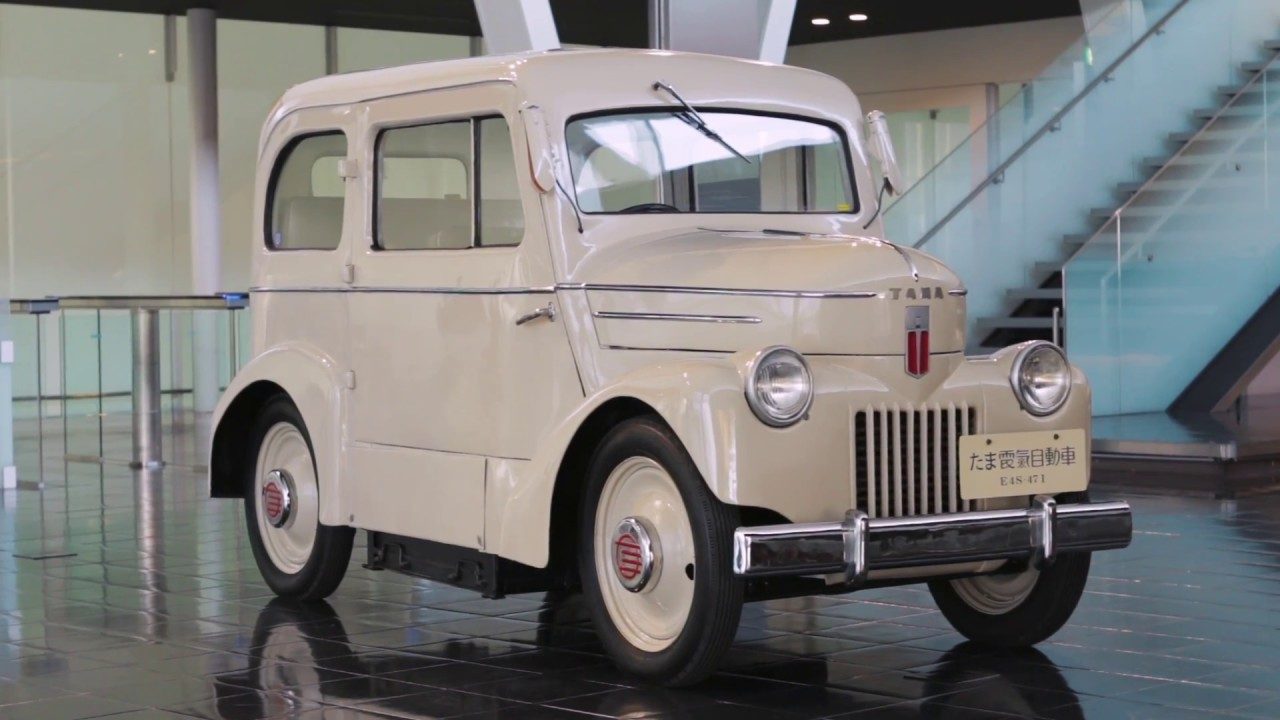
Japan actually built one of its first EVs in 1947 in the aftermath of World War II, when the country was absolutely battered by conflict and commodities like gasoline were hard to come by.
The Tama Electric Car was built by employees of the Tachikawa Aircraft Company who moved over to a new company called Tokyo Electro Automobile (which would end up merging with Nissan in 1966 and is counted among its historic achievements today.) The Tama, named after the area where the company was based, used a 6.5 kWh battery pack located under the floor of the vehicle like in modern EVs. As a kind of city car, it had a driving range of about 40 miles and a top speed of over 20 mph.

A restored Nissan Tama can be found today at the Nissan Crossing store in Ginza, Tokyo. Photo: Patrick George
Even though it only had a 78-inch wheelbase, it could seat four people and it was used as a taxi until 1951. The Tama was a reasonably popular vehicle in its time as Japan struggled to get back on its feet following the war.
What do you think?
View
Comments
But another war would ultimately consign the Tama to history. As Nissan recounts today, when the Korean War broke out, the price of lead in the region—lead that was needed to make the Tama's batteries—skyrocketed because armies needed bullets instead. The Japanese government stopped rationing gasoline by 1952, and so gas cars became dominant once again.
Did You Know?
The destruction and almost constant fuel shortage faced by the population during and right after the Second World War was what brought renewed interest in electric vehicles. However, even though going electric was a great way around it, not that many electric vehicles were actually built during the 1940s and 1950s. The EV current started taking off again starting in the 1960s.
Everrati Shows First US-Bound Porsche 911 (964) EV Conversion
Jay Leno Goes For A Ride In Tony Hawk’s Tesla-Swapped 1964 Corvette
1929 Rolls-Royce Phantom II EV Conversion By Electrogenic Revealed With 201 HP
1965 BMW 700 CS EV Conversion Heading To Auction, Could Fetch Over $31,000
We want your opinion!
What would you like to see on Insideevs.com?
Take our 3 minute survey.
- The InsideEVs team
Share this Story
- (https://twitter.com/intent/tweet?url=https%3A%2F%2Finsideevs.com%2Ffeatures%2F733196%2Fhistory-electric-vehicles-the-downfall%2F&text=This%20Invention%20Spelled%20The%20End%20For%20EVs%27%20First%20Golden%20Age&via=InsideEVs)
- copy
GO TO COMMENTS
(
)
Got a tip for us? Email: tips@insideevs.com
View all comments ( )
Trending
Kia EV3 Lease Deals Are Here, And It’s Cheaper Than The Chevy Bolt And Nissan Leaf
I Let Android Auto Plan My EV Roadtrip. Here’s How It Worked
This Chevy Bolt Has 470,000 Miles. Here’s How Much A New Battery Was
Here's What It's Like To Take Delivery Of A Rivian R2
latest articles
- How Much Range Do EVs Lose When Parked? (And How to Stop It) Oct 20 - EV 101 -
- This Chinese EV Is Now Made In Europe. More Are Coming Oct 20 - News -
- GM Is Closing Its Detroit EV Battery Plant Oct 20 - Industry -
- The 2027 Lexus NX Plug-In Hybrid Gets A Bigger Battery And Fast Charging Oct 20 - Official -
- Kia EV3 Lease Deals Are Here, And It’s Cheaper Than The Chevy Bolt And Nissan Leaf Oct 20 - Pricing -
- Here's What It's Like To Take Delivery Of A Rivian R2 Oct 19 - News -
- Used EVs Hit A Record Share Of Overall Used Car Sales In September Oct 19 - Sales -
RECOMMENDED FOR YOU
Chinese And European Car Companies Both Brought Their A-Game To The Paris Auto Show
The 2027 Lexus NX Plug-In Hybrid Gets A Bigger Battery And Fast Charging
European Car Companies Can't Compete With Chinese Tech. In Paris, They Leaned On 'Heritage' Instead
Kia EV3 Lease Deals Are Here, And It’s Cheaper Than The Chevy Bolt And Nissan Leaf
I Thought Fake Gears Made EVs Better. Then I Drove This Porsche Taycan
Here's What It's Like To Take Delivery Of A Rivian R2
The Best Electric Sedans To Buy In 2026: Top Picks For Range, Performance & Style