
Did Mercedes-AMG Just Build A Better Porsche Taycan?
The new AMG GT 4-Door EV beats the most potent Taycan variant on specs, with more features to boot.
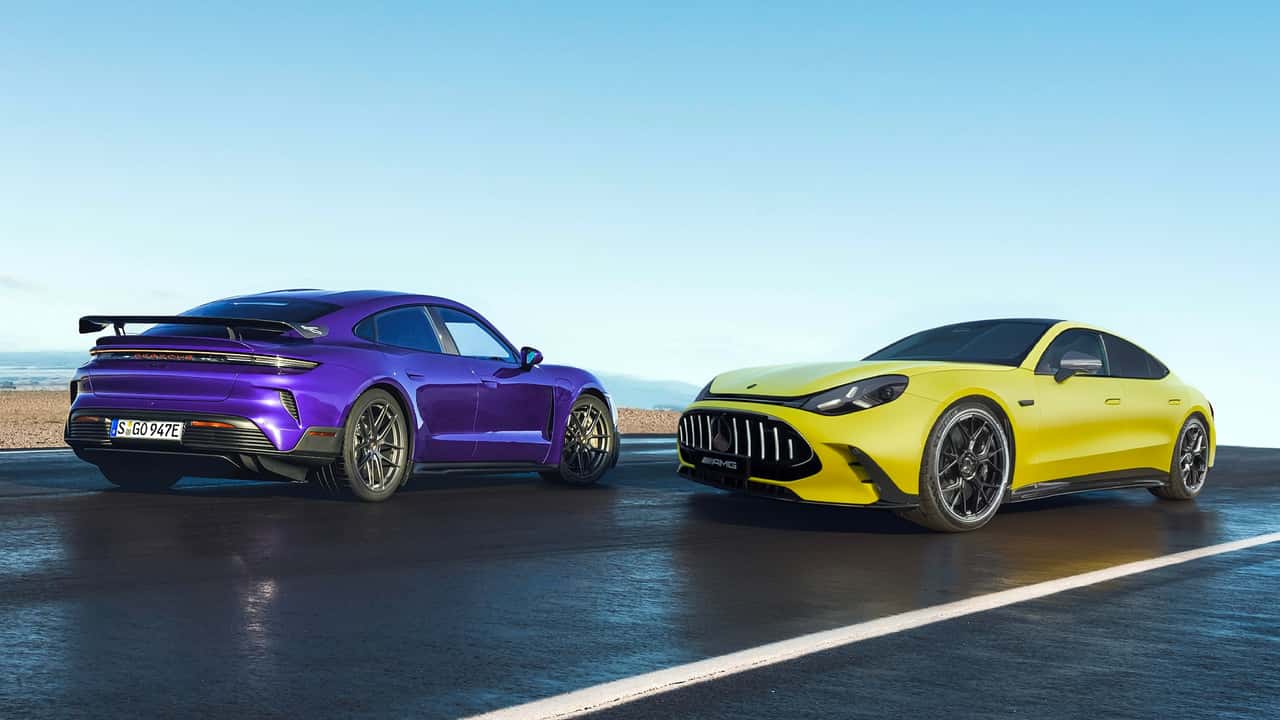

The Porsche Taycan remains one of the few electric performance cars that driving enthusiasts actually like. It sold in meaningful numbers, claimed lap records, and convinced plenty of skeptics that an EV could feel like a proper driver’s car rather than a laptop with launch control. But now it has a serious rival in the form of Mercedes-AMG’s new GT 4-Door electric fastback, which trumps it on specs and promises extra soul thanks to its simulated V-8 engine.
The AMG’s most important trick is its tri-motor layout with axial-flux motors. One motor drives the front axle, while two more sit at the rear, each controlling one wheel independently. That gives the car a much finer degree of torque control than a conventional dual-motor setup, especially when it is trying to deploy over a 1,100 horsepower without shredding its tires.
This fine torque vectoring should also make the car really playful. By varying torque across the rear axle, AMG can rely on software to get the car to rotate, hold a slide, and then claw its way out of a corner with both rear wheels doing exactly what the electronic brain wants. This should be one of the most fun EVs to drive ever.
Gallery: Mercedes-AMG GT 4-Door

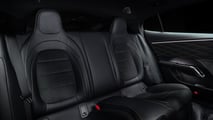
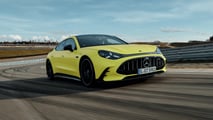
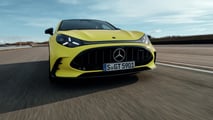
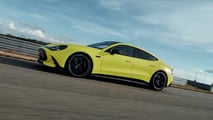
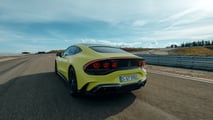
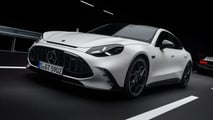
Just like the Porsche, it rides on a bespoke 800-volt EV platform. The new platform makes it the fastest-charging electric car ever made by a Western automaker—it charges at up to 600 kilowatts, good for 10-80% in 11 minutes, assuming you can find such a monstrous charger.
The Mercedes' battery pack is also a structural member of the chassis, which not only lowers the car’s center of gravity but also helps it maintain very high torsional rigidity.
On paper, the GT 4-Door EV is very similar to the Taycan, clearly showing that AMG benchmarked the Porsche during its creation. Interestingly, even though Mercedes uses a two-speed gearbox on the rear motor in many of its other new EVs, the new four-door AMG doesn’t have one, likely because of its two separate rear motors.
Porsche equipped the Taycan with a two-speed rear transmission from the start, and it hasn’t changed the formula with its 2024 update. That’s when the most powerful model, the Taycan Turbo GT, was introduced, the first variant to exceed 1,000 horsepower.

The Turbo GT is already operating near the limit of what the current Taycan platform can support. In regular driving, it is still a brutally quick 777-hp four-door. Enable Launch Control, and output rises to 1,034 hp. Activating the temporary overboost function makes the number climb again, briefly reaching 1,092 hp.
If you want a more hardcore experience, the available Weissach package ups the ante, albeit with a significant ding to practicality. It deletes the rear seats, adds more serious aero, trims weight, and gives the car a stronger track focus. This is clearly Porsche throwing everything it’s got at the Taycan to maximize its track performance.
Even with this optional pack, the Taycan Turbo GT still needs 2.2 seconds to reach 62 mph (100 km/h), a tenth quicker than a Turbo GT without the package. This means the new AMG is a bit quicker, even with its rear seats. In its most potent guise, the 63 model takes 2.1 seconds to complete the sprint, or 2 seconds flat to reach 60 mph (96 km/h).
Gallery: 2025 Porsche Taycan Turbo GT First Drive


This is thanks to more power and torque than the Taycan. The 63 model makes 1,153 hp, which isn’t much more than the Porsche, but it has considerably more torque. While the Taycan Turbo GT Weissach has 988 lb-ft (1,340 Nm), the AMG GT63 4-Door EV packs 1,327 lb-ft (1,800 Nm) of twist, which will make it even more difficult to keep your head straight under hard acceleration than in the Porsche, where your neck muscles are already struggling.
They are very similar in terms of top speed. AMG says you need the optional driver’s package to unlock the maximum top speed of 186 mph (300 km/h), while in the Taycan Turbo GT, if you select the Weissach pack, that increases the top speed from 180 mph (290 km/h) to 190 mph (305 km/h).
It’s worth noting that while the Turbo GT is Porsche pushing the Taycan as far as it will go, AMG says the AMG.EA platform underpinning the new four-door can take over 1,600 horsepower. Is this AMG hinting that more powerful variants are in the pipeline? Perhaps it may want to keep increasing the power if it wants a shot at the Nurburgring EV lap record, which Porsche recently reclaimed from BYD, though it ran a lightly modified Taycan Turbo GT (with a Manthey kit) to do so.
The Taycan isn’t the AMG’s only rival. The Xiaomi SU7 Ultra is about as close as rivals get. On paper, its 1,548 hp output and claimed 1.98 second sprint time to 62 mph put it ahead of the Germans. However, while it held the Nurburgring EV lap record before the YangWang U9 Extreme, it’s not quite as fast as the Taycan around a track, even with more power.
Mercedes-AMG hasn’t announced plans for a lap record attempt in the new four-door, but bragging rights matter in this corner of the market. We'll have to wait to see if it can claim the "fastest EV" title around the 'Ring.
RECOMMENDED FOR YOU
The Porsche Taycan’s Days May Be Numbered: Report
Geely Is Testing A Solid-State Battery With Over 621 Miles Of Range. It Could End Up In A Volvo
Porsche CEO Confirms The Electric 718 Is Still Coming
The Lucid Air Air Sapphire Beats Genuine Mid-Engine Supercars From 0-200-0 MPH
Porsche's 6,000-Pound Electric Cayenne Beats Supercars To 60 MPH
The Tesla Semi Is Heading To Europe
Used Tesla Model S Prices Have Fallen Dramatically. But Their Batteries Are Holding Up Great