
How Much Range Do EVs Lose When Parked? (And How to Stop It)
Your electric car can use energy without moving an inch. Here’s where those miles actually go and how much "vampire drain" is normal.

-
In normal conditions, modern EVs can lose 1% of their state of charge per day while parked, but it's often far less than that.
-
The main causes of "vampire drain" include security systems (like Tesla Sentry Mode), topping up the 12-volt battery, and thermal management that keeps the battery's temperature in a safe range.
-
Cold temperatures can also make your displayed range drop overnight without actual battery drain.
-
For times when you expect your EV to sit parked for an extended period, it's best to turn off unnecessary features (like Sentry Mode) and keep your car plugged in if possible.
You park your electric car with what looks like enough range for tomorrow’s errands. It stays still until the next morning. But when you get in, the display shows that you have fewer miles left than before. It didn’t move overnight, so where did the range go? And how much can you expect to reasonably lose?
Why Does an EV Lose Range Overnight?
There are two main explanations for EV range loss when parked: The car used electricity while parked, or its estimate of how far you can drive changed. Typically, both happen together. And the basics of how this happens can help you better predict and manage range loss, for example while your EV is parked for longer periods.
How Electric Cars Calculate Remaining Range (It’s Just an Estimate)
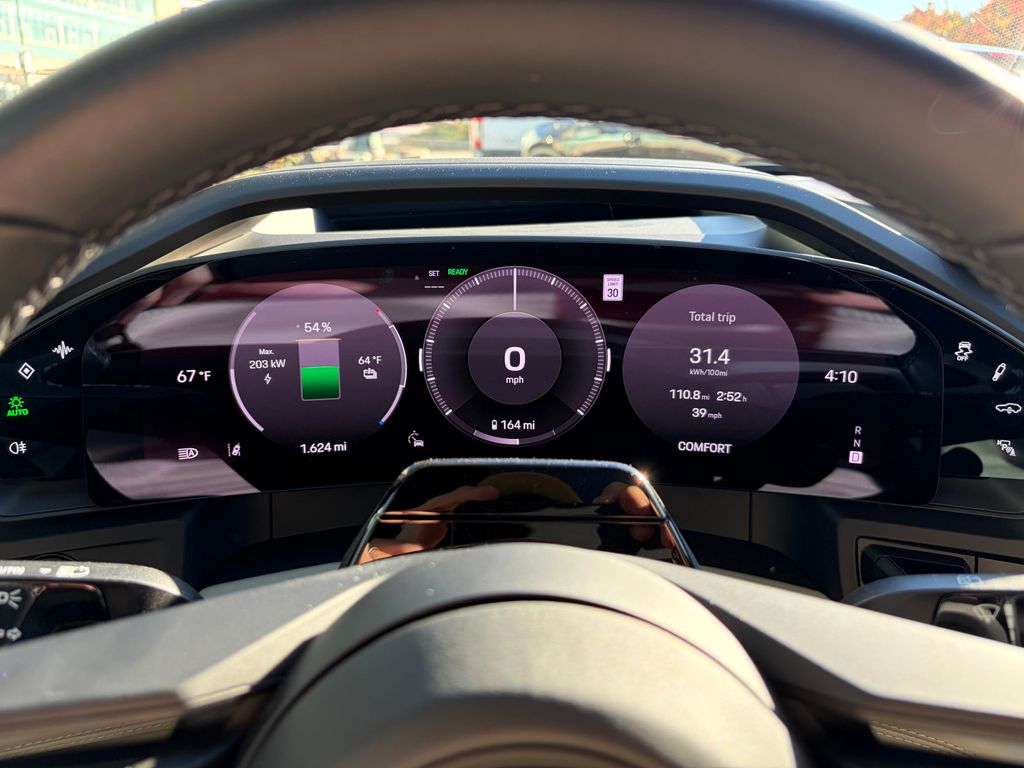
First, lets look at how EVs predict range. It’s an estimate, not an exact measurement of how many miles the remaining charge can deliver. The latter would be impossible, since lots of factors can impact range, like how heavy your right foot is or if you decide to climb a steep incline.
Weather and Driving Behavior Impact Predictive Range
Some cars take more than just the battery's state of charge into account when estimating range. Ford’s Intelligent Range prediction, for example, considers past driving behavior and the weather forecast. If conditions change overnight, the same charge can cover a different distance, even if the car hasn't moved an inch. If you get into your car on a frigid morning, the range indicator may show fewer miles since the car expects extra energy usage from running the heat.
(In the cold, some stored energy can also become temporarily unavailable. Tesla indicates this with a blue snowflake and a blue portion of the battery meter.)
Tesla’s main mileage display instead uses rated efficiency, with more personalized predictions available through its Energy app. The point is that different cars do the math differently.
What Causes "Vampire Drain" or "Phantom Drain" in Parked EVs?
Switching off an EV doesn’t shut down every system, and EVs do use some of their stored electricity while parked. This is sometimes referred to as “vampire drain” or “phantom drain,” but there’s nothing supernatural about it. Tesla’s Model 3 manual, for example, says the car periodically draws energy for system checks and to recharge its 12-volt battery.
Systems and Features That Consume Energy While Idle
Camera surveillance, cabin climate control, and powered accessories can also keep running after you lock the car and walk away. Tesla explicitly warns that Sentry Mode, which uses the car's exterior cameras to constantly monitor and record its surroundings, increases electricity consumption.

Even checking on the car can drain the battery. Tesla’s Model Y guide warns that checking vehicle status through its app wakes the car and starts normal energy consumption. App behavior varies by vehicle and software, but repeatedly waking up a parked EV can make it use more juice.
How Temperature and Battery Self-Discharge Play a Role
Temperature extremes are another contributor to standby battery drain, since most EVs use their battery management system (BMS) to keep the cells within a safe temperature range. Vehicles with active battery cooling (virtually all new EVs) may run pumps, fans, or a compressor to manage pack temperature in hot weather. In cold temperatures, too, a car's thermal management system may kick in to keep the battery from getting too cold.
Cells also gradually lose charge through internal chemical processes, known as self-discharge, though it's very low in lithium-ion batteries.

How Much Range Do EVs Actually Lose When Parked?
So, how long can an EV sit parked without dying? There’s no universal daily drop to expect, since it varies by vehicle, battery chemistry, and how the thermal management system works. Tesla says that a Model 3 can lose about 1% of its state of charge per day, but says weather conditions and vehicle settings can change that.
Real-World Airport and Cold-Weather Range Loss Examples
But anecdotal evidence points to a much more modest daily drain. Former InsideEVs Editor-in-Chief Patrick George left his Kia EV6 unplugged in a cold garage for nearly a month, and its indicated state of charge only dropped from 80% to 78%.
One Redditor said they left their 2021 Model 3 at the airport for four days in average temps of 35 degrees and that the car's state of charge only dropped by 1%. (They didn't have Sentry Mode on.) Similarly, one Nissan Ariya owner said their EV lost only 1% state of charge after being parked at the airport for 3 weeks.
On the other end of the spectrum, older EVs with less sophisticated thermal management systems may fare more poorly. Some Chevy Bolt owners, for example, have reported energy loss of several percentage points per day in extremely cold temperatures.
Tips to Minimize Battery Drain When Leaving Your EV Parked
If you're leaving an EV parked at the airport or leaving your car sitting for an extended period, there are some steps you can take to manage battery drain and avoid a bad day. Make sure it has enough charge so it doesn’t drain the battery entirely, using Tesla's 1% per day rule as a general guideline. You can also switch off battery-draining features like Sentry Mode, and avoid waking the car up from your phone app.
Of course, there's one surefire way to preserve your EV's battery when it sits idle for a long time: keep it plugged in. That's what Tesla suggests.
"The most important way to preserve the high voltage Battery is to LEAVE YOUR VEHICLE PLUGGED IN when you are not using it. This is particularly important if you are not planning to drive Model 3 for several weeks," Tesla says in the Model 3's manual.
RECOMMENDED FOR YOU
The Best Affordable Electric Cars In 2026: Cheap, Reliable Options For Everyone
‘Propulsion-Agnostic’: GM Wants To Bring Tesla-Style Software Features To Its Gas SUVs, Too
The Best Compact Electric SUVs To Buy In 2026 (Updated)
Want The Best Range Rover? Get The Electric One: First Drive
These EVs Have The Highest Claimed Charging Power In 2026
I Drove The Electric And Gas-Powered BMW X5. I Know Which One I'd Pick.
The 10 Best Sports And Performance EVs In 2025: Thrilling Options That Even Gas Car Fans Will Love