
Things Are Getting Really, Really Bad At Porsche. That's Not Good For EV Fans
The company is cutting 20% of its jobs by 2035. Some key models could be axed, too.
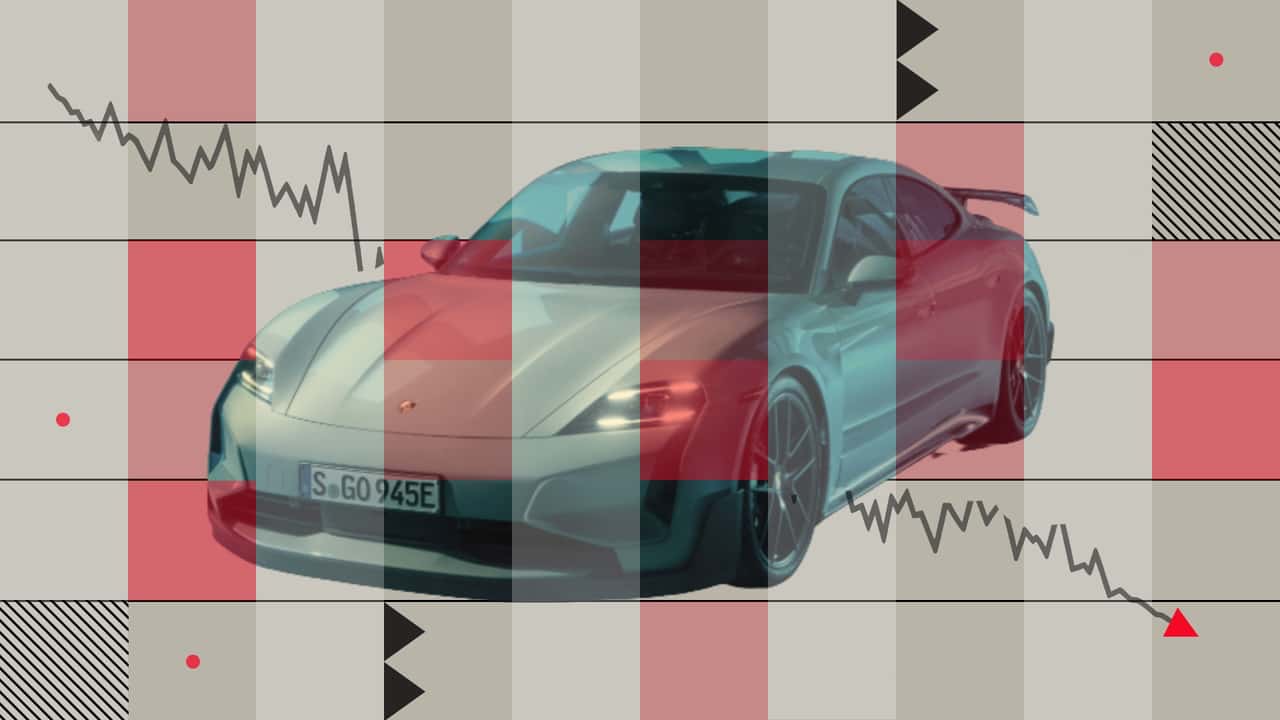

- Porsche now plans to trim roughly 9,000 jobs through 2035, representing over 21% of its workforce.
- The company has struggled with a collapsing business in China and a difficult transition to EVs.
- It's a bummer for EV fans, as the cost crunch makes Porsche less likely to embark on moonshot EV programs.
Things are not going well for Porsche. As the company faces a tough market in China and a tumultuous pivot to EVs, it's bleeding cash. To stem the flow, the company announced yet another round of job reductions on Monday, now affecting a total of 9,000 jobs through 2035.
The jobs will be trimmed largely by through natural attrition, early retirement schemes, and some voluntary buy-outs, per Porsche. Together, the 5,000 jobs trimmed today, combined with the roughly 4,000 in previously announced cuts, represent 21% of the 42,066 employees that Porsche had during fiscal year 2025, per its latest sustainability report.
Here's why that isn't great news for EV fans.
A Tech Pioneer Struggles With Demand
The Porsche Taycan was the most sophisticated EV from a legacy car company when it arrived in 2019. It offered an 800-volt architecture with lightning-fast charge times and enough cooling capacity to hold up to on-track driving abuse. Over the years, it has only gotten better, with a recent update making its charging curve way more impressive. And while the early version was relatively underwhelming on the range front, some new models can go well over 300 miles on a charge.
Gallery: 2020 Porsche Taycan Turbo S: First Drive


The Taycan, then, was early proof that Porsche planned to maintain its engineering edge in the electric age. Then the company announced that the Macan crossover would go electric-only, with an all-electric Boxster and Cayman sports cars also planned as direct-drop replacements for their gas counterparts.
That didn't work out. The Macan EV arrived, and was relatively impressive, but its high price and Porsche buyers' affinity for gasoline held it back. The company scrambled to start development of a new gas-powered Macan as it realized that it had kneecapped its highest-volume product.
Gallery: 2025 Porsche Macan Electric First Drive


Meanwhile, the electric Boxster and Cayman were delayed, and delayed again. The company announced that there would be gas motor options for the ultra-high-performance versions. Then Porsche revealed it was planning gas variants across the model line. Now, as budget cutbacks limit the brand's maneuverability, we'll have to see what actually materializes.
The new Cayenne Electric did hit U.S. showrooms this year, and it's certainly impressive, too. It offers wireless charging, ultra-fast DC fast charging, and a highway range that exceeded 350 miles in InsideEVs testing. Yet it's not replacing the gas version, either, with a new internal combustion model to follow.
Our rendering of the long-delayed Porsche 718 Cayman EV.
All of this whipsawing on electrification has cost the company dearly. It's lost a lot of money and sales trying to fine tune its approach. In China, it's been worse, as what was once a prestige brand now struggles to keep up with a faster-moving EV market. Last year, Porsche sold just under 42,000 cars in China, less than half of its 95,671-unit peak in 2021.
This is all bad news for EV fans. It looked, briefly, like the high-end market would rapidly electrify, and that traditional performance and luxury manufacturers could therefore spare no expense in securing their tech lead. Today's cuts, though, are a reminder that getting the timeline wrong is a catastrophic mistake. With development cycles that take years and limited capital, small volume manufacturers like Porsche can't afford to constantly rejigger their model plans.
Related Stories
When that happens, you see big job cuts, and a necessary reduction in ambitions. The Porsche of 2017 or 2018 could afford to take a big swing on an unproven category, using the Taycan to secure a reputation for tech leadership even if the per-unit profit wasn't going to match that of the gas Cayenne SUV. But today's Porsche is not the same company. It is capital constrained and bruised from a half-decade of confusing back and forth.
That'll likely give it less of an appetite for building moonshot EV products, and less willingness to try to push its customers to accept electrification in every project. Instead, it may end up doing what so many legacy auto companies are doing today: make as much money on gas cars while they can, and hope that they can build a profitable EV business in the future. That may make sense for shareholders, but it sucks for us.
A spokesperson for Porsche declined to comment for this story.
Contact the author: Mack.Hogan@insideevs.com
RECOMMENDED FOR YOU
California's EV Rebate Won't Apply To All Cars. These 13 Automakers Qualify
BMW Is Finally Planning An Electric Convertible: Report
Plot Twist: Volkswagen Is Now Rivian’s Biggest Shareholder
The Rivian R2 Is A Charging Beast. But It's 'Just Fine' At Road Tripping
Honda’s EV Sales Plunged–And GM Could Be The Surprise Winner
Which Year Of The Tesla Model Y Should You Buy? The Answer Isn't Obvious
Toyota Has A New CEO, Again. Here's What It Means For EVs, China And Beyond