
Tesla Starts Testing Steering Wheel-Free Cybercab On Austin Streets. Can It Match Waymo?
Tesla wants to sell Cybercabs without steering wheels to the general public. Will it work?
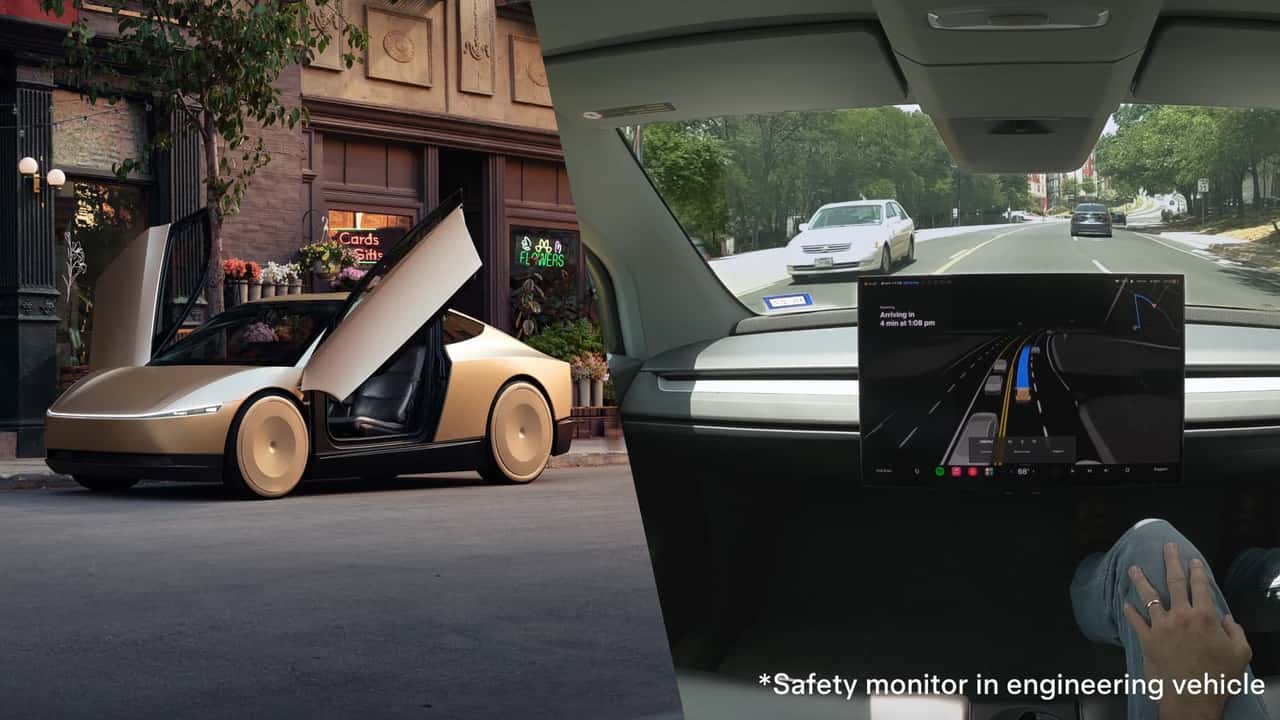

Tesla has begun testing a steering-wheel-free version of its Cybercab robotaxi in Austin, Texas, the company announced Monday on X.
Tesla made the announcement with a 27-second video on the platform, which showed a safety monitor sitting in the right seat of the Cybercab. I say "right seat," not "passenger seat," as they're both effectively passenger seats in this version.
The Cybercab was designed to have a cabin free of traditional driving controls. CEO Elon Musk confirmed that intention at its launch event in October of 2024. But until now, the prototypes we've seen testing in public have featured traditional steering wheels and pedals. That's not an ideal setup for a two-seat robotaxi, as you'd have to sit as a passenger while the steering wheel directly within reach either turned with the front wheels or sat their disconnected and dumb.
Yet the no-wheel design poses its own challenges. The robotaxis that both Tesla and Waymo have deployed commercially all feature steering wheels and pedals as backup options, so first responders or company employees can maneuver the cars if necessary. They can typically be remotely piloted from a control center for these scenarios, too, which is how Amazon-owned Zoox launched autonomous robotaxis without a steering wheel or pedals.
That approach won't be quite as easy for the Cybercab, though, if Tesla delivers on its initial promises. The company says it'll sell Cybercabs to private customers. That'd be a huge departure from its rivals, which operate their own robotaxis and can therefore remotely control them or retrieve them in the case of a software or hardware issue. But if you personally own a Cybercab, and something physically damages its cameras, or there's a software issue, will you be able to move the car on your own?
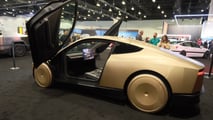
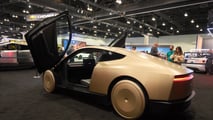
Gallery: Tesla Cybercab LA Auto Show 2024



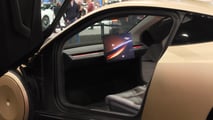
The truth is we don't know yet. Tesla typically drip-feeds details, and while we know there's a safety driver in the Cybercab video it released, we don't know if or how they can control the vehicle. I can't imagine controlling it through the touch screen would be nearly precise or effective enough for anything beyond parking lot speeds, but perhaps there's a place to connect or mount a controller.
More Robotaxi Stories
We'll have to wait to learn how it's going to work. But the company's autonomy plans are clearly still charging ahead. It has said that the Cybercab will be available before 2027, so the company's clock is ticking if it wants to develop a version of Full Self-Driving so good that you won't even need a steering wheel or pedals. Is that coming imminently? As ever, Tesla's plan is fuzzy, its timeline is ever-changing, and its approach is unconventional. We'll have to see if it all comes together.
Contact the author: Mack.Hogan@insideevs.com.
RECOMMENDED FOR YOU
Waymo Just Recalled A Bunch Of Robotaxis Because They Could Drive Into Closed Highway Construction Lanes
Someone Keeps Stealing Entire Truckloads Of Tesla Batteries
Lucid And Uber Will Bring Robotaxis To Houston Next
California's New EV Incentive Is Almost Here—With Special Benefits For Rivian And Lucid
Mobileye, Supplier Of Robotaxi Tech, Is Launching Its Own Robotaxi Fleet In The U.S.
BMW iX5 Blows Away The Competition With 460-kW Charging, 435-Mile Range
PepsiCo Is Now Moving Soda And Snacks Using Driverless Box Trucks