
Shell Built A Tiny EV With Hyper-Fast Charging And A New Cooling System
This tiny EV is impressively clever, but the real business case is hiding in the coolant.
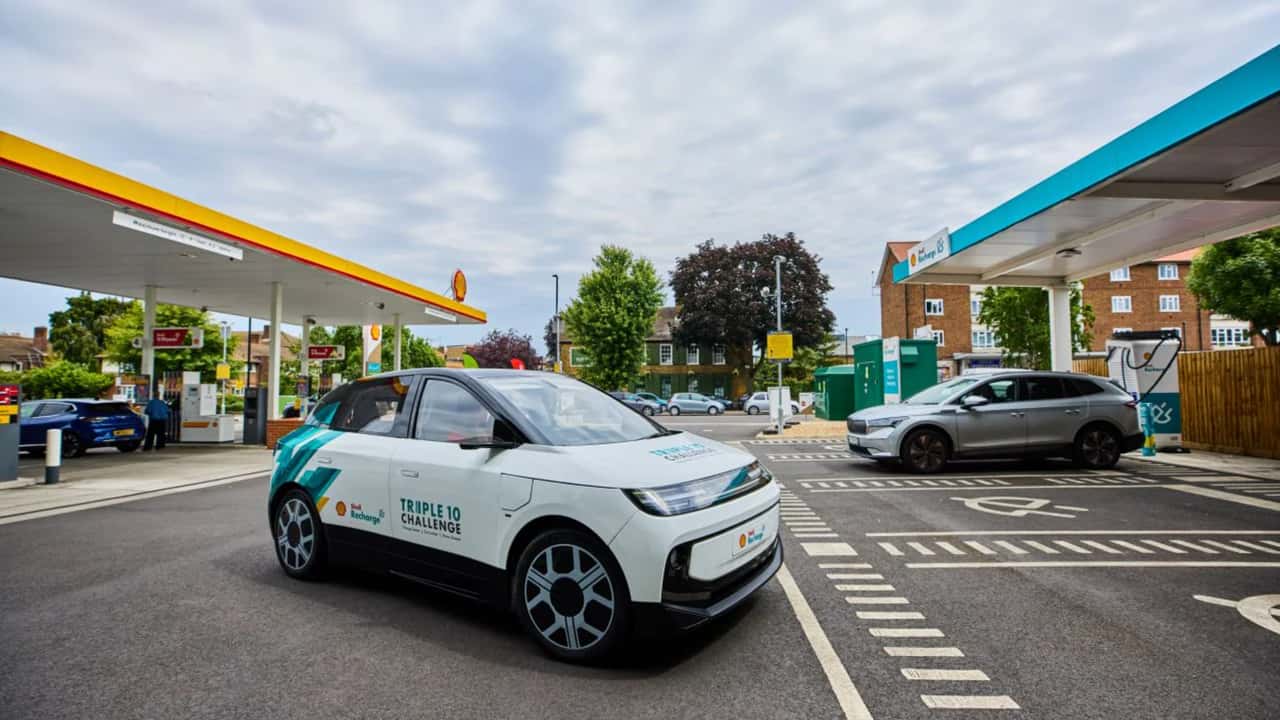

- Shell’s Triple 10 EV is a car concept, but that doesn't mean it's becoming an automaker.
- Its main trick is direct cooling of the battery using a dielectric coolant that Shell sells.
- Shell wants automakers to buy the cooling tech, not the car.
Shell isn’t planning to launch a small electric city car, but its tiny Triple 10 Challenge Concept car makes a pretty good case for itself. It charges very quickly, has excellent efficiency, and promises to reduce its carbon footprint by half compared to today's European EVs, but the really important part is the fluid that makes it work.
The big innovation with this one-off study is how it cools its battery, which is completely different from how everybody else does it. It features a cooling system that, unlike in most other EVs, where the battery cells are indirectly cooled, uses a different coolant that can safely come into contact with high-voltage parts.
Gallery: Shell Recharge


This means the battery cells are directly immersed in the fluid, so heat can be extracted more quickly and efficiently. Improved heat extraction offers multiple benefits, including greater control over cell temperature. This is especially useful during fast charging, when cells tend to heat up, forcing the car to reduce charging power to protect the pack.
It’s a simplified single-circuit cooling system, which also handles heat extraction from the motor and electronics. This reduces the complexity of the cooling system, making the vehicle lighter and cheaper, and ultimately boosting its efficiency.
Shell says its EV can charge its battery pack, of unspecified capacity and chemistry, from 10% to 80% in under 10 minutes from a 175 kW charger. It adds range at a rate of 15 miles (25 km) per minute, which Shell says is better than the average of 8 miles (13 km) of other EVs charging at the same power.

The vehicle also boasts a claimed running efficiency of 6.2 miles/kWh (10 km/kWh), although Shell doesn’t specify whether it used a standard test cycle such as EPA or WLTP. It notes that this is about a 30% improvement “compared to many current-generation EVs,” without naming any specific models.
The oil giant has no plans to build this or any other EV, but it does want to sell its battery cooling technology to automakers so it can also sell them the Shell Recharge thermal fluid needed to make it work. This would give Shell a hydrocarbon-based revenue stream in the electric era because it uses a “crystal-clear 99.5% pure base oil made from natural gas with stronger molecular bonds, to improve BEV battery cooling,” per an older press release.
In the more recent blurb about its new tiny EV, Shell simply calls this a "dielectric fluid," which basically means it doesn’t conduct electricity, so you can safely immerse high-voltage components in it. This is impossible with the type of water-glycol coolants typically used in EVs, because if that stuff touches the live bits, you haven’t cooled the battery. You’ve destroyed it and likely caused a fire.
Waterless coolants do exist, usually based on glycols rather than water, but they’re mainly a niche product for classic cars and motorsport applications. Their appeal in a combustion car is that they don’t boil easily, create little pressure, reduce corrosion, and can prevent local hot spots, but they’re expensive and aren't as good as water-based coolants at heat transfer.
RECOMMENDED FOR YOU
Lucid Cosmos Mid-Size SUV: Here’s A First Look At The Tesla Model Y Rival
Here’s What Autobahn Speeds Do To EV Range
EVgo Will Install Tesla Superchargers At Its Charging Stations
The Porsche Cayenne Turbo EV's Performance Makes No Sense for a 6,000-LB SUV
Zoox's Autonomous Pod Without A Steering Wheel Wants Your Money Now
After Years Of Delays, Aptera Is Finally Preparing To Build Customer Cars
Some Owners Say Tesla's New FSD Update Is Causing Their Cars' Computers To Overheat