
Tesla Wants Its Cameras To Blink Like a Human Eye
Computers might be better at some things, but Tesla's newest patent shows that the human eye remains undefeated in one important area.
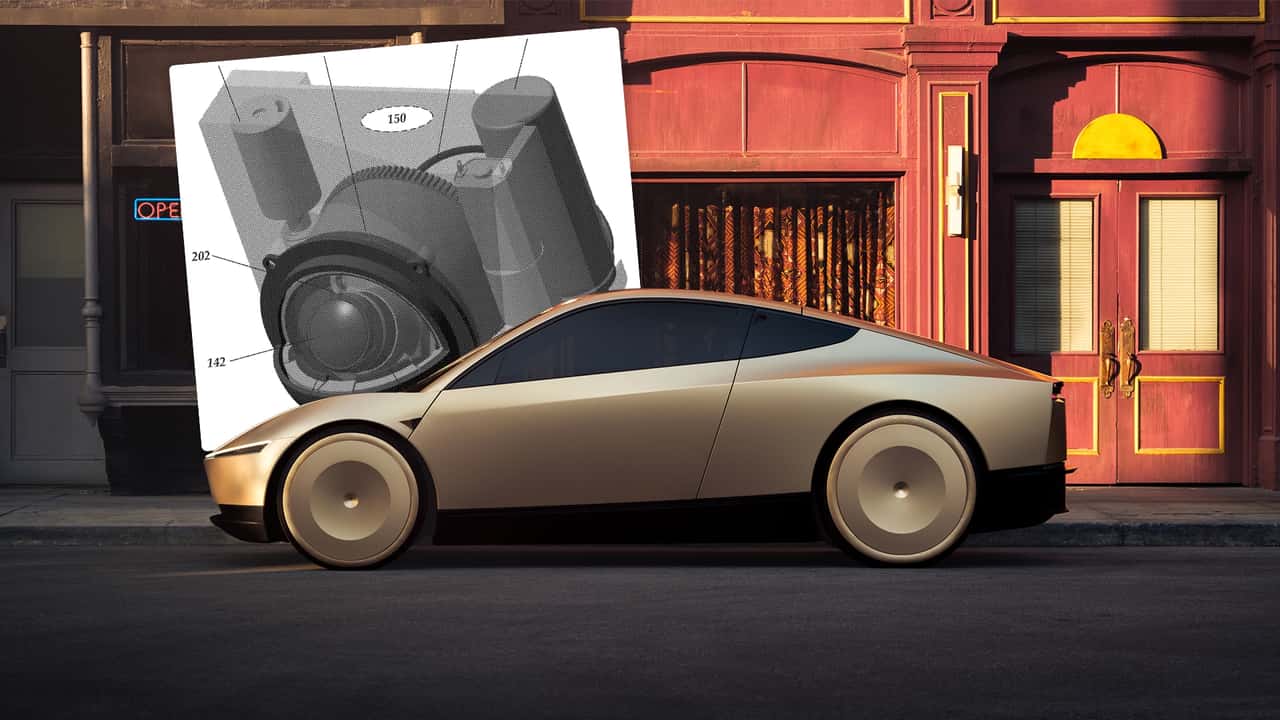

- A patent filed by Tesla could create a new way for car cameras to clean themselves when they get dirty.
- The method involves adding a fluid reservoir and wiper into the camera assembly.
- This allows the camera to rid itself of debris similar to how a human eye blinks.
Elon Musk has long claimed that his cars don't need extra sensors like lidar and radar to become autonomous. Teslas should be able to drive themselves using only cameras and computing power, he has said, since humans can drive with just eyes and a brain. Now Tesla is working on something akin to eyelids for its cars.
A new patent filed by Tesla describes a spherical-shaped wiper that follows the contour of the camera lens. The wiper is aided by a fluid dispenser that works together with the wiper blade to clear the lens of debris. Sounds a lot like how the human eye works, no? This is just a patent, and it's not clear that the tech will make it into Tesla's passenger cars or Robotaxi fleet, or what vehicles it's intended for.

The software side of the patent describes a system that monitors the image captured by the camera to tell when visibility is degraded due to dirt, mud, water droplets, or what have you. When it senses a dirty lens, the wiper system can engage and "blink" to get rid of the debris.
Tesla has experimented with different ways to keep its cameras clean already, including a new sprayer-based system on the upcoming Cybercab model. However, as almost any owner who has used Autopilot or Full Self-Driving in adverse conditions can tell you, its current methods (or lack thereof) don't work perfectly. This is why some owners have resorted to aftermarket hydrophobic covers and coatings for their vehicles.

Creating a fleet of driverless cars surfaces all sorts of problems that don't apply to human drivers. There's creating a reliable self-driving system, of course. But then there are all the other nitty gritty details involved in keeping vehicles moving without humans present. Keeping cameras and sensors clean is one, and Tesla may have an answer for that here. There's also the whole business of cleaning and charging the cars.
That being said, Tesla doesn't exactly have the best track record with automatic wipers, so it might take a bit of work to avoid phantom wiper activation—if this tech ever makes it to production, that is.
More Tesla News
RECOMMENDED FOR YOU
After Years Of Delays, Aptera Is Finally Preparing To Build Customer Cars
Rivian Is Adding A Second Shift To The R2 Assembly Line. Here’s Why It Matters
Oregon's EV Rebates Are Back. Here's How To Get Up To $7,500
I Drove Slate’s $25,000 Electric Truck. It Could Be A Real Game-Changer
Lucid Delays Cosmos EV Launch To 2027 As Part Of Turnaround Plan
Porsche CEO Confirms The Electric 718 Is Still Coming
Pilot, GM, and EVgo Now Have 300 EV Charging Stations Nationwide