
Just 1% Of EVs Made Up A Huge Amount Of Sales Last Year. Here Are The Winners.
Last year, there were over 600 electric models sold across the world. Just five of them made up 20% of all EV sales.

- Just five EVs managed to make up 20% of all global market share.
- Tesla took the lead (unsurprisingly), but its other ranking contenders were a big surprise.
- In fact, all non-Tesla vehicles in the top five start at under $10,000 in China.
There are more electric and electrified choices in the car market than ever. Of the 2,500 car models available around the globe last year, 630 were battery-electric.
Despite the huge number of choices that consumers have, they disproportionately flocked to just a few vehicles. Of those 600-odd options, just five vehicles made up around 20% of the total global EV sales last year—and I bet you can guess at least two of them.

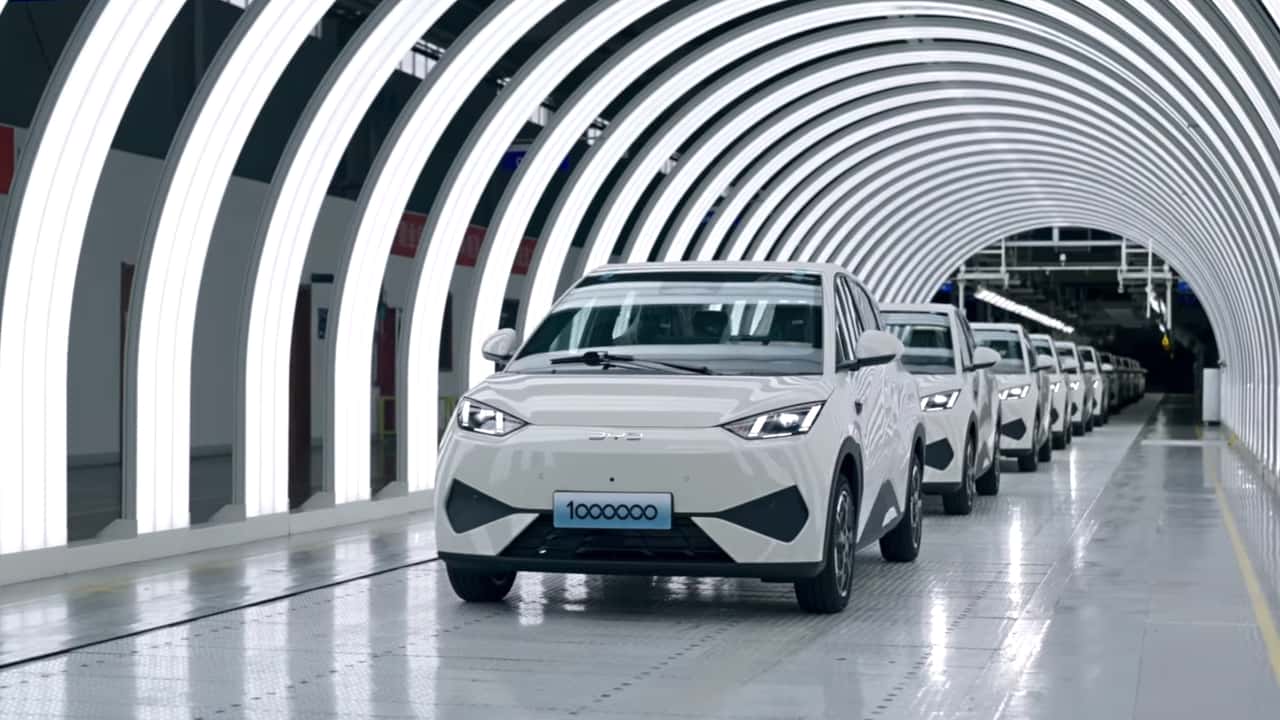
Leading the group, unsurprisingly, is the Tesla Model Y. Statistics from the International Energy Agency show that the Model Y made up nearly 8% of all BEV sales. On its heels was the Model 3 with around 3.6% of the total market share. After that are three Chinese EVs with Tesla-like traction: the $9,700 Geely Geome Xingyuan (3.5%), Wuling HongGuang Mini (3.1%), and BYD Seagull (3.0%)
You've probably never heard of the Geely or Wuling models before, and that's okay. But these models have something drastically different than the two Teslas taking up first place: they're extremely affordable. All three vehicles start at the equivalent of under $10,000 in China.
The Geely, which offers as much as a 40 kWh battery pack and 255 miles of CLTC range, starts at $9,700. The BYD Seagull, which starts at $8,000, offers similar specs on its top-tier trims. And the cheapest of the bunch, the Wuling, offers a tiny 26.5 kWh battery pack and 190 miles of range (just not at its starting price of $6,500). That's a pretty big cost delta when you consider that the cheapest Model Y is $39,990 in the States (and $36,700 in China).
China's affordable string of cars is nothing new. There's been an ongoing price war for a while across Chinese automakers, but the fact that these three contenders managed to rank amongst Tesla is pretty big feat in itself, especially when you consider what they're packing under the hood.

But one interesting fact called out by the IEA is that 30% of plug-in vehicles sold in China start at a cost of below $20,000. Over in the U.S., only about 20% of EVs have a base cost of under $40,000. That's no surprise, especially when 85% of EVs sold in the States are large vehicles or SUVs. Meanwhile, Chinese EVs with tiny batteries and small price tags are selling like hotcakes.
And where they're selling is critical too. The IEA attributed cheaper Chinese EVs to rapid growth of electric sales in emerging markets and developing economies. The affordability of these models drove up market share, especially in Southeast Asia.
The number of electrified models will continue to grow rapidly in the coming years, according to the organization. The selection of plug-in cars on the global market more than doubled from 440 in 2020 to 980 in 2025. Another 150 models are slated for release this year. The IEA expects that figure to climb to 1,250 by 2029, nearly rivaling the 1,580 combustion and hybrid vehicles expected to be on sale by that date.
More Affordable EV News
RECOMMENDED FOR YOU
All The EVs That Got Canceled Or Delayed In 2025 And 2026 (Updated)
The Best Compact Electric SUVs To Buy In 2026
Someone Is Already Trying To Flip One Of The Last Tesla Model S's Built. The Price Is... Ambitious
Polestar Won't Appeal Its U.S. Ban. Now Dealers Are Left Holding The Bag
This Tesla Model 3 Battery Chemistry Ages Better Than The Rest
America’s First UL-Certified Plug-In Balcony Solar Microinverter Is Here
The 16 Cheapest Electric Cars In 2026