
Inside Ford's $1 Billion Bet On Detroit’s Future: Newlab at Michigan Central
Ford spent a hefty sum turning an abandoned train station into a tech hub. We took a tour to see what the turnaround is all about.

For 30 years, Detroit’s once-glamorous Michigan Central train station sat abandoned. The building signaled the city's past as an industrial hub and served as a reminder of its present-day struggles.
Today, Michigan Central and the surrounding campus are abuzz with engineers, entrepreneurs, and creative thinkers. Ford’s Connected Car and Advanced Electric Vehicle teams call this place home—along with over 100 startups. What happened?
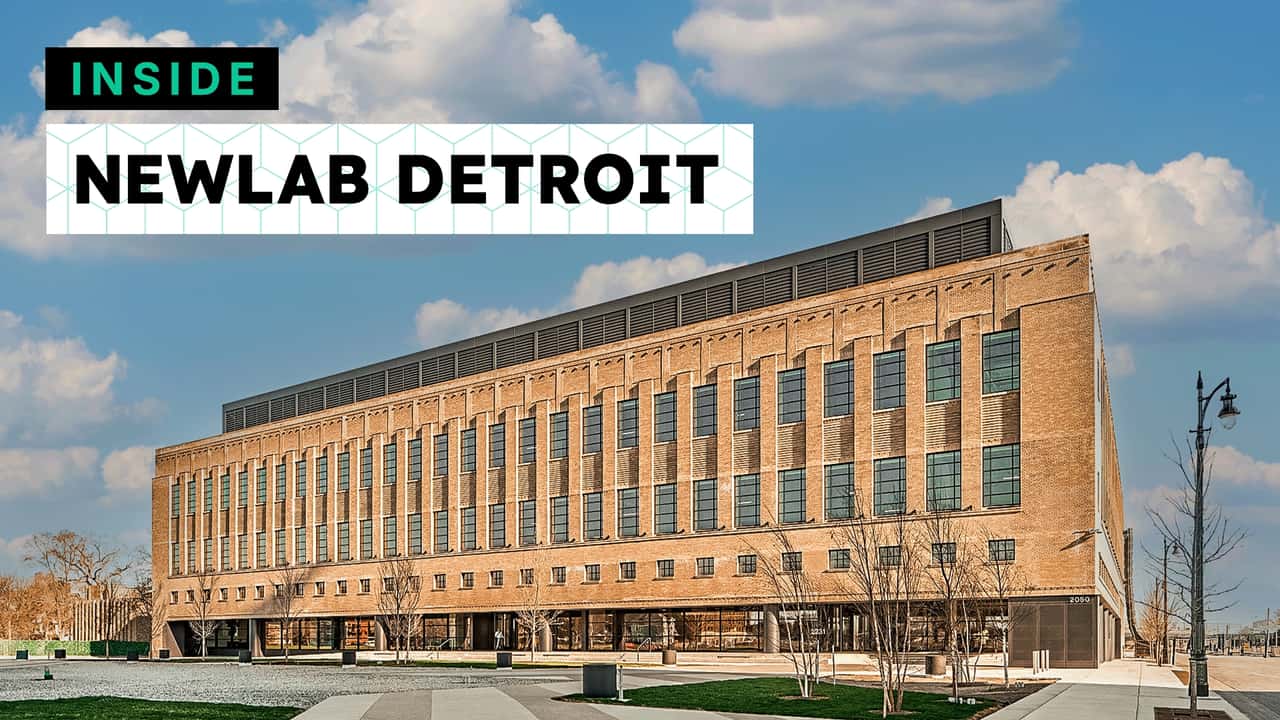
Starting in 2018, Ford invested over $1 billion to bring Michigan Central back to life. In addition to restoring the main train hall, it partnered with Newlab, an incubator that focuses on "critical technologies," to occupy the disused book depository next door.
A critical technology is anything essential to a country’s national security and economy, according to the company. Newlab Detroit’s specific focus is mobility, which means drones, robots, and autonomous vehicles are all being built and tested there.
Mobility startups aren’t quite like software companies. Sure, you can design a car in 3D and model its aerodynamic properties on a computer, but actually building the car and testing it in the real world reveals issues a screen can’t.
The same concept applies to all sorts of physical products. You can’t just finish writing the code, press send, and unleash your invention instantly. That’s where Newlab comes in.
Newlab Detroit has over 30,000 square feet of communal lab and manufacturing space, with equipment ranging from CNC mills and laser cutters to industrial-scale 3D printers—and professional guidance on how to use them. There’s even an electrified roadbed outside for wirelessly charging electric vehicles.
The idea is that having all this expensive infrastructure centered in one place and shared among many startups speeds up cycles of development, testing, and iteration. Companies can build, test, and refine their ideas in days or weeks instead of months.

Take Civilized Cycles, a startup building an electric "Semi-Trike" it claims combines a van’s cargo capacity with an e-bike’s carbon footprint, for example. By being a part of the Newlab ecosystem, it is able to design and quickly prototype versions of its tube-chassis trike and trailer without leaving the building, I learned during a visit to the facility earlier this year.
So, what does Ford get out of this? First, programs like Newlab may lure engineering talent to Detroit instead of Silicon Valley or Austin. Second, Ford gets early access to innovations in autonomy, electric micromobility, and more.
Between the current administration’s EV policy rollbacks and China’s rapid progress, it’s easy to feel like the U.S. is getting left in the dust right now. Touring Newlab Detroit didn’t allay these concerns entirely, but it did remind me that we can build great things in this country.
And what better symbol of that than a collection of tiny startups, operating out of a building restored by the company that democratized the automobile, in an industrial city many thought was dead?
RECOMMENDED FOR YOU
America’s First UL-Certified Plug-In Balcony Solar Microinverter Is Here
The Best Compact Electric SUVs To Buy In 2026
The Cadillac Optiq Is Getting A China-Developed EV Platform (Update)
Polestar Won't Appeal Its U.S. Ban. Now Dealers Are Left Holding The Bag
Why BMW Isn't Giving Up On Hydrogen Cars
PSA: Don't Use An Old Charging Adapter For Your Rivian R2. It May Melt
Volvo Gets A Pass To Keep Importing Connected Cars To The U.S.