
Congress Wants You To Pay $130 A Year Just To Drive An Electric Car
Lawmakers want EV drivers to "pay their fair share" to fund highways. But is $130 actually fair?
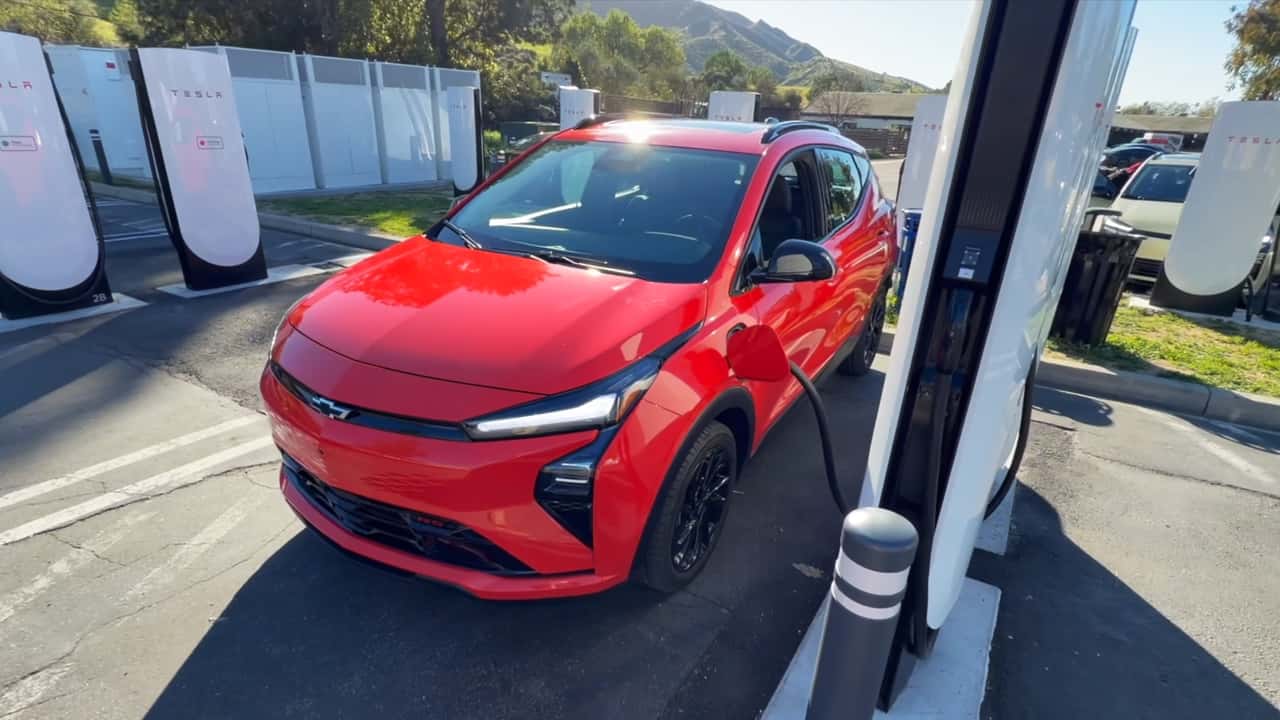

- A proposed bill would slap EV drivers with a $130 annual fee.
- The federal gas tax raises money for highways, but EV owners don't pay it. It also hasn't been increased in decades.
- EV and environmental advocacy groups slammed the move.
EV owners have been sitting pretty as prices have blown past $4.50 a gallon. But get ready for your costs to go up. U.S. lawmakers proposed bipartisan legislation that would impose a $130 annual fee on electric car drivers.
"The BUILD America 250 Act ensures that electric vehicle owners begin paying their fair share for the use of our roads," said Transportation and Infrastructure Committee Chairman Sam Graves, Republican of Missouri.
The federal gas tax helps fund road repairs across the country, but EV drivers don't pay it. A new transportation funding bill aims to plug that gap by reviving a fee on electric car drivers that has been pitched numerous times on Capitol Hill.
Starting in 2029, the $130 fee would increase by $5 every two years until it hits $150. The policy would also charge plug-in hybrid drivers $35 a year, with that rising over time to $50. EV and environmental advocacy groups slammed the move.

"This draft includes an irresponsible tax for EV and plug-in hybrid drivers that will fail at meaningfully closing the Highway Trust Fund shortfall," said Katherine García, director of Sierra Club’s Clean Transportation for All Campaign. "Now is the time to incentivize, not penalize, clean transportation options that curb emissions harmful to our health and climate."
Albert Gore, executive director of the Zero Emission Transportation Association, said he "understands the need to maintain the solvency of the Highway Trust Fund," but called the proposed fee "simply a punitive tax that would disproportionately impact adopters of electric vehicles, with no meaningful impact on maintain the HTF."
Run the numbers, and you quickly see that the critics have a point. For starters, the federal gas tax of 18.3 cents a gallon hasn't budged since 1993, despite regular inflation and efficiency improvements in cars. According to research from Consumer Reports, the average American pays between $70 and $90 annually in federal gas taxes, far less than the EV fee.
Plus, the nonprofit group argues, these kinds of flat fees are problematic because they don't account for how much a person actually drives. Seniors and people who only drive occasionally only pay $40 to $50 in gas taxes annually. "Fixed fees also shift the financial burden away from commercially driven vehicles, such as delivery vans, robotaxis, and rideshares, which can drive up to 10 times as many miles as a personal vehicle," Consumer Reports analysts said in April.
Many states already have EV-specific registration fees to raise road-repair funds at the state level. And many aren't cheap either. In Michigan, EV drivers need to fork over $267 in 2026, and plug-in hybrid owners must pay $113, increases from the previous year. In New Jersey, it's $270 to register an EV, and drivers also need to pay the first four years up front.
The new federal fee isn't set in stone, however. It still needs to be formally introduced and pass both houses of Congress. The bill's authors hope to send it to the president's desk by September 30, when the current version of the funding law expires.
Contact the author: Tim.Levin@InsideEVs.com
More EV News
RECOMMENDED FOR YOU

How Much Quicker Is The Newest Version Of Tesla FSD? This Test Put It Against Old Software To Find Out
Tesla Never Made An Electric Jet Boat, So This YouTuber Built One Himself
Subaru Is Spending Three Times More To Sell EVs Than Gas Cars. It's Not Working
Ford Fathom: Everything We Know About The Sub-$30,000 Affordable EV Truck
What To Know About California's $3,500 EV Rebate—And Which Teslas Qualify
Toyota Will Modernize Your Aging Plug-In With Its Factory Upgrade Program
Clemson's Solar-Powered EV Project Looks Like A Cardboard Shoe. But It's A Lot More Clever Than It Looks