
Tesla’s Robotaxis Just Went Live In Dallas And Houston. Good Luck Finding One
Tesla started offering autonomous taxi rides in the two Texas cities, but the service network is tiny. For now, at least.
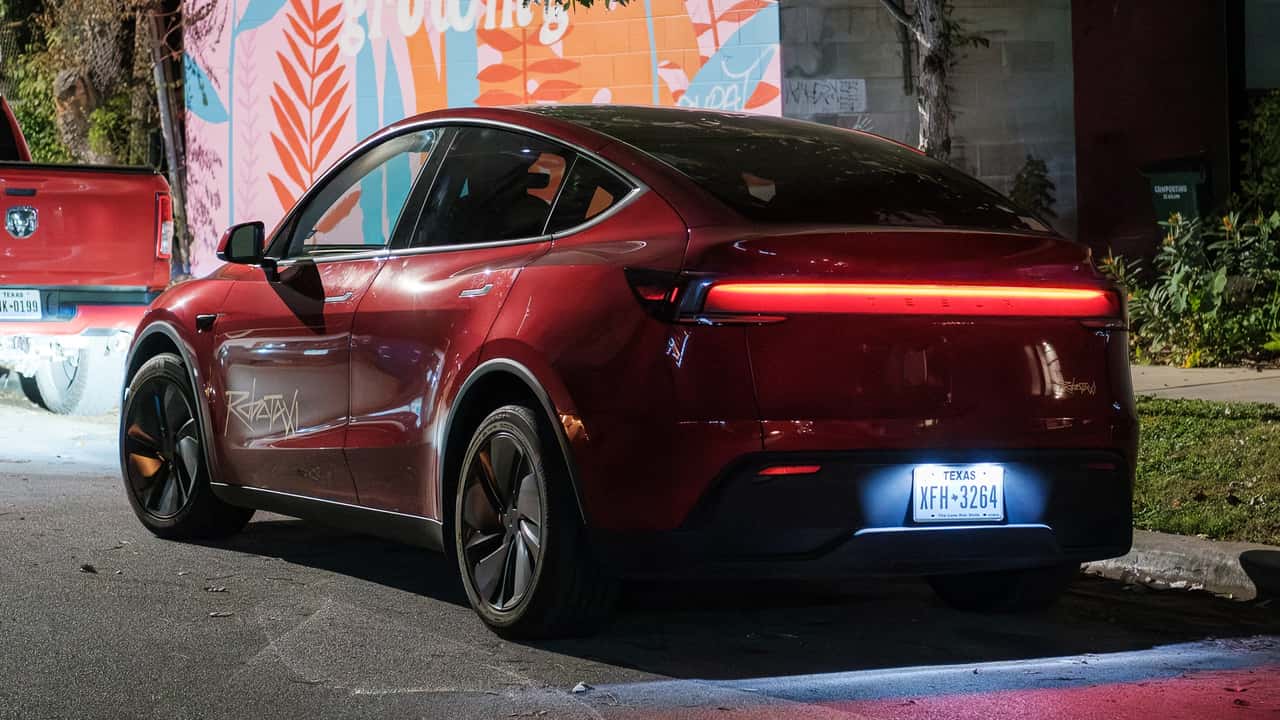

- Tesla has kicked off its Robotaxi rollout in Dallas and Houston.
- The company published a short video on social media, showcasing a driverless Tesla Model Y without a safety monitor in the passenger seat.
- The service area in each city is around 30 square miles, but the number of available cars is even smaller.
Tesla is now offering robotaxi rides in Dallas and Houston, expanding its self-driving taxi service network in the state of Texas.
The company published a short video on its official X account, showing a driverless Model Y without a safety monitor in the passenger seat, but it’s unclear if the robotaxi service in the two cities will run without human safety monitors in the vehicles.
The American electric vehicle manufacturer’s expanded network is currently limited to small sections of the two Texas cities, and the vehicle count is tiny. According to a third-party robotaxi tracker, Tesla’s footprint in Dallas is just 31 square miles, and 25 square miles in Houston, with a single Model Y available in each of the two towns.
Waymo, the biggest player in the American robotaxi game, set up shop in Dallas and Houston earlier this year, but its presence here is not much bigger than Tesla’s. According to the same robotaxi tracker, Waymo operates a single robotaxi in a 23 sq mi geofenced area in Houston, while its 48 sq mi footprint in Dallas is handled by 16 Jaguar I-Pace EVs.
Tesla’s first robotaxis went live last year in Austin, Texas, where the company is headquartered. At first, the driverless Model Y electric crossovers had a safety monitor in the front passenger seat, but the company started to ditch human monitors, betting on a fully autonomous, unsupervised experience. Tesla also runs a supervised ride-hailing service in the Bay Area.
That said, a Wired report based on a series of letters sent by autonomous vehicle developers to Democratic US senator Ed Markey of Massachusetts revealed that Tesla’s robotaxis are sometimes driven remotely by human operators. By contrast, six other AV makers were adamant that their remote operators never actually drive the vehicles, instead providing input that the vehicle software then decides to use or ignore.
More Robotaxi Stories

RECOMMENDED FOR YOU

One Owner Just Did What Tesla Couldn't: Upgrade An Older Car To HW4
Nevada Opens The Door To Thousands Of Paid Robotaxis, And Tesla Has The Edge
Tesla’s New Three-Row EV Is The Longest-Range Model Y Tested By Edmunds
Hyundai And Genesis EVs In The U.S. Get A Big Discount At Ionna Chargers
Home EV Charging Has A Hidden Cost. Here’s How To Reduce It And Lower Your Bill
Aptera Reveals The Secret To Building Its Solar EV: China
Tesla’s Mainstream Model Y Gets A Feature Hyundai EVs Have Had For Years