
How Does Rivian’s Gear Guard Work?
Rivian’s Gear Guard is a camera-based surveillance and alert system that activates when your vehicle is parked and locked.
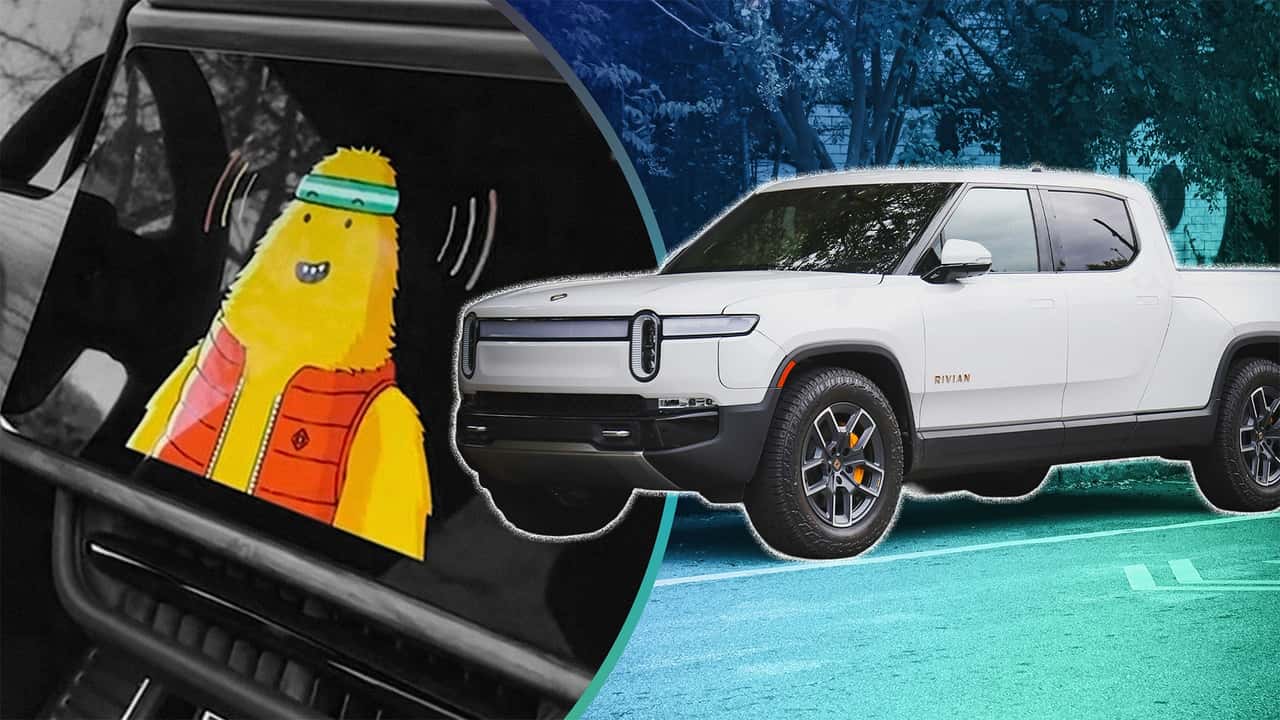

Your bike is locked in the back of your SUV. A stranger walks a little too close. What happens next? For Rivian drivers, the answer is Gear Guard Gary, a digital watchdog that records, alerts, and, judging from TikTok, keeps a sense of humor about it.
The clip from Rivian (@rivian) combines footage of the brand’s iconic character, dubbed with a clip from the famous “I do be nosy…” meme. The humor and good vibes created in the short video seem like a perfect fit for Rivian’s offbeat brand profile, which speaks to modern, active-lifestyle motorists.
But behind the viral appeal lies a serious piece of technology. Gear Guard is more than a meme mascot; it’s Rivian’s built-in vehicle security system, designed for the real world. Here’s how it works, what it does and where users still have questions.
What Does Gear Guard Do?
Rivian’s Gear Guard is a camera-based surveillance and alert system that activates when your vehicle is parked and locked. The system continuously monitors the surroundings using the truck or SUV’s external cameras, and when it “senses any funny business,” it records short video clips for later review.
Now Trending
In a software update delivered in 2024, Rivian introduced Gear Guard Live Cam, which allows owners with a Connect+ subscription to view live camera feeds through the Rivian mobile app and receive notifications when motion is detected. Previously, users could only view recordings after an event had occurred, via the vehicle’s infotainment display.
One standout accessory is the Gear Guard cable for the R1T pickup. This is a braided-steel cable that plugs into lockable receivers in the truck bed. Combined with the bed-facing camera, it allows you to secure physical gear such as bikes or cargo while monitoring that gear through the camera system.
FROM THE TRENDING NEWS DESK
Viral bits from across the social media landscape
Our team of experts tracks what's trending so you don't have to—from viral videos to online debates that have everyone talking.
Rivian’s system is intelligent and aims to suppress needless triggers. When enabled, Gear Guard discerns what incidents are worth recording, rather than capturing every passing motion. That said, some users have reported that more subtle impacts or jostles don’t always trigger a recording. On Reddit, one user said, “The Gear Guard system is designed to ignore motion that it doesn't believe are people … you will typically only get a recording of someone getting out of their car next to you and not a recording of the car pulling into the space.”
To minimize energy drain, Rivian’s second-generation architecture cuts the power draw of Gear Guard significantly. In early systems, it cost an estimated 6 miles of range per day, but later designs reduced that to only about 2 miles. All videos captured by Gear Guard, regardless of how triggered, can be downloaded via a USB-C port in the vehicle.
Why “Gary” Exists: Branding And Culture
Rivian’s choice to give its security system a personality—Gear Guard Gary—is a branding play that leans into warmth, approachability and a sense of fun. It differentiates the feature from more sterile “security mode” labels and softens the tension that often surrounds surveillance features. The TikTok clip suggests the strategy works: Fans are amused and charmed rather than creeped out.
The user comments under the video reflect that tone. “I love Gear Guard Gary! I love the Rivian team!” reads one. “Perfect use of audio. Love you gear guard Gary!” says another. These comments signal an ongoing tension: Owners love the quirky, character-driven branding, but they also expect modern software features to match. The community is vocal, and it demands both style and substance.
Gear Guard puts Rivian in direct competition with Tesla’s Sentry Mode, which uses a similar camera-based approach to monitor surroundings and deter vandalism. One key differentiator: Rivian gives the feature a personality and an ecosystem twist (such as the bed cable), while Tesla leans into a more austere “security mode” branding.
Tesla continues to expand the reach of Sentry Mode; the feature now activates in service and showroom parking lots to deter vandalism. But Tesla’s broader approach is less whimsical, more utilitarian, in contrast to Rivian’s playful embodiment in Gary.
At the same time, Rivian is racing to scale. Its second-generation R1T and R1S models recently debuted with upgraded hardware, revised architectures, and features like NACS charging compatibility and higher output ratings. As the company evolves, the balance between personality and performance will likely tighten.
The TikTok clip of Gear Guard Gary presents a microcosm of how Rivian is positioning itself. It demonstrates how the brand leans into personality, playfulness, and fan engagement while offering a robust set of technical features. But for all the smiles it generates, real users are watching too. They ask: Will the next software update finally add CarPlay-level music/nav features? Will hardware continue to improve? Will Rivian’s pricing and incentives hold up in a post-tax-credit world?
In the end, Gear Guard Gary may be the charming face of Rivian’s security system, but it’s what’s behind the camera, and what comes next, that will define whether Rivian wins hearts and minds in the crowded EV landscape.

RECOMMENDED FOR YOU

California's New EV Incentive Is Almost Here—With Special Benefits For Rivian And Lucid
Someone Keeps Stealing Entire Truckloads Of Tesla Batteries
Rivian Discontinues Its Cheapest R1T And R1S As R2 Rolls Out
Tesla Starts Testing Steering-Wheel-Free Cybercab On Austin Streets. Can It Match Waymo?
Rivian Has A Bold Plan For You To Skip The Repair Shop
BMW iX5 Blows Away The Competition With 460-kW Charging, 435-Mile Range
The Rivian R2 Is Just As Efficient As A Tesla Model Y, Despite Weighing More