
‘Learned That the Hard Way': EV Driver Has Low Battery On Highway. Then She Realizes This Common Habit Drains Her Power Faster
"I was on 20 miles to get to where I needed to go. But then I got on a highway and I had my window down."
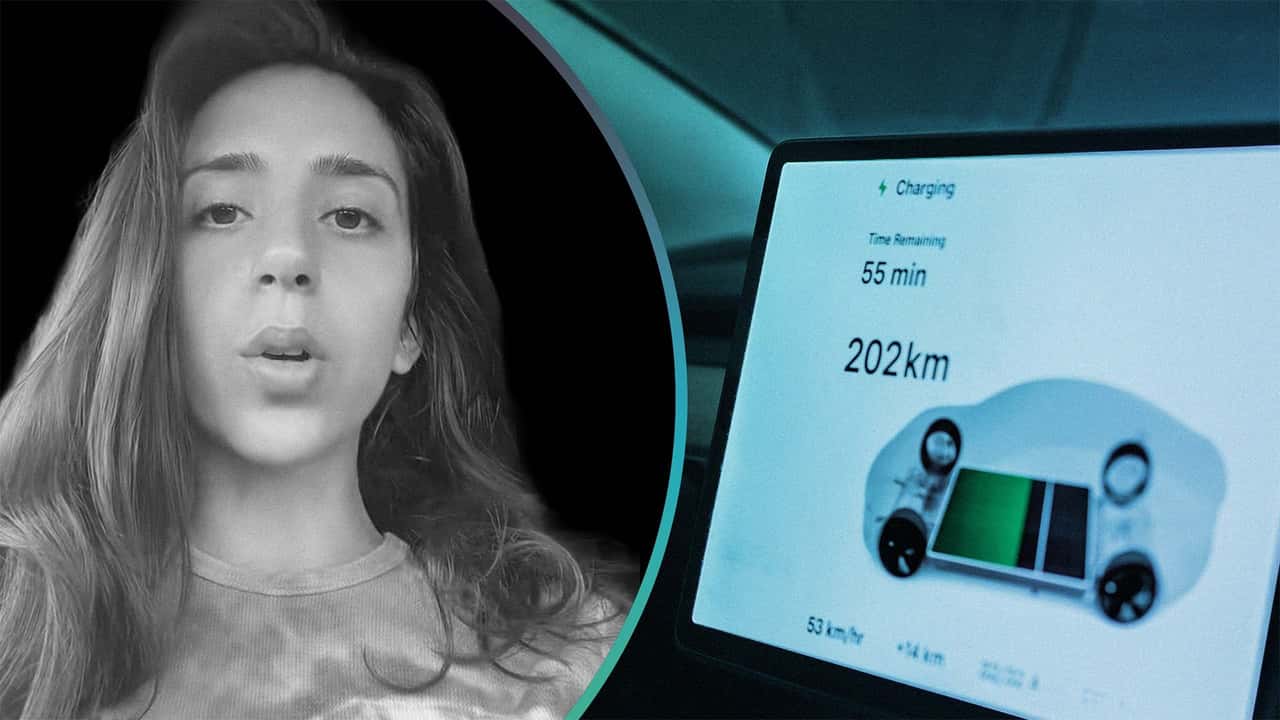

An EV owner was shocked to see just how much of a difference driving with her windows down had on her car’s range. TikTok user @alexandraindeed posted a viral clip sharing her initial panic, and then understanding, of the role drag coefficients play in EV battery drainage.
She records her video from the interior of her car, where she speaks into the camera, warning others to keep their windows up if they’re low on battery.
“Okay here goes another electric car tip. I was on 20 miles to get to where I needed to go. But then I got on a highway and I had my window down. And then air was really pressing against the car,” she tells viewers.
As a result of her decision, the creator says her range suffered considerably. “I lost like 8-10 miles and I freaked out. And then it kept going down, down, and I’m like what’s going on? … I thought to myself, it’s because your window’s down. Because it takes more energy for the car to push when the window is down. So be mindful of that when you’re low on battery,” she suggests.
Drag Coefficients And EV Range
Electric vehicle automakers must pull off a lot of engineering feats to ensure drivers can squeeze the most road mileage out of a single charge.
Aerodynamics play a significant part in this, and there are a number of EVs on the market that have managed to pull off some very low drag coefficients to aid in the fight against battery drain. The Audi E-Tron and BMW i4 and i7, for instance, all sport drag coefficients of 0.24.
Now Trending
These designs allow for airflow to glide across the car’s body and minimize wind resistance against their vehicles, which helps to reduce the amount of force the car’s met with on the road, requiring less energy from its electric drive train to maintain a set speed.
FROM THE TRENDING NEWS DESK
Viral bits from across the social media landscape
Our team of experts tracks what's trending so you don't have to—from viral videos to online debates that have everyone talking.
InsideEVs highlighted in 2023 how Tesla’s refreshed Model 3 managed to keep the vehicle’s distinct design language intact while simultaneously reducing its drag coefficient to a staggering 0.219 from its already praiseworthy 0.23.
Hyundai’s EV sedan, the Ioniq 6, has managed to get this figure down even further to 0.21. This not only helps the car cut through wind but also reduces noise and improves driving dynamics.
Other auto brands have touted even more impressive figures in their respective quests for minimizing drag on their vehicles. The Mercedes EQS, for instance, has purportedly reached a .20 drag coefficient, and in 2024, Tesla reported its Model S clocked a 0.208 figure.
What Features Drain Tesla And Other EV Batteries The Most?
For both electric and gas-powered vehicles, driving with windows down will adversely impact one’s range. How Stuff Works reports that “driving with the windows down has a significant negative effect on … fuel efficiency.” In fact, the outlet says it’s more efficient for folks to drive with their car’s windows up and air conditioning on than with open windows.
This Giga Gears article explains the phenomenon further, stating that the additional drag from open windows becomes a problem at highway speeds. This explains the noticeable drop in range @alexandraindeed reportedly saw in real time in her Tesla.
This Engage Tesla blog post also urges drivers concerned with optimizing range to avoid driving with their windows down. “Driving an aerodynamic vehicle with the windows open above 40-50kmh is a backward step, more energy will be consumed from poor aerodynamics than an air conditioner would normally consume,” the piece states.
Motor and Wheels wrote that poor charging habits, like topping off a Tesla to 100% consistently, could reduce battery efficiency over prolonged periods of time. Additionally, the outlet stated that keeping Sentry Mode engaged can prematurely deplete one’s battery because “cameras, sensors, and alarms consume a lot of power” even while a vehicle is parked. Thankfully, Teslas come outfitted with software features that suspend Sentry Mode once its battery reaches 20%. The same write-up says always keeping Smart Summon mode activated also can lead to quicker-than-expected battery drain.
Grid Serve put together a list of EV cabin creature comforts and how much power they drain. According to the outlet’s assessment, heaters and air conditioners are the biggest offenders. Touchscreens, infotainment centers and USB chargers sport negligible drainage rates by comparison. The site says playing music probably won’t cause a noticeable difference in battery efficiency.
InsideEVs has reached out to @alexandraindeed via TikTok comment for further information.

RECOMMENDED FOR YOU

Teslas Will Now Deploy Their Airbags Before Crashes Happen Thanks To Cameras
Drivers Are Not Happy With Their Cars' Screens
Tesla Is Giving Away Free Supercharging. Here's How To Win.
Lucid Cosmos And Earth: Everything We Know About The Tesla Model Y Rivals
This Ex-Rental Tesla's Battery Was Heavily Degraded. Then The Decline Slowed
This Chinese SUV Sold 100,000 Units In Seven Months For A Good Reason
Tesla FSD Finally Reached Europe. Now Speed Limits May Slow Its Expansion