
‘I’ve Had Enough': Tesla Driver Takes Apartment Charger Space For Days Without Charging. Should This Driver On Low Battery Tow?
“You have a Tesla. I know you can afford a $150 parking spot per month."
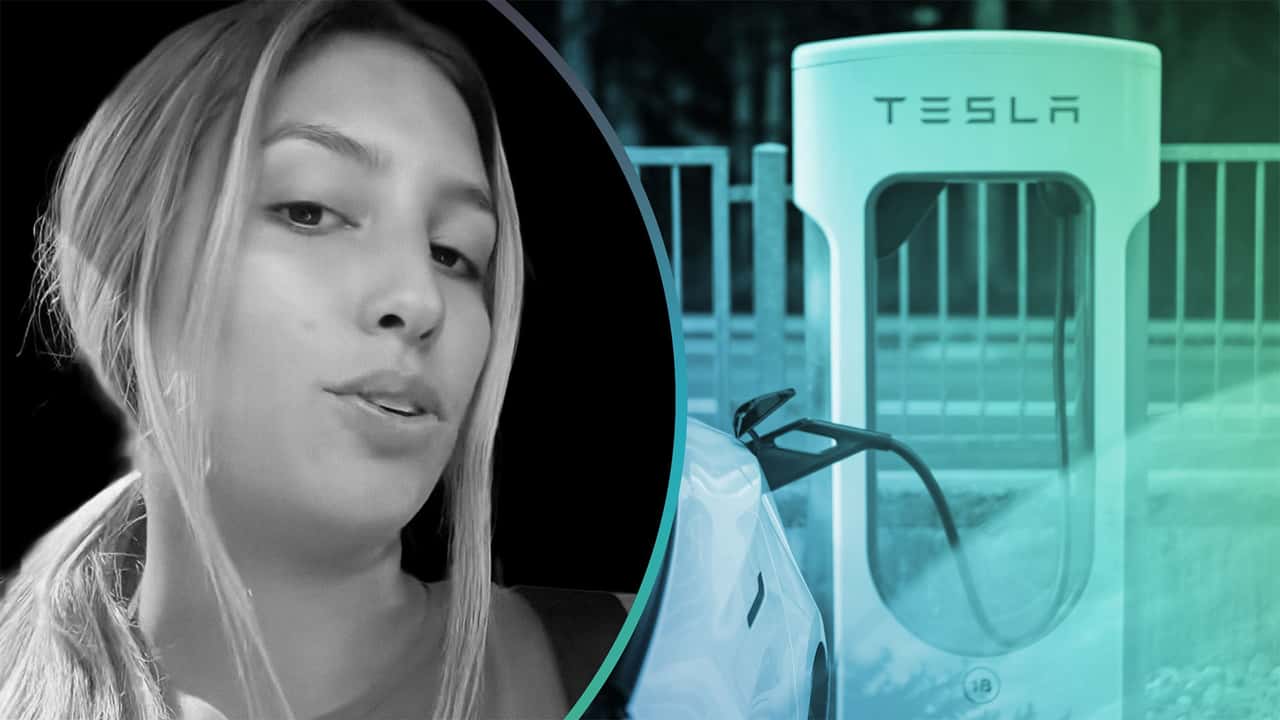

Two charging stations. Dozens of EVs. One Tesla that won’t budge.
As apartment dwellers juggle limited infrastructure, one driver’s refusal to move his fully charged car has ignited a battle of battery percentages, courtesy notes and TikTok fury.
In a viral TikTok, EV owner Eriana (@eerriiaannaa.22) brings her viewers up to speed on the silent battle being waged in her apartment complex, all thanks to an inconsiderate Tesla owner who appears to be using a charging space permanently as a way to avoid a monthly parking space fee.
“You have a Tesla. I know you can afford a $150 parking spot per month,” she reasons into the camera while preparing to write a note to the offender. “He's just parked there. He's not even charging his car. So, okay, I've had enough. I think it's fair for me to write a note and put it on his car.”
Now Trending
As EV adoption continues to climb, stories like this are becoming more common, especially in multi-family housing settings where charging infrastructure remains limited. According to the U.S. Department of Energy, just over 6% of multi-unit dwellings currently offer dedicated EV charging for residents, despite the fact that around 20% of EV owners live in apartments or condos.
That scarcity often turns chargers into unofficial battlegrounds. While public EV etiquette encourages unplugging and moving a vehicle once charging is complete, apartment dwellers face a unique problem: There’s no rotation system, no clear enforcement policy and often no alternative chargers nearby. The result is growing tension between neighbors, especially when someone treats a charger as a personal parking spot.
FROM THE TRENDING NEWS DESK
Viral bits from across the social media landscape
Our team of experts tracks what's trending so you don't have to—from viral videos to online debates that have everyone talking.
In Eriana’s case, she noted that her apartment complex only has two charging spots total, making the days-long occupation by a non-charging Tesla more than just an inconvenience. “I have to go somewhere tomorrow that I have to drive pretty far,” she says in the video. “And I come down here and both spots are taken, and one of them is the Tesla, and he’s not even charging.”
Is Charger Squatting Illegal?
The most common question raised in the TikTok’s comment section, besides whether the Tesla has moved yet, is whether this kind of behavior is legal. The answer, as it turns out, varies widely depending on where you live.
In California, for example, state law prohibits parking in designated EV charging spots unless the vehicle is actively connected to a charger. Hawaii, Oregon, Washington and several other states have similar laws on the books.
But in most parts of the country, no such protections exist. Enforcement typically falls to individual property owners, meaning apartment complexes are left to decide whether to install signage, write policy into leases or implement towing procedures.
Without state laws or building-level enforcement, most EV drivers are left to rely on unspoken rules and a healthy amount of hope that their neighbors follow them.
Best practices, according to experts, include:
- Only occupying the spot while actively charging
- Moving the vehicle promptly once full
- Leaving contact info in the windshield when parked at shared chargers
But many apartments and condos lack app-based systems or smart chargers that notify users when charging is complete. In those settings, staying too long can become a recurring problem.
As one commenter on Eriana’s TikTok put it: “People treat chargers like reserved seating. It’s not your table. Other people need to eat too.”
The Real Cost Of Inconsiderate Charging
In the video, Eriana speculates that the Tesla owner is using the charger spot as a workaround to avoid paying for a traditional monthly parking space, an expense she pegs at $150. That cost-cutting move may seem smart to the squatter, but it creates real-world consequences for other EV drivers.
With her vehicle nearing empty, Eriana is left scrambling for a solution. Without nearby charging options, she’s now forced to either wait, try again late at night or locate a public fast-charger, options that are time-consuming, inconvenient or potentially unavailable depending on where she lives.
The situation isn’t unique. A 2024 McKinsey report on EV readiness found that charger access is the single largest barrier for EV owners in urban areas, with shared residential chargers topping the list of frustration points.
In public charging networks like Tesla’s Supercharger system or EVgo, lingering after a charge is complete can incur idle fees, often upwards of $1 per minute once a grace period ends. That feature has helped encourage rotation and reduce congestion at high-traffic stations.
But in private apartment settings, most Level 2 chargers aren’t smart enough to track charging duration or impose penalties. Some landlords and HOAs are beginning to install smart charging hardware with time tracking and even reservation systems, but these tools are still far from widespread.
EV owners in shared housing can also advocate for solutions like:
- Adding signage with time limits
- Leasing additional chargers through rebate programs
- Asking property managers to write EV rules into lease agreements
Until then, notes like Eriana’s may remain the go-to enforcement tool for apartment dwellers dealing with charger squatters.
InsideEVs reached out to Eriana via direct message.

RECOMMENDED FOR YOU

Tesla Apparently Won't Let Cybertruck Buyers Transfer FSD Without Spending Another $20k
The Rivian R2 Is Finally Here. The CEO Just Shared When To Expect More Models
This Tesla Model 3 Went Nearly 400 Miles In A Range Test, 30 More Than Its EPA Rating
'I Want To Own It': What Engineering Explained's Jason Fenske Thought Of The Rivian R2
Teslas Are More Likely To Hit 250,000 Miles Than Almost Every Car Brand
The Electric BMW M3 Is Coming. Here's What It Might Look Like
The Best EV Lease And Finance Deals In June 2026