Home
News
Battery Tech
How Hyundai And Kia Are Dealing With EV Fire Concerns In Korea
The Korean automaking giant is launching free inspections, disclosing its battery sourcing and adding software updates after a fire.

Photo by: InsideEVs
Patrick George 
By: Patrick George
Aug 18, 2024 at 8:33am ET
Add InsideEVs as a preferred source in Google
- (https://twitter.com/intent/tweet?url=https%3A%2F%2Finsideevs.com%2Fnews%2F730531%2Fhyundai-kia-fire-korea%2F&text=How%20Hyundai%20And%20Kia%20Are%20Dealing%20With%20EV%20Fire%20Concerns%20In%20Korea&via=InsideEVs)
- copy
Share
Comment
- A fire with a Mercedes-Benz EQE and then a Kia EV6 has sent South Korea into a panic over EVs.
- EV fires are statically few and far between, but if they do happen, lithium-ion battery fires are particularly nasty and hard to extinguish.
- The involved car companies are making a number of changes in an attempt to restore customer trust.
It's a situation no electric vehicle owner wants to think about: A car catches fire for inexplicable reasons and causes significant collateral damage before it's finally extinguished. It's also a headline no car company that makes EVs wants to deal with. Thankfully, those fires are statistically rare. But after one conflagration involving an electric Kia in a parking garage in Korea, the Hyundai Motor Group said it's taking proactive steps to alleviate the public's fire fears and alert owners to potential problems before they happen.
The world's third-largest automaker and burgeoning EV titan has announced several policy changes, new practices and forthcoming software updates since a Kia EV6 caught fire earlier this month. Fortunately for all involved, that blaze was extinguished quickly. But it came on the heels of a far more devastating fire involving a Mercedes-Benz EQE in an Incheon garage that sent two dozen people to the hospital.
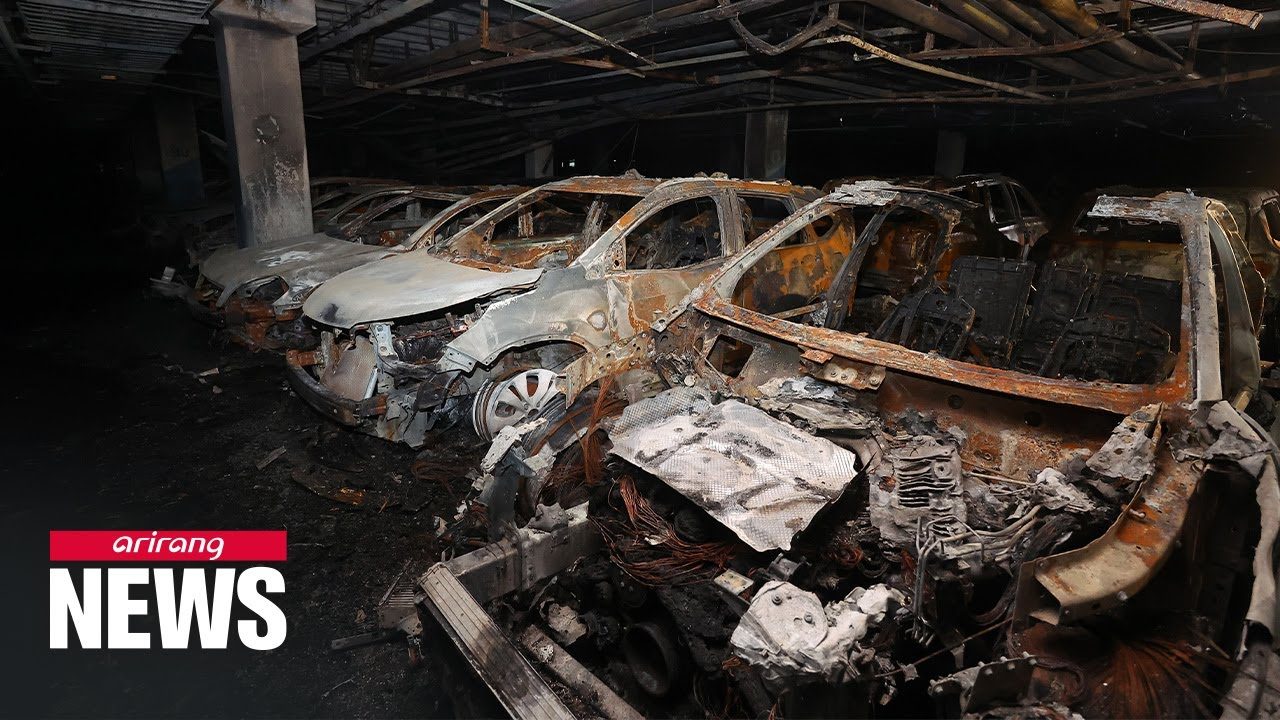
Both blazes have sparked a national panic in South Korea, a nation whose automakers are crafting a huge play to be competitive in the EV world. Online used EV sale listings are now up nearly 200% as owners quickly seek to dump their cars amid fire concerns, according to local news reports.
That's a situation the Hyundai Motor Group clearly wants to get ahead of. So last week, it launched a free inspection program for owners of Hyundai, Kia and Genesis EVs in the home market.
"The inspection targets all passenger and small commercial electric vehicles from Hyundai Motor Company, Kia Motors, and Genesis, and a total of nine items related to the safety of electric vehicles are inspected, including insulation resistance, voltage deviation, cooling system, damage to connecting cables and connectors, underbody impact/damage [and] occurrence of fault codes," the automaker said in a news release. "Customers who wish to use the service can make a reservation by selecting the desired date and location on a weekday or Saturday through each company's customer center, and then visit the service center."
The automaker also said that its Hyundai and Kia brands are providing home chargers (including installation, in Hyundai's case), somehow guaranteeing the residual value of used cars and supporting owners if a total loss happens due to an accident within one year. Again, those perks seem to be limited to Korean EV owners, not ones in other markets.

Kia EV6 battery
Furthermore, along with Mercedes-Benz, Hyundai is voluntarily disclosing the names of its battery suppliers to owners, according to Bloomberg. This has been—and continues to be—a point of contention among owners who want to know if their particular batteries are tied to any specific fire incidents. Across the industry, it's often very hard to tell what batteries are in what EVs and where they come from.
The batteries from the Mercedes fire in Korea are believed to be sourced from China’s Farasis Energy, which are unlikely to be used in any U.S.-model EVs. (We'll update this story as we get more on the source of the batteries for U.S.-market EQE sedans; Mercedes' EQ SUVs use locally made batteries near the same Alabama factory that builds the cars.)
Yoon Joonwon, a fund manager at DS Asset Management Co. in Seoul, told Bloomberg that sourcing quality may make a difference here: “It’s difficult to tell at this point whether Farasis batteries are the problem, but there’s a general sentiment that the risk is higher with smaller battery makers than major producers like CATL or Korean makers,” he said. In other words, it seems unlikely that U.S. EV batteries are implicated here; many of the e-bike fires that have caused chaos in New York City, for example, have been tied to batteries from cheaper, lower-cost Chinese sources rather than higher-grade automotive ones.
According to Hyundai and Kia's websites, batteries are sourced from Korean giants LG and SK On, as well as CATL.
Hyundai BMS
Finally, Hyundai Motor has announced updates to its Battery Management System (BMS) that should help monitor irregularities and alert owners if any are occurring. "When the BMS detects any malfunctions, it immediately assesses the risk level and initiates vehicle safety control measures," the Korea Times reported. The abnormal data is transmitted to remote support centers of the carmakers, which then automatically send a text message to the customer." Updates will be applied to new vehicles and ones currently on the road by the end of this year.
The automaker added to local news outlets that it does not believe "overcharging" was a source of any battery fires, saying the BMS already monitors that situation and that "the likelihood of issues caused by overcharging is close to zero percent."
"Hyundai Motor Group's EVs incorporate a comprehensive range of safety technologies developed based on the expertise and experience accumulated so far," a company official said. "We are committed to ensuring that customers worldwide can feel safe driving our EVs."
The automaker had better hope so. EV sales in its home market have been down recently despite significant growth globally, and the latest spate of fires—though only limited to two known incidents so far—have sent sales and prices plummeting. It's certainly not a situation Hyundai Motor wants as it escalates an EV push designed to take on Tesla, China and the rest worldwide.
We're reaching out to Hyundai and Kia in the U.S. to see if any of these policies or updates are coming to American-market cars. No fires from either brand, or Mercedes-Benz, are known to have happened recently; a few thousand 2022 Kia Niro EVs were recalled recently over fire concerns, but Hyundai Motor's largest fire-related recall was for gasoline-powered cars.
What do you think?
View
Comments
More on this as we get it.
Contact the author: patrick.george@insideevs.com
More on EV Fires
Tesla Gets A Warning From Uber's CEO
Mercedes EQE's Catastrophic Fire In Underground Garage: What We Know
How Much Of A Fire Risk Are Electric Cars?
Kia Is Recalling Some 2022 Niro EVs Because They Might Catch Fire
We want your opinion!
What would you like to see on Insideevs.com?
Take our 3 minute survey.
- The InsideEVs team
Share this Story
- (https://twitter.com/intent/tweet?url=https%3A%2F%2Finsideevs.com%2Fnews%2F730531%2Fhyundai-kia-fire-korea%2F&text=How%20Hyundai%20And%20Kia%20Are%20Dealing%20With%20EV%20Fire%20Concerns%20In%20Korea&via=InsideEVs)
- copy
GO TO COMMENTS
(
)
Got a tip for us? Email: tips@insideevs.com
View all comments ( )
Trending
Kia EV3 Lease Deals Are Here, And It’s Cheaper Than The Chevy Bolt And Nissan Leaf
I Let Android Auto Plan My EV Roadtrip. Here’s How It Worked
This Chevy Bolt Has 470,000 Miles. Here’s How Much A New Battery Was
Here's What It's Like To Take Delivery Of A Rivian R2
latest articles
- This Chinese EV Is Now Made In Europe. More Are Coming Oct 20 - News -
- GM Is Closing Its Detroit EV Battery Plant Oct 20 - Industry -
- The 2027 Lexus NX Plug-In Hybrid Gets A Bigger Battery And Fast Charging Oct 20 - Official -
- Kia EV3 Lease Deals Are Here, And It’s Cheaper Than The Chevy Bolt And Nissan Leaf Oct 20 - Pricing -
- Here's What It's Like To Take Delivery Of A Rivian R2 Oct 19 - News -
- Used EVs Hit A Record Share Of Overall Used Car Sales In September Oct 19 - Sales -
- Nio's Little Electric Car Has A Cool Party Trick: Upgradeable Range Oct 19 - News -
RECOMMENDED FOR YOU
The Roadster Will Have Tesla’s Most Advanced Battery Pack Yet
The 2027 Lexus NX Plug-In Hybrid Gets A Bigger Battery And Fast Charging
Tesla Supplier Reports Record Earnings From EV And Energy Storage Batteries
Kia EV3 Lease Deals Are Here, And It’s Cheaper Than The Chevy Bolt And Nissan Leaf
China Wants Mass-Produced Solid-State Batteries By 2030. CATL Knows That's Hard
Here's What It's Like To Take Delivery Of A Rivian R2
How Geely's New Battery Handles A Megawatt Of Charging Power Without Crazy Degradation