
VW Boosts EV Spending To Catch Tesla, Will Electrify More Plants
VW Group pledged to increase investments in e-mobility by almost 50% to $59 billion through 2026.


In addition to the executive reshuffle, VW Group announced significant updates to its electrification strategy yesterday, pledging to increase capital expenditure and product development costs for e-mobility by almost 50% to €52 billion ($59 billion) through 2026.
Of the total investments of €159 billion ($179 billion) allocated for the next five years, 56% or €89 billion ($100 billion) will be for future-oriented investments, primarily in e-mobility, hybridization, and digitalization. Another big decision from VW Group is to electrify more European plants to achieve its goal of becoming global market leader in electric mobility by 2025.
The company’s vehicle manufacturing and components plants in Lower Saxony alone will be allocated €21 billion ($23.7 billion). Volkswagen Commercial Vehicles’ Hanover site will go all-electric in the medium term and will get to build Audi’s first Artemis vehicle, the bodywork of a new Bentley model, and the VW ID. California all-electric camper van based on the upcoming ID. Buzz. The site will also built MOIA autonomous shuttles and the self-driving ID. Buzz AD.
Gallery: VW Group Supervisory Board meeting press conference

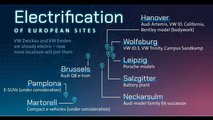
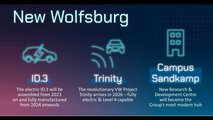




Volkswagen has also confirmed the electrification of its main plant in Wolfsburg through the next-generation, Level 4-capable VW Project Trinity EV, which will enter production in 2026, possibly at a new plant located outside the current site. Furthermore, there are plans to build a second EV manufacturing facility on the current factory premises by 2030. The carmaker will also build Europe’s most modern research and development center, the Sandkamp Campus, in Wolfsburg.
Until then, the carmaker plans to re-equip the Wolfsburg site for full production of the ID.3 from 2024. Starting from 2023, Wolfsburg will build the ID.3 with supplies from Zwickau.
“Wolfsburg, our Group’s long-established headquarters, will be central to the transformation, because we can only safeguard our strong position long term if Wolfsburg is successful. We will give the Wolfsburg site a new identity with our vision for 2030. Our goal is to create an internationally sustainable site with efficient Group steering, two electric manufacturing facilities, plus a state-of-the-art research and development center, and to establish and expand other future-oriented fields.”
Herbert Diess, VW Group CEO
The Salzgitter site will be further expanded into a European battery hub, with VW Group to invest around €2 billion ($2.25 billion) to produce the unified cell for the volume segment at its gigafactory from 2025. Development, planning, and control of the battery production will be brought together in Salzgitter.
The component plants in the region will continue to contribute to the transition to e-mobility. The Hanover plant will also produce axles for MEB models, while the Braunschweig, Salzgitter and Kassel will expand MEB production of battery systems, rotors/stators and electric motors. Furthermore, the factories are already preparing to manufacture key components of the SSP platform.
In addition to the investments in Lower Saxony, VW is planning further investments in e-mobility at the Leipzig plant, which will build two PPE-based Porsche EVs, Neckarsulm (next-gen PPE-based Audi E6 model family), Brussels (Audi Q8 e-tron from 2026), Martorell (compact EVs), and Pamplona (electric SUVs from 2025).
More on VW Group's electrification push

Source: VW Group
RECOMMENDED FOR YOU
Americans Just Aren’t Buying Audi EVs
Launch Mode Actually Makes The 2026 Tesla Model Y Performance Slower
The Best EV Lease And Finance Deals In July 2026
I Used To Hate Giant EVs Like The Cadillac Escalade IQL. Then I Drove One
'We Will Not Survive': Toyota Boss Wants Japanese Automakers To Team Up To Beat Chinese EVs
Honda Just Axed Its Last EV In The U.S.
The U.S. Strongarms Polestar Out Of The American EV Market