Home
News
Battery Tech
LG Chem's Li-Sulfur Battery Successfully Tested In High Altitude Aircraft
Lithium-sulfur batteries are considered as one of several next-generation technologies to significantly increase the energy density.

Mark Kane 
By: Mark Kane
Sep 12, 2020 at 2:41pm ET
Add InsideEVs as a preferred source in Google
- (https://twitter.com/intent/tweet?url=https%3A%2F%2Finsideevs.com%2Fnews%2F443709%2Flg-chem-li-sulfur-battery-tested-aircraft%2F&text=LG%20Chem%27s%20Li-Sulfur%20Battery%20Successfully%20Tested%20In%20High%20Altitude%20Aircraft&via=InsideEVs)
- copy
Share
Comment
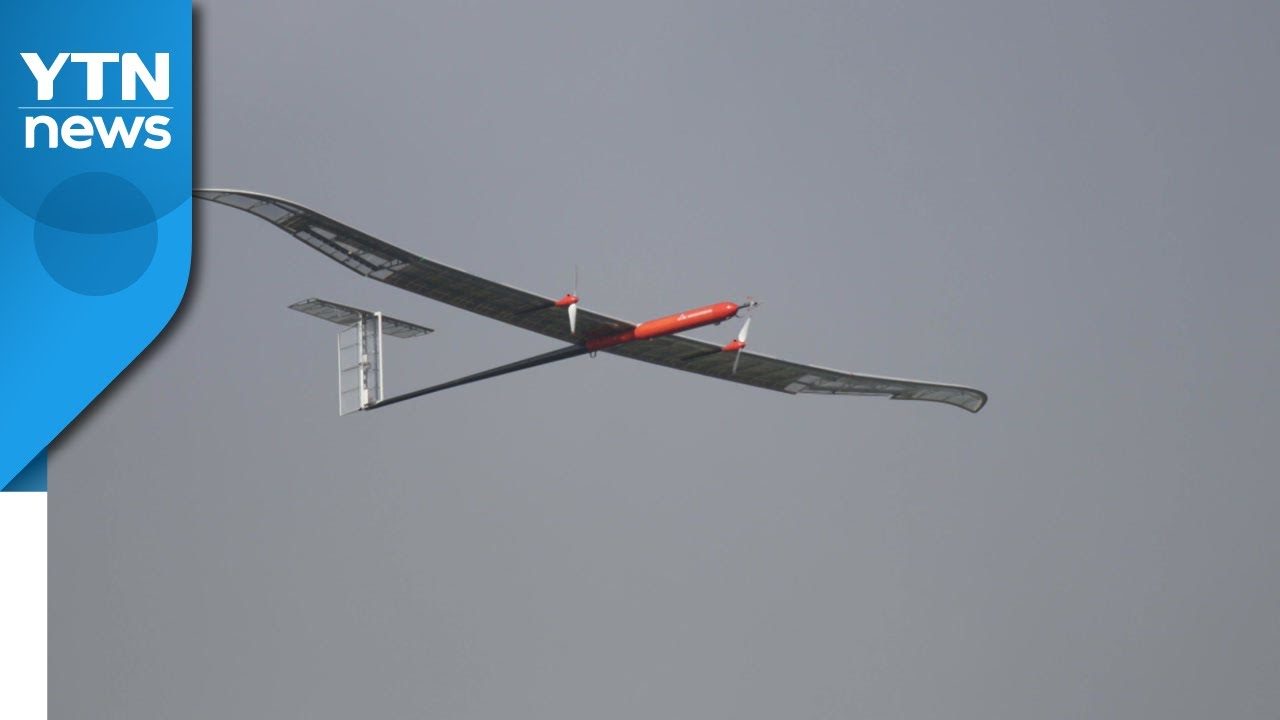
LG Chem announced that its prototype lithium-sulfur battery successfully completed multiple high-altitude flights in a solar-powered unmanned aerial aircraft (EAV-3), developed by the Korea Aerospace Research Institute.
The EAV-3 (9m long, with a wingspan of 20m) was equipped with cells much more energy-dense than current state-of-the-art lithium-ion batteries available on the market. The company says that energy density is 50% higher, which suggests roughly 400 Wh/kg or so (the exact value was not revealed).
According to the manufacturer, the tests confirmed "a stable charge/discharge function of a lithium-sulfur battery in the extreme environment of the stratosphere", at temperatures as low as -70°C and an atmospheric pressure of 1/25 of one at ground level.
** Stratosphere: it is an atmospheric layer ranging from 12-50km altitude between the troposphere (the ground – 12km) and the mesosphere (50-80km).*
As in the case of other solar-powered aircraft, the idea of EAV-3 is to charge the battery during the day and use it to stay in the air during the night.
The EAV-3 achieved an altitude of 22 km (13.7 miles), which is a record in South Korea. Globally, there were multiple approaches to test/demonstrate Li-S batteries in aircraft. The most known is the manned Solar Impulse 2, which completed the round-the-world flight in 2016 (having a 154 kWh battery).
More about LG Chem's test:
"On 30 August, LG Chem loaded a lithium-sulfur battery on EAV-3 at the Aviation Center of Korea Aerospace Research Institute in Goheung and conducted flight testing approximately for 13 hours from 08:36AM to 09:47PM. LG Chem is the first company in Korea which conducted flight testing using a lithium-sulfur battery.
Especially, EAV-3 flew in the altitude of 22kms, which is unprecedented for a domestic unmanned aircraft, and achieved a new record of flying at the highest attitude in the stratosphere in Korea. Also, it flew for 7 hours out of a total of 13 flight hours with a stable output in the stratospheric altitude of 12-22km where a general aircraft cannot fly.
This fight testing is highly significant as it confirmed a stable charge/discharge function of a lithium-sulfur battery, the next generation battery in the extreme environment of the stratosphere with a low temperature of 70 degrees below zero and atmospheric pressure of 1/25 of one at ground level, which is close to a vacuum state."
The next step is a long-endurance flight for a number of days and nights.
The company intends to introduce the lithium-sulfur batteries on the market and "mass-produce" them after 2025 with an energy density target of two times higher than current lithium-ion batteries, which on a cell level should be more than 500 Wh/kg.
What do you think?
View
Comments
"Moreover, it plans to mass-produce a lithium-sulfur battery that has an energy density more than twice that of the present lithium-ion battery after 2025."
See also
 LG Chem Leads EV Battery Market Ahead Of CATL And Panasonic
Silica May Help High Energy Density Li-S Batteries Reach 2,000 Cycles
It's interesting to see LG Chem engaged in Li-S, but we are not sure whether these types of cells will be sufficient for electric cars in terms of cycle life and power output (their usual weak points).
We want your opinion!
What would you like to see on Insideevs.com?
Take our 3 minute survey.
- The InsideEVs team
Share this Story
- (https://twitter.com/intent/tweet?url=https%3A%2F%2Finsideevs.com%2Fnews%2F443709%2Flg-chem-li-sulfur-battery-tested-aircraft%2F&text=LG%20Chem%27s%20Li-Sulfur%20Battery%20Successfully%20Tested%20In%20High%20Altitude%20Aircraft&via=InsideEVs)
- copy
GO TO COMMENTS
(
)
Got a tip for us? Email: tips@insideevs.com
View all comments ( )
Trending
A Tesla Model Y Without A Steering Wheel Is Coming: Musk
Every EV Motor Type Explained: They Aren't All The Same
I Tried Mercedes' Answer To Tesla FSD. Here's How It Went
Tesla Model 3 Maintenance Guide: What Needs Servicing And What Doesn't
Latest Stories
- A Tesla Model Y Without A Steering Wheel Is Coming: Musk Nov 18 - News -
- The BMW i3 Has The Nurburgring Skills To Match Its Impressive Range Nov 18 - News -
- Kia Made Its First EV 40 Years Ago. It Shows How Far Electric Cars Have Come Nov 18 - News -
- Ford Just Started Fathom LFP Battery Production In Michigan. It's A Big Deal Nov 18 - Battery Tech -
- This GM EV1 Lives After A Painstaking Restoration Nov 18 - News -
- ‘We’re Moving Really Fast’: Ionna CEO On 500 kW EV Chargers And Flagship New Location Nov 18 - Charging -
- BMW's First U.S.-Made EV Is Now Rolling Off The Assembly Line Nov 18 - Manufacturing / Production -
RECOMMENDED FOR YOU
Ford Just Started Fathom LFP Battery Production In Michigan. It's A Big Deal
The BMW i3 Has The Nurburgring Skills To Match Its Impressive Range
Solid-State Cells Can Make The U.S. Competitive In Batteries Again: CEO
Kia Made Its First EV 40 Years Ago. It Shows How Far Electric Cars Have Come
Ford Tested 36,000 Mustang Mach-E Batteries. Here’s How They Held Up After 100,000 Miles
This GM EV1 Lives After A Painstaking Restoration
China Has An Iron Grip On EV Batteries. Here's America’s Plan To Break It