
EV Reveals Have Gotten Way, Way Too Drawn Out. The Ford Fathom Proves It
Here's why automakers now announce products years before building them, and why they're unlikely to change course.

In August 2025, Ford announced big news to the world: It was developing an all-new electric pickup truck that would cost under $30,000 when it arrived in a couple of years. A full year later, just this week, Ford dropped another big announcement: It was still developing a midsize electric truck, now dubbed the “Fathom” and priced at—you guessed it—just under $30,000.
In the years between these two announcements, Ford has had at least three major announcements and events surrounding the project. I even got to tour the facility where it’s being developed. But we have learned precious little about the truck: It will have native Apple Maps, a standard touch screen, BlueCruise hardware, a 400-volt architecture, and more passenger space than a Toyota RAV4. It will arrive in late 2027, assuming things go to plan.

Ford announced this week that its next electric truck will be called the "Fathom," although we still don't know what it will look like.
The list of things we don’t know is long. We don’t know the final range of either battery pack, or even whether there will only be two options. We don’t know what it will tow, how much power it’ll make, what options like all-wheel-drive will cost, or whether it’ll have buttons in addition to its touch screen. We don’t know what it’ll look like, inside or out.
So when Ford tried to arrange an “Ask Me Anything” Q&A in the Electric Cars subreddit, it didn’t end up answering many of the questions. Most of the top questions were things that Ford is saving for later, as part of an endless slow drip of bite-sized news.
This is all proving out a problem that has faced the EV world for years: Automakers have started announcing cars way too early, and they risk losing out on the hype when they finally arrive.
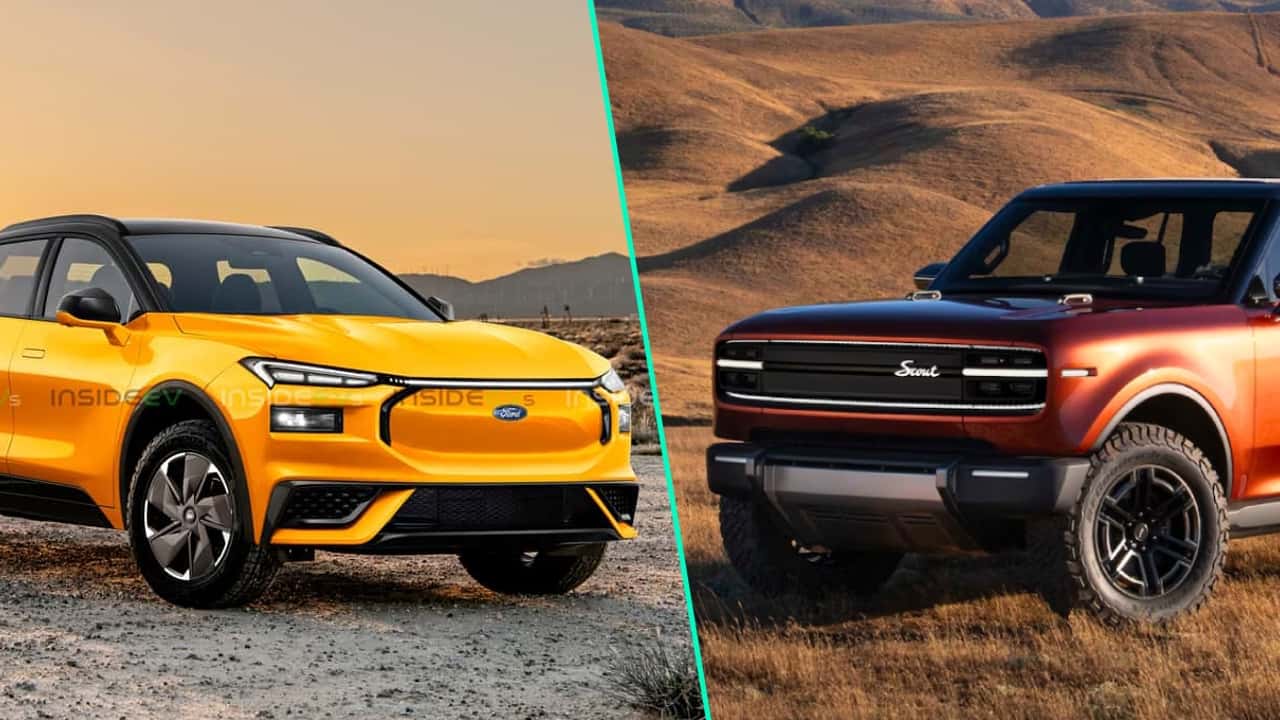
This is the only real teaser we have for the Fathom's design. The main photo in this post features an artist's rendering of what it could look like, but that's just an educated guess for now.
It’s Not Just Ford
Tesla deserves credit or blame for starting this. The company pioneered the innovative approach of revealing cars far before they were even developed, leading to the Model 3 and Cybertruck both reaching volume production far later than expected and being priced higher than initially promised.
But other automakers were happy to take the ball and run with it. Land Rover announced an electric Range Rover in 2023. We drove a prototype over a year ago, with a months-long embargo to even admit we had. Yet you still can’t buy one.
We drove a Range Rover EV prototype over a year ago, years after it was first confirmed back in 2023. Yet Land Rover still hasn't announced key details, and the product isn't on sale.
Rivian announced its R2, R3, and R3X a few months later, in the spring of 2024. The full design was revealed, along with many of the specs, plus the base price. It took two more years to learn the price of the launch version and see the production-spec car that started deliveries in June. I was originally taken by the idea of a $45,000 Rivian. But since it was revealed I completed an entire 24-month lease on a different car, and that base model is still months away.
The R3 and R3X, meanwhile, are still distant specters on the horizon. We don’t even have production dates for a car I saw in person back when Joe Biden was still running for a second term.
Rivian revealed the R3X and R3 on the same day as the R2. Nearly two and a half years later, we still don't know when this product will hit the market.
A few weeks before the election, Scout announced its own duo of far-off EVs. The Terra and Traveler certainly looked great back in 2024, with excellent specs and a lot of buzz. But the company faced a tough road from the beginning: Could it hold people’s interest until the products finally arrived in 2027?
Well, turns out Scout fans are having their patience tested even more than originally expected. The company has confirmed that while "initial production" is on track for 2027, customer deliveries won’t start until 2028. That means Scout could end up launching a product at least four years after it revealed its design and specs. That can’t quite beat the Tesla Roadster 2.0—which was revealed nine years ago and still isn’t in production—but hopefully no one is coming too hard for that crown.
The Scout Terra was revealed nearly two years ago. It might be another two years until it gets delivered.
Why This Happens
There’s a clear audience for these multi-year public development cycles: shareholders. The original Tesla Model 3 was publicly confirmed by Elon Musk nearly four years before it went on sale, at a time when the company needed investors to see the long-term growth strategy for what was then a luxury goods seller.
Teasing the Model 3 helped Tesla keep investors excited early on. But its extremely long and troubled ramp-up period gave the company a reputation for giving highly optimistic timetables. True Full-Self Driving, the Cybertruck, the Semi, and the second-generation Roadster all missed their target dates, too.
Since then, it’s become a good way for brands to claim that—while their current products struggle to profitably compete in the marketplace—good things are right around the corner. This is likely why, when I first heard about the project that would become the Ford Fathom, it was on an earnings call where Ford CEO Jim Farley was talking about a “skunkworks” team he had building a revolutionary EV, about eight months before Ford officially announced the electric truck program.
It’s helpful for brands like Rivian to prove that they have a long-term plan to win. It’s helpful for companies like the Volkswagen Group to say, sure, our current EVs may not be succeeding in America, but our reborn truck brand, Scout, will fix it all.
Mostly, though, I’d argue it’s just a natural result of the attention economy. It’s very, very hard to break through in a world of infinite news and endless feeds. Back in the magazine days, you knew that if you announced the Ford Fathom all at once, you’d get a long tail of awareness as magazines and dealers spread the news.
The VW ID.4 is dead for the U.S., and the ID. Buzz (pictured) is on a one-year hiatus due to slower than expected demand. So it's no surprise that VW wants investors to know about its ambitious plan to sell electric trucks to Americans through a sub-brand, even if sales are a few years out.
But these days, that “one big story” may get drowned out by whatever rage-baiting nonsense is clogging up your feed. Companies therefore opt to drip feed out their news, hoping not just to get one news cycle, but six or seven out of the same product.
Why It’s Annoying For Consumers And Dangerous For Car Companies
That sounds like a clear win. And for one company, it can be. When everyone does it, though, it stops working. Years and years of false promises have left a cloud of skepticism over every EV reveal.
Every article becomes a judgment call of how much the journalist trusts what the automaker is saying, and that dulls any appeal. After all, it isn’t just Tesla and Faraday Future that have delivered products years late, or with absurdly different pricing structures, or with major parts unfinished.
The Ford F-150 Lightning’s price quickly climbed from its announced $40,000 base MSRP. The Volvo EX90 was late and unfinished. The Chevy Blazer EV SS faced multiple delays, too. Meanwhile the Honda 0 Series was first shown in 2024, and then canceled just a few months before deliveries were set to begin. And Lord knows when Porsche's on-again-off-again 718 Boxster and Cayman EVs will finally arrive.
Decision makers reading this may be thinking, sure, but even if you announce the vehicle close to production you could have delays. My company is smart. My company is different. We won’t miss the target. To which I say: It doesn’t matter.

Even if you hit your target exactly, you’ve given your competitors a roadmap to beating you. When you announce an electric pickup truck four years before it goes on sale, you give competitors time to beat you to market. And you’re still at the whims of pandemics, wars, and supplier issues that may make the promised pricing and specs irrelevant or impossible.
Automakers know this, and they do it anyway. Because this business isn’t just about selling cars, it’s about staying relevant. If your competitors have you beat today, you had better promise that something better is right around the corner, lest you lose the confidence of buyers and shareholders alike.
Tesla proved that by hyping the product ahead of time you could excite shareholders, giving you more access to capital markets and thus more cash. Hype generates cash, which leads to a better product, which leads to more sales, more cash, and more investor interest. Get things right and you have a beautiful feedback loop. The rewards can be great.
Yet so too are the risks. As more and more companies follow the same playbook, more and more customers, journalists, and investors are growing skeptical of tremendous promises with fuzzy timeframes. Develop a reputation for over-promising and under-delivering and, by the time your product completes its four-year-long public development period, your potential customer may have moved on.
Contact the author: Mack.Hogan@insideevs.com
Related Stories
RECOMMENDED FOR YOU
Ford Fathom: Everything We Know About The Sub-$30,000 Affordable EV Truck
How Much Quicker Is The Newest Version Of Tesla FSD? This Test Put It Against Old Software To Find Out
Ford's EV Sales Are Falling Off A Cliff In America
Tesla Never Made An Electric Jet Boat, So This YouTuber Built One Himself
Ford Recalls 86,000 Mustang Mach-E EVs Over Flying Window Trim Risk
Subaru Is Spending Three Times More To Sell EVs Than Gas Cars. It's Not Working
Ford Just Made It Easier To Back Up Your House With An F-150 Hybrid Or Lightning