
The Xpeng L03 Aims To Take On Europe And Undercut Tesla
This Chinese SUV has integrated Google Maps and FSD-like capability, all for about $3,500 cheaper than a Tesla Model Y.
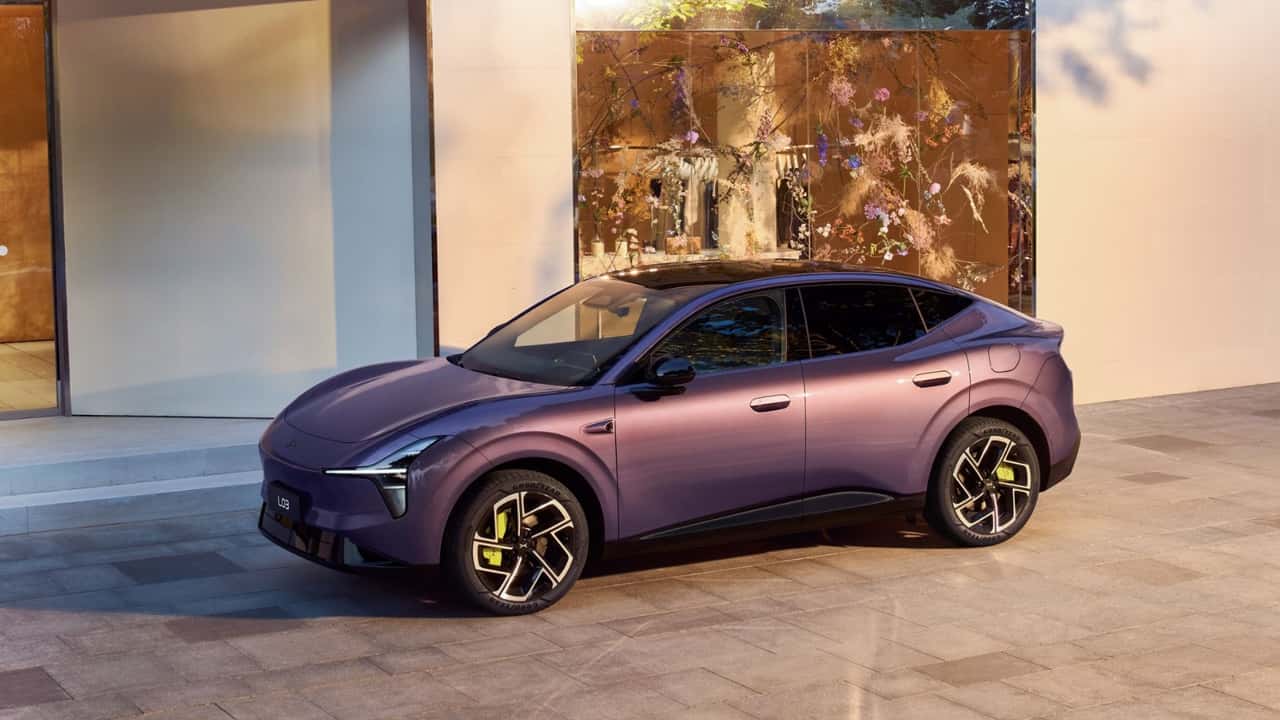

- The Xpeng L03 is a compact crossover aiming right at the Tesla Model Y.
- At $40,700 (USD equivalent in the German market), it undercuts the $44,480 local price of the Model Y by quite a bit.
- It also includes integrated Google Maps, a first for any Chinese car brand.
As you well know, there are a lot of Chinese brands vying for attention outside of China. BYD, Zeekr, Geely, Chery, Nio, and Xpeng are all getting into the export game. Xpeng been trying to sell its series of EV crossovers in Europe for a while now, but with limited success.
But its latest model looks like it could turn the tides here. This week in Munich, Xpeng showed off the European market version of the recently released Mona L03 crossover. For Europe, they’ve dropped the “Mona” moniker, changed up some of the equipment, and priced it to go right up against some of the biggest nameplates on the market.
At its core, the L03 is a compact crossover-coupe that’s very similar in concept to the Tesla Model Y. It shares its nomenclature as the Mona M03 sedan, Xpeng’s most popular car, which is meant to be a direct Tesla Model 3 competitor. The L03 is stylish; it avoids the Model-3-in-a-photocopier look of the original Model Y. I has a similar front-end treatment as its sedan cousin, but the two don’t really look like they share any body panels. At 183 inches long, it’s marginally smaller than the Tesla Model Y, which could be an asset in European markets where physical size is a make-or-break thing for buyers.

This is a very important car for Xpeng. While some brands are merely homologating Chinese models, bringing them to Europe with zero changes, the export version of the L03 looks like it was designed for Europe from its outset. For example, Xpeng claims to be the first Chinese automaker to have Google Maps integration.
The L03’s powertrain options are surprisingly varied. The base standard range model comes with a 58.3 kWh battery and a 241 hp rear motor. It's good for 276 miles on the more forgiving WLTP range cycle. The long-range model keeps the same rear motor, but boosts the battery to 71.2 kWh, bringing the range to 323 miles. There’s also a top-of-the-line AWD performance model that adds a second motor to the front wheels, bumping output to 382 horsepower. Range does fall to 273 miles, however.
Interestingly, the L03 will also be available in an EREV form, too. Xpeng hasn’t confirmed European specifications quite yet, aside from promising up to 621 miles of driving range. If it’s like the Chinese version, then expect a 1.5-liter engine good for about 94 horsepower, and a battery with 37.2 kWh of capacity. It uses the same 241 hp rear motor as the EV versions. We’ll have to wait and see what Xpeng officially says about what specs the Xpeng L03 will have.

Like Tesla, Xpeng is going all-in with its AI and assisted driving features. No matter where the L03 is sold, it'll come with Xpeng’s VLA 2.0 software, which is a direct competitor to Tesla’s Full Self-Driving.
The real kicker is the L03’s price. Xpeng released pricing for the German market; a base L03 will come in at €35,600, or about $40,700 with current exchange rates. This is cheaper than €38,970 (about $44,480) needed for a base Model Y in the same market. Xpeng is really gunning for the best here.
Xpeng says the L03 will go on sale simultaneously in 65 different markets around the world this year, including China.
Contact the author: Kevin.williams@insideevs.com.
Related Articles
RECOMMENDED FOR YOU
How Much Quicker Is The Newest Version Of Tesla FSD? This Test Put It Against Old Software To Find Out
EV Reveals Have Gotten Way, Way Too Drawn Out. The Ford Fathom Proves It
Subaru Is Spending Three Times More To Sell EVs Than Gas Cars. It's Not Working
Tesla Never Made An Electric Jet Boat, So This YouTuber Built One Himself
What To Know About California's $3,500 EV Rebate—And Which Teslas Qualify
Ford Fathom: Everything We Know About The Sub-$30,000 Affordable EV Truck
Clemson's Solar-Powered EV Project Looks Like A Cardboard Shoe. But It's A Lot More Clever Than It Looks