Home
Xpeng
News
Tesla FSD Has A Real Rival. But It Drives Very Differently
This first real-world test with Western journalists reveals where VLA 2.0 shines, and where FSD still pulls ahead.
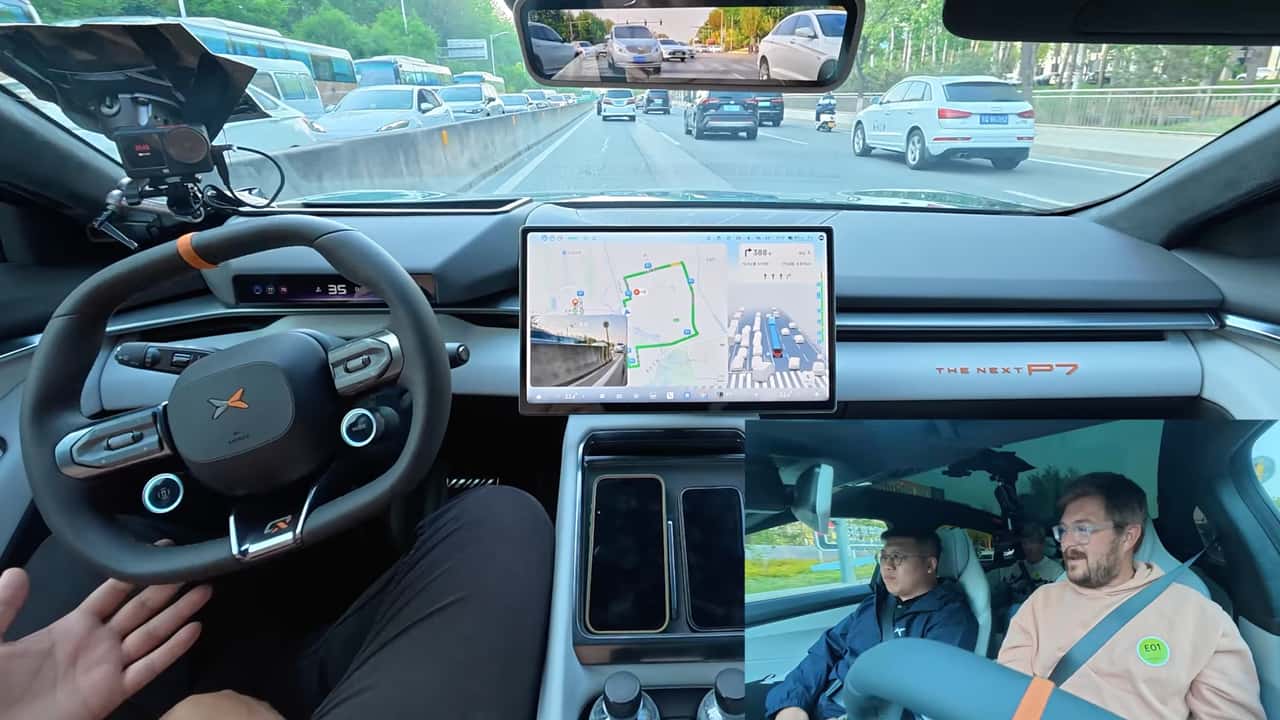
Photo by: Out of Spec Reviews (YouTube)
Andrei Nedelea 
By: Andrei Nedelea
Apr 30, at 8:58am ET
Add InsideEVs as a preferred source in Google
- (https://twitter.com/intent/tweet?url=https%3A%2F%2Finsideevs.com%2Fnews%2F794558%2Fxpeng-vla-beijing-test-ride%2F&text=Tesla%20FSD%20Has%20A%20Real%20Rival.%20But%20It%20Drives%20Very%20Differently&via=InsideEVs)
- copy
Share
Comment
- Xpeng's VLA 2.0 is smooth and confident, but still trails Tesla Full Self-Driving in overall capability.
- It relies too heavily on lead cars and can react too late to lane changes and traffic.
- It looks impressive in traffic but hasn’t yet proven how good it is in emergency situations.
Tesla may still be the name most associated with advanced driver assistance systems, but China is closing the gap fast. Xpeng recently started rolling out its VLA 2.0 driver assistance system, and Western journalists had the chance to experience it in a real-world driving scenario. They were all impressed.
VLA is Xpeng’s answer to Tesla Full Self Driving, and, at least from this initial batch of videos showing how it behaves in Beijing traffic, it works very well and feels quite different from FSD. It uses what Xpeng calls a “generative world model” that simulates driving scenarios, which was used to develop the system before deployment.
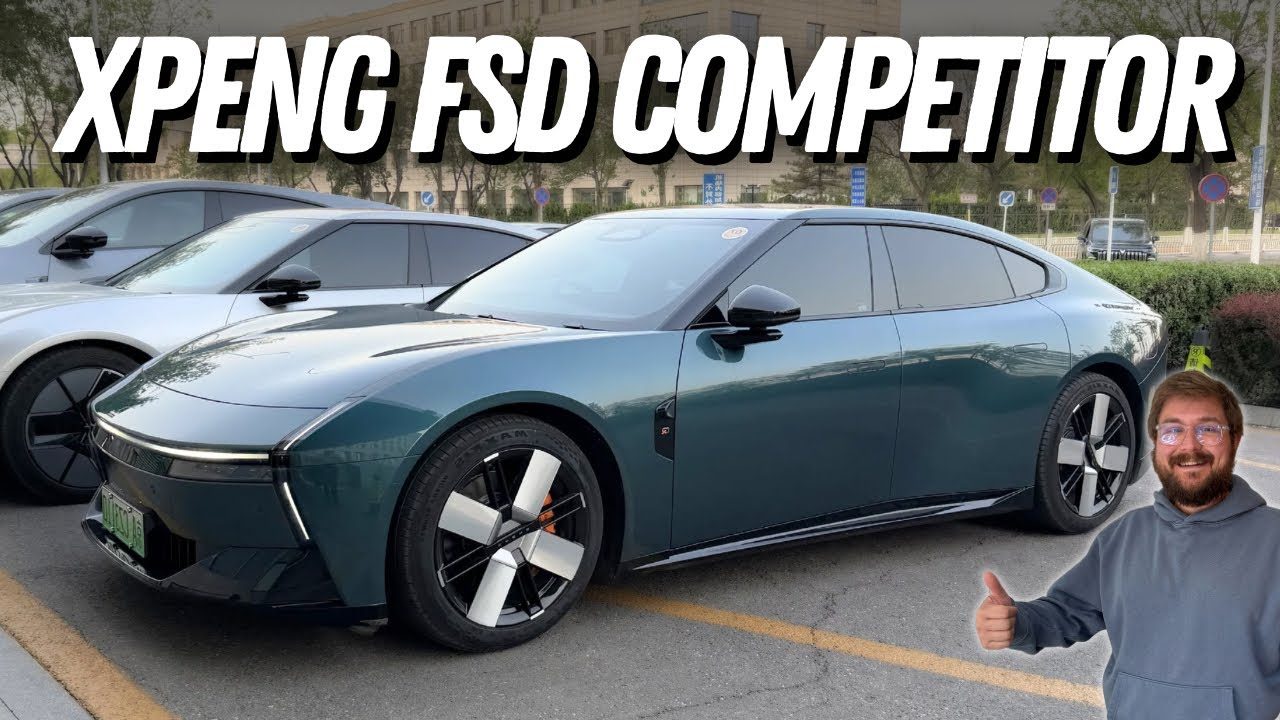
Xpeng says this has helped expand its autonomous driving simulation scenarios from 30,000 a year to 500,000, with a daily simulated mileage equivalent to 30 million kilometers of real-world driving. That’s a different approach to Tesla’s, which relies on ridiculous amounts of real-world data feeding its neural networks. Xpeng wants to generate, simulate, and replay scenarios virtually without requiring actual test vehicles to cover real-world miles.
Where the two companies’ approaches are similar is in their heavy reliance on cameras rather than radar or lidar. Xpeng was one of the early pioneers of using lidar in its vehicles for driver assistance, but VLA 2.0 doesn’t need it.

Stay informed with our newsletter every weekday
back
Subscribe For more info, read our Privacy Policy & Terms of Use.
That all sounds impressive, but simulation only matters if it transfers cleanly to the real world. Kyle Conner from Out of Spec Reviews went for a ride in an Xpeng P7 with VLA 2.0 enabled, and it looked surprisingly polished and surefooted. It handled lane changes smoothly, moved through messy traffic confidently, and seemed suited for the local driving culture.
It didn’t feel like a prototype. It was assertive, squeezing through gaps when it had to, in a way that may appear somewhat reckless by American or European driving standards, but in Beijing, it blended in with how everyone else was driving. The ride wasn't long enough for the system to show off its ability to avoid potential emergencies, even though it handled the rather hectic traffic very well overall.
 Tesla Says It Will Need To Build Micro Factories To Retrofit Old Cars For FSD
Tesla Drivers Must Pass A Quiz To Enable FSD In Europe
Tesla’s FSD Is Finally Approved In Europe. Only Not Everywhere Yet
Tesla Will Stop Selling Full Self-Driving As A One-Time Package Next Month
What do you think?
View
Comments
Kyle had previously experienced the version of FSD that is available for Teslas in China and said it felt like an older and more conservative version of the suite compared to what’s available in the United States. He said VLA 2.0 felt smoother than FSD in China, although it was not perfect. It seemed a bit too eager to follow the vehicle in front, while at other times it hesitated to move into the right lane or to prepare for an upcoming turn.
VLA 2.0 looks like one of the most credible FSD challengers yet, and it shows how quickly China is catching up to and, in many cases, surpassing the West. Tesla still looks like it has the lead in advanced driver assistance, but it looks like it’s only a matter of time before something (likely from China) surpasses it.
We want your opinion!
What would you like to see on Insideevs.com?
Take our 3 minute survey.
- The InsideEVs team
Share this Story
- (https://twitter.com/intent/tweet?url=https%3A%2F%2Finsideevs.com%2Fnews%2F794558%2Fxpeng-vla-beijing-test-ride%2F&text=Tesla%20FSD%20Has%20A%20Real%20Rival.%20But%20It%20Drives%20Very%20Differently&via=InsideEVs)
- copy
GO TO COMMENTS
(
)
Got a tip for us? Email: tips@insideevs.com
View all comments ( )
Trending
BMW Can't Build Its New iX3 Fast Enough. Now It's Adding The iX4
VW’s Cheap EVs Are So Popular, Buyers Face Wait Times Of Nearly Two Years
Ford Has A Dedicated Battery Abuse Team. It Obsesses Over How Cells Fail
What We Both Thought After Driving The Rivian R2
Latest Stories
- Here’s How To Make Your Holiday EV Road Trip Easier Nov 24 - Charging -
- New York Says 'Enough Is Enough' To In-Car Subscriptions Nov 24 - News -
- An Empty EV Tried To Park Itself 868 Times In One Night. The Video Is Hilarious Nov 24 - News -
- These Are The Top 10 Black Friday EV Deals. Some Are $25,000 Off Nov 24 - Pricing -
- Lucid Gravity Robotaxis Just Took A Major Step Toward Commercial Launch Nov 24 - Autonomous Vehicles -
- The 2027 Cadillac Vistiq Gets A Price Bump And More Options Nov 24 - Pricing -
- BMW Can't Build Its New iX3 Fast Enough. Now It's Adding The iX4 Nov 24 - Manufacturing / Production -
RECOMMENDED FOR YOU
New York Says 'Enough Is Enough' To In-Car Subscriptions
Lucid Gravity Robotaxis Just Took A Major Step Toward Commercial Launch
An Empty EV Tried To Park Itself 868 Times In One Night. The Video Is Hilarious
The 2027 Cadillac Vistiq Gets A Price Bump And More Options
These Are The Top 10 Black Friday EV Deals. Some Are $25,000 Off
BMW Can't Build Its New iX3 Fast Enough. Now It's Adding The iX4
This Little Electric Truck Looks Like France's Answer To The Slate