
Volkswagen Says Its Latest EVs Are 70-80% As Profitable As Gas Cars
VW's profit margins on EVs willl be slim until its next-generation SSP architecture arrives later this decade, its CFO said.
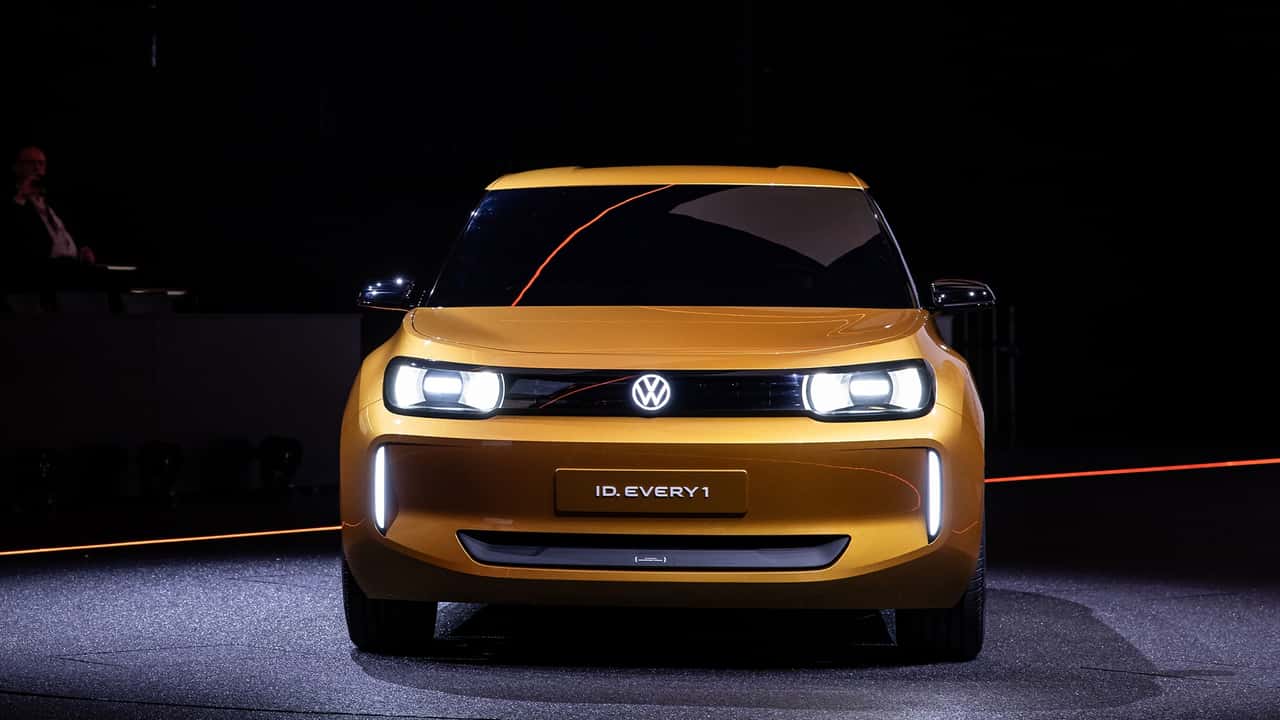

- VW says that its EVs won't have comparable profit margins to combustion vehicles until at least 2030.
- This is contingent on the company's move to its new SSP platform, which aims to cut production costs by as much as 20%.
- Currently, VW expects to have an overall operating margin of between 4% and 5.5% for 2026.
The road to electrification has been a roller coaster. Just a few years ago, manufacturers began dumping billions into battery plants and factories like it was a race to get to market. Scale would eventually deliver price parity with traditional combustion cars. As we know now, things didn't play out exactly as planned, but it hasn't deterred automakers from continuing down the EV path.
Volkswagen is one of the companies that is still pushing ahead. And while electrification isn't a big money maker for the Germans right now, that doesn't mean that it won't be in the future. This week, VW revealed that EVs still aren't making nearly as much profit margin as its combustion-engine cars—and they won't until a whole new EV platform hits the road.

That little nugget comes from Volkswagen Group's first-quarter earnings call, where CFO Arno Antlitz mentioned that VW's EVs won't have similar margins to gas vehicles until the brand undergoes a significant architecture shift.
“We expect the margin to be fully comparable only with our future SSP platform,” said Antlitz.
SSP refers to the upcoming Scalable Systems Platform, which is the successor to Volkswagen's current MEB and PPE EV architectures. MEB underpins the VW ID lineup while the group's premium vehicles like the Audi A6 and Q6 e-tron, as well as the Porsche Macan and Cayenne EVs, are built on PPE.
Volkswagen aims to cut production costs by 20% with SSP compared to MEB. The platform was originally slated to debut this year, but now it's expected by the end of the decade. Antlitz said VW has already made strides in EV profitability, and that that will help it meet Europe's CO2 targets over time without destroying profits.
Vehicles on the modified MEB Plus platform have cheaper lithium iron phosphate batteries and a cell-to-pack battery layout, he pointed out. "There, the margin-dilution effect is still there, but it’s smaller," he said. As an example, he said, the ID.2 Cross has about 70-80% the profit margins of its gas equivalent.
Oliver Blume, CEO of the Volkswagen Group, has laid out a plan to reach company-wide margins of between 8% and 10% by 2030. Blume said in the company's 2025 annual report to shareholders that this would be "built on strict cost and investment discipline."
However, the group as a whole has been feeling the heat over the past few years. It experienced a 10% decline in North American sales and an 8% decline in China—the two biggest automotive markets in the world by volume—in 2025. Blume confirmed during the call that VW is forecasting its annual margin for 2026 to be between 4% and 5.5%, up from 2.8% in 2025.

The tiny profit margins that seen in its EVs should explain why many Western automakers target high-dollar, high-margin EVs like trucks and SUVs before pushing out more affordable models. It also speaks to the reason that many automakers are chasing efficiencies through software and additional recurring revenue via subscriptions. Right now, combustion is keeping the lights on, but smarter, more efficient EVs are still the end goal for many players.
More Volkswagen News
RECOMMENDED FOR YOU
Home EV Charging Has A Hidden Cost. Here’s How To Reduce It And Lower Your Bill
Audi’s China-Only EVs Are Coming To Europe—And They Cost Less Than Local Models
This Kit Turns The Volkswagen ID. Buzz Into A More Capable Off-Road Van
This 100-Year-Old EV Came With More Range Than The First Nissan Leaf
VW Wants Higher Tariffs After Chinese PHEVs Overtake Its Best-Seller in Europe
Xiaomi's First EV Just Hit A Massive Milestone
Volkswagen's Cheapest EVs Are Already A Hit: 70,000 Orders And Counting