
‘You Can Get These Cells On eBay For $30’: Toyota Prius Driver Quoted $2,700 For Battery. Then He Fixes It For Under $100
Battery replacement is one of the most expensive maintenance items for electrified vehicles.
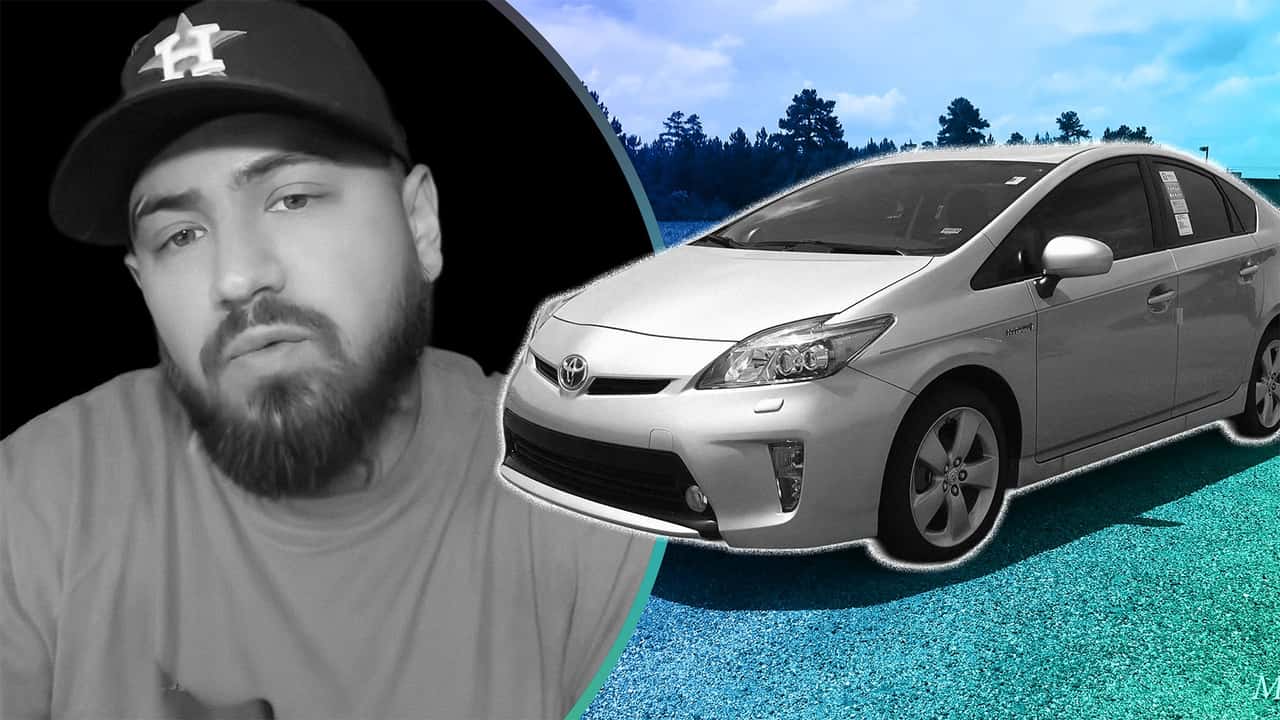

Dealerships say a dead hybrid battery means a multi-thousand-dollar replacement is essential. However, a viral TikTok reveals a more affordable reality: $30 modules that can be swapped at home, resulting in a total repair cost under $100.
Prius owner Alex Sierra (@alexsierramist) was in no mood to part with close to $3,000 for a new battery when the “red triangle of death” popped up on his instrument panel. In a viral TikTok post that has been viewed over 700,000 times, he breaks out the toolbox and shows viewers how to breathe new life into the hybrid’s battery system.
“We're gonna take out the battery today and test every individual cell and only replace the cells that are needed, and you can get these cells on eBay for like $30 apiece,” Sierra explains at the start of the clip.
Sierra’s video challenges the assumption that consumers are locked into paying for full-pack replacements. Rather than replacing the entire battery pack, Sierra isolates the failing cells and replaces them, then rebalances the battery to ensure optimal performance. The whole process, by his count, costs under $100 in parts and a weekend of effort. As he shows in the video, the “red triangle” warning vanishes, and the car appears to resume normal hybrid operation.
‘How Much For A Battery?’
To many Prius owners, the stark contrast in price is jarring: The dealership quote of roughly $2,700 that Sierra originally received is by no means out of line. Estimates for hybrid battery replacement often run from $1,000 to $3,000, depending on model, region and whether the battery is new, refurbished or aftermarket. In some cases, dealers or specialty install shops quote as high as $5,000 or more. In contrast, Sierra’s approach sidesteps much of that cost by concentrating only on the failing modules.
Why don’t more owners try this? Part of it is the perceived risk and complexity. Hybrid battery packs are high-voltage systems, and handling individual cell modules can raise concerns regarding safety, compatibility and warranty. Toyota and other automakers generally endorse full-pack replacement, in part because it simplifies diagnostics, quality control and liability. Furthermore, many dealerships refuse to offer partial repairs or overtly discourage them, preferring the cleaner business model of swapping the entire pack.
Now Trending
However, independent online communities offer a wealth of documented DIY repair information. Enthusiasts have long disassembled Prius battery packs, measuring each module’s capacity, discharging and charging them to identify the weak ones, and rebalancing the remaining ones. One PriusChat contributor walks through the process of disassembling the battery, cycling and load-testing modules and reassembling them. These methods are not entirely new, but Sierra’s TikTok clip brings them to a broader audience.
FROM THE TRENDING NEWS DESK
Viral bits from across the social media landscape
Our team of experts tracks what's trending so you don't have to—from viral videos to online debates that have everyone talking.
From the perspective of EV and hybrid economics, stories like this tap into a central tension: Battery replacement is one of the most expensive maintenance items for electrified vehicles. In a conventional EV, replacing a full battery pack can cost $10,000 to $20,000 or more, depending on chemistry and warranty. While the Prius uses NiMH cells, which are a more mature and lower-cost chemistry than many lithium EV batteries, the principle remains: The more modular and repairable the pack, the more resilient ownership becomes. Repairing individual modules can substantially extend the useful life of the pack and reduce total lifecycle costs.
Yet the rewards come with risks. For one, there is safety: Dealing with high-voltage modules, ensuring proper insulation and isolation and avoiding thermal or electrical imbalances are nontrivial tasks. Mistakes could lead to short circuits or fire hazards. Second, warranty and legal issues loom: DIY repairs may void manufacturer warranties or violate service contracts. Third, the quality and longevity of used or aftermarket modules is variable, and some may fail prematurely or mismatch existing modules, causing instability in the pack.
The Right To Repair Debate
Beyond the technical tradeoffs, there’s a deeper debate about how much repair and replacement knowledge should be democratized in the EV/hybrid space. The “Right to Repair” movement, which has been gaining traction in consumer electronics and farm equipment, has begun influencing legislation in the automotive realm. Advocates argue that automakers should be required to share repair data, software access and parts with independent shops and owners. Critics, including some manufacturers, counter that safety, liability and software complexity demand stricter control over repair channels.
Sierra’s TikTok post is one small but potent flashpoint in that larger debate. If more Prius owners or hybrid drivers become aware that cell-level repair is feasible, it could pressure manufacturers and dealers to offer more flexible servicing models or modular warranties. It may also spur growth in independent shops that specialize in module-level diagnostics and repair rather than full-pack swaps.
Still, this approach is not universally applicable. Packs that have experienced widespread module aging or internal chemical breakdown may lack enough viable modules to make a repair worthwhile. That’s why many experienced DIYers and repair shops treat module replacement as a way to extend life, not always a permanent solution.
In the case of Sierra, the gamble appears to have paid off. At a fraction of the dealership quote, he restored functionality and avoided a hefty repair bill. As EV adoption accelerates and battery technology becomes even more critical, stories like this may become inflection points: not just about saving money but about rethinking how we repair, maintain and democratize access to high-voltage systems.
InsideEVs reached out to Sierra via direct message.

RECOMMENDED FOR YOU

The Best EV Lease And Finance Deals In June 2026
Tesla Is Giving Away Free Supercharging. Here's How To Win.
Teslas Are More Likely To Hit 250,000 Miles Than Almost Every Car Brand
Slate Truck Vs. Chevy Bolt Vs. Nissan Leaf: Which Affordable EV Actually Wins?
Here Are The Affordable Plug-In Hybrids With The Most Electric Range
The Peaq Is Peak Skoda. Too Bad America Can’t Buy It
‘Better Than Most’: Toyota Mechanic Says Brakes Last ‘Forever’ on Hybrid Cars. Is That True?