
‘People Think I Brake Check Them’: Florida Man Drives Behind Tesla. Then He Figures Out Why They “Drive So Weird”
“When you ease your foot off the accelerator pedal but don’t hit the brakes, do the brake lights turn on?”
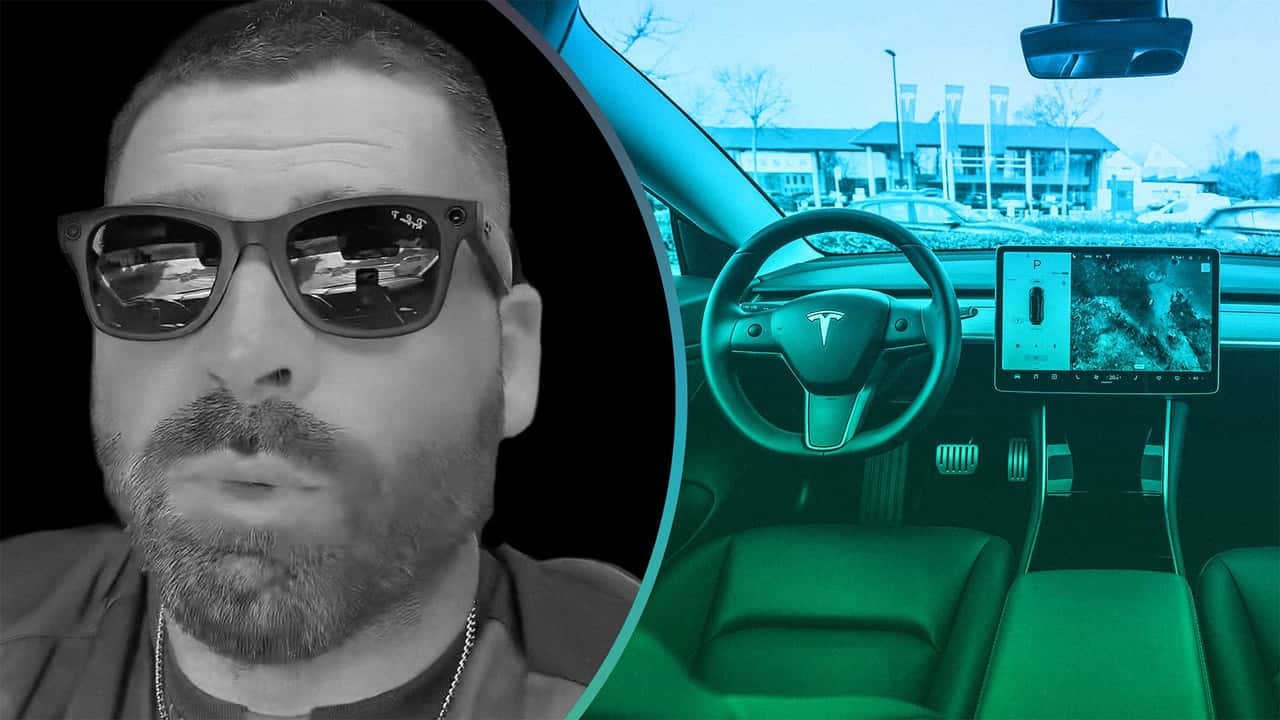



A driver finally got to the bottom of why Teslas seem to engage their brake lights more than other vehicles. Rob Halo (@soflo_eats) posted a viral TikTok claiming that the vehicles are designed to automatically turn their lights on. He says this occurs even when drivers aren’t intentionally pressing their brake pedals. But is this the case?
In a text overlay for his video, Halo writes, “I just learned why Teslas seem to drive so weird.” Throughout the duration of the video, a Tesla’s brake lights are seen engaging several times. According to the TikToker, this is attributed to the EV manufacturer’s one-pedal driving capabilities.
“See why this Tesla keeps braking?” he asks at the onset of his TikTok as the car’s rear lights turn on and off. “And I never knew this. It’s not ‘cause there’s traffic, ‘cause no one else is braking ... Anytime in a Tesla you take your foot off the gas, it brakes automatically. Like, it’s the weirdest thing.”
Tesla’s (Auto) Brake Lights
On the EV manufacturer’s website, the brand indeed states that its brake lights will come on automatically. This is tied to the vehicle’s regenerative braking threshold. That is, if you have your Tesla set to the highest regen-braking option, it will happen more frequently.
Now Trending
As Tesla writes in the Model Y owner’s manual: “If regenerative braking is aggressively slowing Model Y (such as when your foot is completely off the accelerator pedal at highway speeds), the brake lights turn on to alert others that you are slowing down.”
This functionality was also discussed on the r/TeslaLounge subreddit. “When you ease your foot off the accelerator pedal but don’t hit the brakes, do the brake lights turn on?” one user asked. Another responded, “It depends on the rate of deceleration. If deceleration is high enough when you’re letting off the accelerator, yes. Otherwise no.”
FROM THE TRENDING NEWS DESK
Viral bits from across the social media landscape
Our team of experts tracks what's trending so you don't have to—from viral videos to online debates that have everyone talking.
Another person shared a straightforward method to discern whether or not one’s brake lights are coming on. They recommend that whenever drivers take their foot off the brake pedal, they should briefly glance at their infotainment screen. “Your virtual car on the screen will show when brake lights go on,” they said.
Other EV Brake Light Discussions
Concerns surrounding brake light safety protocols and one-pedal driving were brought up in this CarsDirect article. The outlet referenced a Consumer Reports piece pertaining to one-pedal driving in Hyundai, Kia and Genesis vehicles. According to the product research firm, they found that cars with this badging “did not illuminate during one-pedal driving unless the driver completely took their foot off the accelerator pedal.”
Electric vehicle driving dynamics differ from ICE vehicles significantly in that when inert, EVs don’t “lurch” forward when in drive. Consequently, riding the brake, so to speak, generally doesn’t happen in an EV. This is largely attributed to the regenerative braking systems installed in electric cars. This functionality is designed to divert power back into the car’s battery with the assistance of its brakes. As Tesla mentions, if regenerative braking is set to a more aggressive option, this can result in an EV stopping suddenly.
This means that drivers tailing an EV won’t be cued into an abrupt stop of the vehicle in front of them. CarsDirect writes: “This is a problem, as EVs can slow down even if the driver’s foot is applying slight pressure onto the accelerator pedal during one-pedal driving.”
Tesla’s on-again-off-again brake lights in Halo’s video may seem bizarre to some. However, it could mean the difference between commuters keeping a safe distance and accidentally colliding with an EV in front of them.
InsideEVs has reached out to Halo via TikTok comment for further information.

RECOMMENDED FOR YOU

The Tesla Semi Is Finally Going Into Mass Production
China’s Rolls-Royce Rival May Have Found A Shortcut Into Europe
Dealerships Are 'Terrified' Direct Sales Might Be The Future
Tesla FSD Has A Real Rival. But It Drives Very Differently
Tesla Is Killing The Model S. But Its Legacy Is Everywhere
Hyundai’s New ‘Pleos’ Infotainment System Gets All The Right Features
Europe’s EV Sales Surge Is Leaving The U.S. In The Dust