Home
Tesla
News
Tesla Is Being Investigated In The U.S. Over Cheekily-Named ‘ASS’ Feature
The remote driving feature allows owners to fetch their vehicles from a parking lot without anyone sitting in the driver’s seat.

Photo by: Tesla
Iulian Dnistran 
By: Iulian Dnistran
Jan 8, 2025 at 4:03am ET
Add InsideEVs as a preferred source in Google
- (https://twitter.com/intent/tweet?url=https%3A%2F%2Finsideevs.com%2Fnews%2F746562%2Fnhtsa-tesla-probe-actual-smart-summon%2F&text=Tesla%20Is%20Being%20Investigated%20In%20The%20U.S.%20Over%20Cheekily-Named%20%E2%80%98ASS%E2%80%99%20Feature&via=InsideEVs)
- copy
Share
Comment
- The NHTSA is investigating Tesla's so-called ASS feature.
- Actually Smart Summon allows owners to fetch their cars remotely via a smartphone app.
- The NHTSA received reports of four crashes involving Tesla EVs with ASS activated.
The National Highway Traffic Safety Administration has opened a probe into 2.6 million Tesla vehicles in the United States after it received several reports of crashes involving the use of the so-called Actually Smart Summon–or ASS–remote driving feature.
The NHTSA said it is opening a preliminary evaluation of the feature over reports of four crashes involving Tesla electric vehicles, according to Reuters. As per the reports, the damaged EVs failed to detect posts or parked vehicles when users had Actually Smart Summon active, with some reports stating that the people involved “had too little reaction time to avoid a crash, either with the available line of sight or releasing the phone app button, which stops the vehicle’s movement.”
One complaint received by the NHTSA claims a Model 3 hit a parked car with a passenger inside in 2023. Another complaint alleges that a Model Y abruptly turned left and struck a parked vehicle.
More Tesla Stuff
 The Tesla Cybertruck Is Now Cheaper Thanks To The $7,500 Tax Credit
Tesla's Decade Of Growth Ends, Annual Sales Slip Despite Record Q4 Sales
Tesla Sales Are Tanking In Europe
Why The Tesla NACS Revolution Is Our Technology Of The Year
The probe covers 2016-2025 Model S and Model X vehicles, 2017-2025 Model 3 EVs and 2020-2025 Model Y crossovers with the optional Full Self-Driving (Supervised) advanced driver assistance system installed.
When using Actually Smart Summon, a Tesla EV user can fetch their car from a distance, like in a large parking lot, without anyone in the car. The feature, which was reintroduced with a new name in September of last year, feeds a live view of what the car sees onto the user’s smartphone. The car only moves when a button on the smartphone app is pressed.
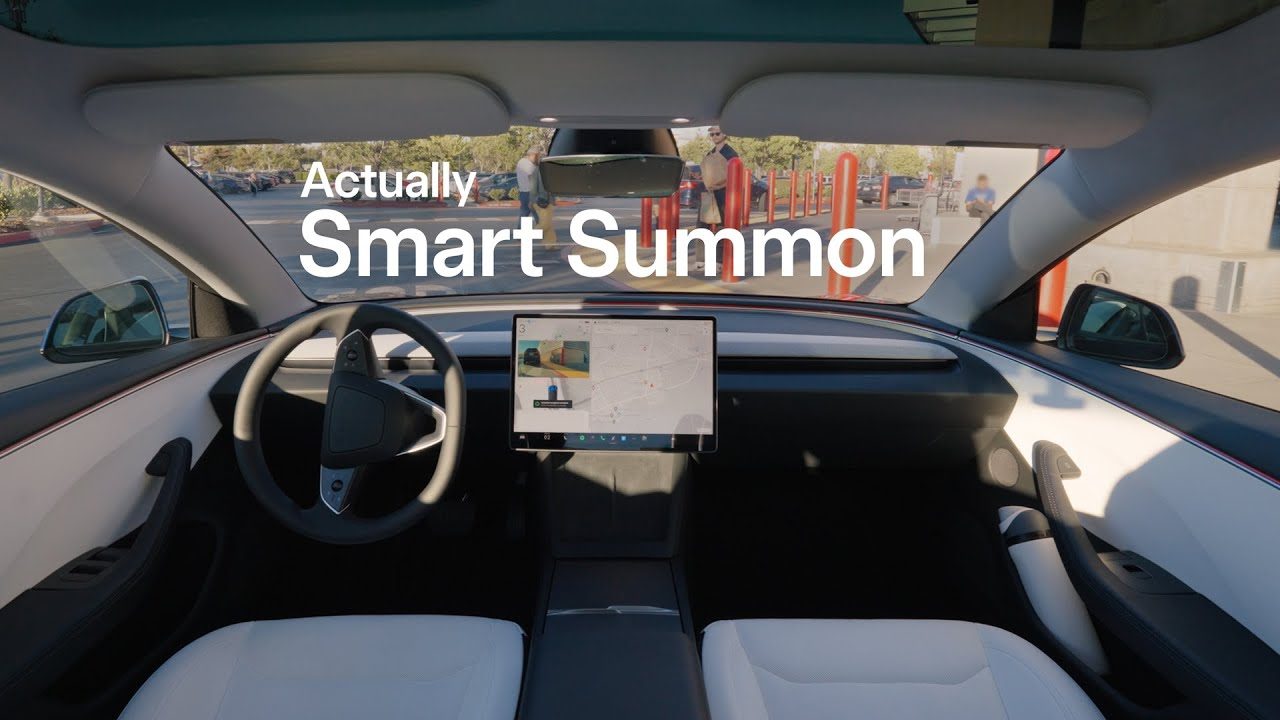
An official Tesla video showing how ASS works.
A previous version of the system, called Smart Summon, was released a few years ago but was ultimately canned because it was not ready for prime time.
What do you think?
View
Comments
The NHTSA said it will assess Actually Smart Summon’s maximum speed, use on public roads and line of sight requirements. Additionally, the probe will look into how the cars are being controlled via the smartphone app, what impact connectivity delays could have and what the system’s performance is in unanticipated conditions.
After the preliminary probe is finished, the NHTSA will decide if it will update it to an engineering analysis, which will enable it to require a recall. If this happens, Tesla will likely issue an over-the-air software update.

Get the best news, reviews, columns, and more delivered straight to your inbox.
back
Subscribe For more info, read our Privacy Policy & Terms of Use.
We want your opinion!
What would you like to see on Insideevs.com?
Take our 3 minute survey.
- The InsideEVs team
Share this Story
- (https://twitter.com/intent/tweet?url=https%3A%2F%2Finsideevs.com%2Fnews%2F746562%2Fnhtsa-tesla-probe-actual-smart-summon%2F&text=Tesla%20Is%20Being%20Investigated%20In%20The%20U.S.%20Over%20Cheekily-Named%20%E2%80%98ASS%E2%80%99%20Feature&via=InsideEVs)
- copy
GO TO COMMENTS
(
)
Got a tip for us? Email: tips@insideevs.com
View all comments ( )
Trending
Kia EV3 Lease Deals Are Here, And It’s Cheaper Than The Chevy Bolt And Nissan Leaf
I Let Android Auto Plan My EV Roadtrip. Here’s How It Worked
This Chevy Bolt Has 470,000 Miles. Here’s How Much A New Battery Was
Here's What It's Like To Take Delivery Of A Rivian R2
latest articles
- Electrify America’s Largest EV Charging Station Is Missing One Big Thing Oct 21 - Charging -
- Can The BMW iX3 Take Down The Tesla Model Y L And Rivian R2? Oct 20 - News -
- Waymo Plans To Have 20,000 Cars By The End Of 2027 Oct 20 - News -
- The Boring Company Uses Tesla Model 3 Sleds To Shuttle Shipping Containers Through Its Tunnels Oct 20 - News -
- How Much Range Do EVs Lose When Parked? (And How to Stop It) Oct 20 - EV 101 -
- This Chinese EV Is Now Made In Europe. More Are Coming Oct 20 - News -
- GM Is Closing Its Detroit EV Battery Plant Oct 20 - Industry -
RECOMMENDED FOR YOU
The Boring Company Uses Tesla Model 3 Sleds To Shuttle Shipping Containers Through Its Tunnels
Can The BMW iX3 Take Down The Tesla Model Y L And Rivian R2?
Used EVs Hit A Record Share Of Overall Used Car Sales In September
Waymo Plans To Have 20,000 Cars By The End Of 2027
The Roadster Will Have Tesla’s Most Advanced Battery Pack Yet
How Much Range Do EVs Lose When Parked? (And How to Stop It)
Tesla 'Cannot Guarantee' Your Roadster Pre-Order Will Ever Be Delivered