Home
News
Charging
Road Trip Charging May Be Pricey, But EVs Are Still Cheap To Fuel
The cost of EV charging depends on many factors, but it's still cheaper than paying for gas.

EVANNEX 
By: EVANNEX
Dec 10, 2021 at 8:07am ET
Add InsideEVs as a preferred source in Google
- (https://twitter.com/intent/tweet?url=https%3A%2F%2Finsideevs.com%2Fnews%2F553706%2Felectric-cars-cheaper-gas-fuel%2F&text=Road%20Trip%20Charging%20May%20Be%20Pricey%2C%20But%20EVs%20Are%20Still%20Cheap%20To%20Fuel&via=InsideEVs)
- copy
Share
Comment
This article comes to us courtesy of EVANNEX, which makes and sells aftermarket Tesla accessories. The opinions expressed therein are not necessarily our own at InsideEVs, nor have we been paid by EVANNEX to publish these articles. We find the company's perspective as an aftermarket supplier of Tesla accessories interesting and are happy to share its content free of charge. Enjoy!
Posted on EVANNEX on December 10, 2021, by Charles Morris
Is driving an EV really cheaper than burning gas or diesel? As you, dear readers, surely know, the short answer is yes. Most of us are saving anywhere from 50 to 70 percent on our energy bills since going electric. However, there is a longer answer—the cost of charging depends on many factors, and topping up on the road is quite a different proposition from charging overnight at home.

Above: Tesla fleet charging up at one of the company's Supercharger stations (Source: EVANNEX; Photo by Casey Murphy)
The Wall Street Journal is generally a reliable EV skeptic, but a recent article entitled “How Much Do Electric Vehicles Cost to ‘Fill Up’ Compared With Buying Gasoline?” presented a pretty balanced picture of charging costs. For whatever reason, the authors ignored the most efficient EV on the road, the Tesla Model 3, and chose instead to compare the 2021 Ford Mustang Mach-E and the Toyota RAV4.
The WSJ correctly notes that charging at home is much cheaper than buying gas, but that the amount of savings varies widely depending on where you live. The WSJ analyzed 15 cities, and found that the Mach-E beat the RAV4 in every case. In Spokane, Washington, which has relatively expensive gasoline but cheap electrical power, a Mach-E driver could save $899 a year compared to a RAV4 owner. On the other hand, in New York City, where both electricity and gasoline are pricey, the Mach-E driver would save only around $428.
Of course, buying and installing a home charger has its costs. EV owners can expect to pay around $500 for a good UL-listed charging station, and other grand or so for an electrician. In some areas, local incentives can ease the pain—for example, Los Angeles utility customers may be eligible for a $500 rebate. Some homeowners, particular those living in older buildings, will find that their electrical panel lacks the capacity to add a dedicated 240-volt circuit for EV charging, and installing a new one can be expensive. Fortunately, there’s an affordable workaround: a handy gadget such as NeoCharge’s Smart Splitter or the simpleSwitch from B&B Technology Solutions allows you to safely piggyback on an existing 240-volt circuit.
So, charging at home is convenient and cheap, and polar bears and grandchildren love it. When you head out on the road, however, it’s a different story. Highway fast chargers are steadily becoming more numerous and more convenient, but they will probably never be cheap. The WSJ calculated the cost of a 300-mile road trip, and found that an EV driver can usually expect to pay just as much as, or more than a gas-burner would.
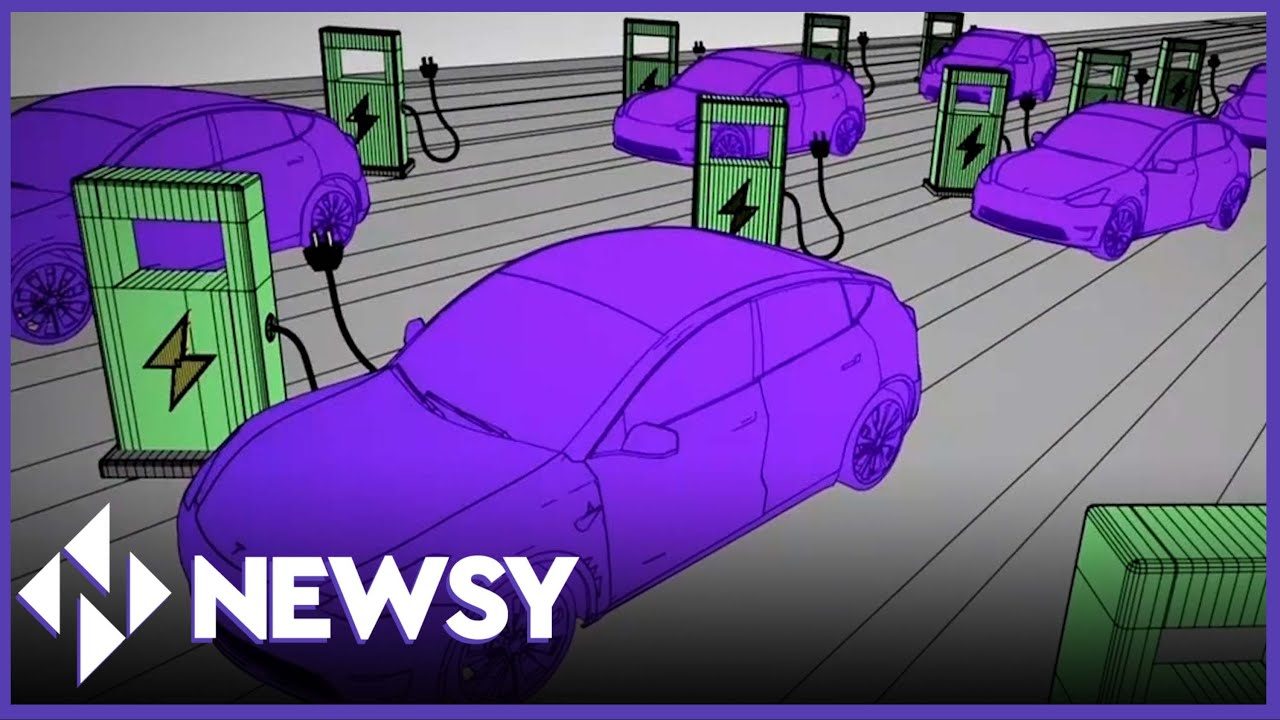
Above: A look at the importance of electric vehicle charging infrastructure as the EV movement grows (YouTube: Newsy)
In Los Angeles, which boasts some of the country’s highest gasoline prices, the hypothetical Mach-E driver would save a small amount on a 300-mile road trip. Elsewhere, EV drivers would spend $4 to $12 more to travel 300 miles in the EV. On a 300-mile trip from St Louis to Chicago, the Mach-E owner might pay $12.25 more than the RAV4 owner for energy. However, savvy EV road-trippers can often add some free miles at hotels, restaurants and other stops, so that 12-buck premium for driving an EV should be considered a worst-case scenario (also worth mentioning: a new Mach-E comes with 250 kWh of free charging at Electrify America, enough for 4 or 5 top-ups).
The WSJ notes that “Tesla’s proprietary network is a key factor that has helped the company dominate the US market,” but oddly doesn’t mention charging costs at Tesla Superchargers. These vary depending on location and various other factors, but we've calculated the average cost to be around $0.25 per kWh, so a full recharge to 250 miles of range would run approximately $22 (unless you purchased a Model S or Model X before January 2017, in which case, it’s free). Electrek figures the average cost at around $0.22 per kWh.
Americans love the mystique of the open road, but as the WSJ points out, most of us don’t take road trips that often. Less than half of one percent of all drives in the US are for more than 150 miles, according to a study by the DOT, so for most drivers, the cost of charging on a road trip shouldn’t be a major factor in a purchase decision.
A 2020 Consumer Reports study found that EV drivers can expect to save substantial amounts on both maintenance and fuel costs. It found that EVs cost half as much to maintain, and that the savings when charging at home more than cancel out any charging costs on an occasional road trip.
Check Out These Related Articles:
 New York City Looking To Buy 300 Teslas For Its Fleet
Tesla Supercharger Network Charging Cost: $70 From New York To Florida
What do you think?
View
Comments
===
Written by: Charles Morris; Source: Wall Street Journal
Source: Evannex
We want your opinion!
What would you like to see on Insideevs.com?
Take our 3 minute survey.
- The InsideEVs team
Share this Story
- (https://twitter.com/intent/tweet?url=https%3A%2F%2Finsideevs.com%2Fnews%2F553706%2Felectric-cars-cheaper-gas-fuel%2F&text=Road%20Trip%20Charging%20May%20Be%20Pricey%2C%20But%20EVs%20Are%20Still%20Cheap%20To%20Fuel&via=InsideEVs)
- copy
GO TO COMMENTS
(
)
Got a tip for us? Email: tips@insideevs.com
View all comments ( )
Trending
‘We’re Moving Really Fast’: Ionna CEO On 500 kW EV Chargers And Flagship New Location
Every EV Motor Type Explained: They Aren't All The Same
I Tried Mercedes' Answer To Tesla FSD. Here's How It Went
Tesla Model 3 Maintenance Guide: What Needs Servicing And What Doesn't
Latest Stories
- Ford Just Started Fathom LFP Battery Production In Michigan. It's A Big Deal Nov 18 - Battery Tech -
- This GM EV1 Lives After A Painstaking Restoration Nov 18 - News -
- ‘We’re Moving Really Fast’: Ionna CEO On 500 kW EV Chargers And Flagship New Location Nov 18 - Charging -
- BMW's First U.S.-Made EV Is Now Rolling Off The Assembly Line Nov 18 - Manufacturing / Production -
- EV Owners Aren’t Worried About Their Batteries. They’re Worried About Myths Nov 18 - News -
- The Polestar 4 Is Getting Vehicle-To-Load, But The U.S. And Canada Are Left Out Nov 18 - Software -
- Waymo Pulls Its Robotaxis Off All U.S. Highways After California Ban Nov 18 - Autonomous Vehicles -
RECOMMENDED FOR YOU
‘We’re Moving Really Fast’: Ionna CEO On 500 kW EV Chargers And Flagship New Location
Ford Just Started Fathom LFP Battery Production In Michigan. It's A Big Deal
Chevy, GMC, and Cadillac EV Owners Can Now Plug And Charge At Electrify America
This GM EV1 Lives After A Painstaking Restoration
Tesla Drivers Can Now Plug In And Charge Automatically at Ionna Stations
BMW's First U.S.-Made EV Is Now Rolling Off The Assembly Line
BYD's Futuristic EV Charger Can Run On Sunshine And Batteries