
Electricity, Compressed Air And Microwaves Can Give Us Airplanes Without Fuels
Chinese scientists developed a clean jet propulsion system that uses only air and electricity.


If you start checking this article by the video above, you'll ask what a dancing steel ball has to do with electric cars. We'll answer this a little further ahead. Right now, what you should know is that this invention can give us airplanes that do not burn a single drop of fuel, whether it is fossil or renewable.
This concept was developed by scientists at Wuhan University, a Chinese city that unfortunately does not require any sort of introduction. It involves compressed air, microwaves, and plasma, the fourth state of matter.
More EV Technology News:
What the researchers managed to do was to create a plasma jet. Dan Ye, Jun Li, and Jau Tang compressed air and used microwaves to ionize the air and turn it into plasma. This thruster proved to be stronger than previous plasma applications, such as the xenon plasma used by NASA's Dawn space probe and an MIT plasma-powered glider.
Gallery: Compressed Air And Microwaves Can Give Us Planes Without Fuels

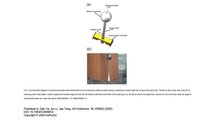

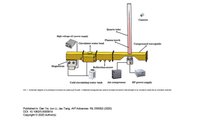
The xenon plasma only works in space, without air resistance, because it has a low thrust power. The MIT experiment reached a lifting force of only 6 N/kW and a jet pressure of 3 N/m2. The Wuhan University researchers achieved a lifting force equivalent to 28 N/kW and a jet pressure of 24,000 N/m2.
The video above shows that the idea can move a 1-kg steel ball over a 24-mm diameter quartz tube. According to the researchers, that is the sort of thrust a commercial airplane jet turbine generates.
Professor Jau Tang stated this in the press release that followed the study:
"The motivation of our work is to help solve the global warming problems owing to humans' use of fossil fuel combustion engines to power machinery, such as cars and airplanes. There is no need for fossil fuel with our design."
As you see, Tang believes this thruster may have applications in cars, but we have to see what his idea for that is. We have seen attempts to have turbine cars in the past, but all of them failed because of noise and fuel consumption.
Anyway, the researcher believes the results show a microwave air plasma thruster has a high chance of replacing conventional jet turbines. The idea of the researchers is to improve the efficiency of the invention. In the future, they may build a broad array of such thrusters to scale the concept to a full-sized jet.
The big question is the source of electricity for the magnetrons that generate the microwaves. As we mentioned in previous articles, this is probably an excellent opportunity for fuel cells, especially if a new metal-organic framework (MOF) developed by Northwestern University researchers proves to be a good option for storing hydrogen.
Source: AIP Advances via EurekAlert!
RECOMMENDED FOR YOU
I Experienced The World’s First Electrostatic Speakers In A Production Car. Now I Can't Go Back
Can Tesla FSD Take You Up The Steepest Dirt Road In America All By Itself?
America’s First UL-Compliant Plug-In Balcony Solar Microinverter Is Here
I Went To Toyota’s Employee Electrification Training. Here’s What Surprised Me
The Cadillac Optiq Is Getting A China-Developed EV Platform (Update)
Waymo Is Headed To Germany
Why BMW Isn't Giving Up On Hydrogen Cars