
Do Americans Really Want Affordable EVs? I Drove The Cheapest One To Find Out
It’s a good car at a great price. But there’s a reason Americans don’t buy cars like this.
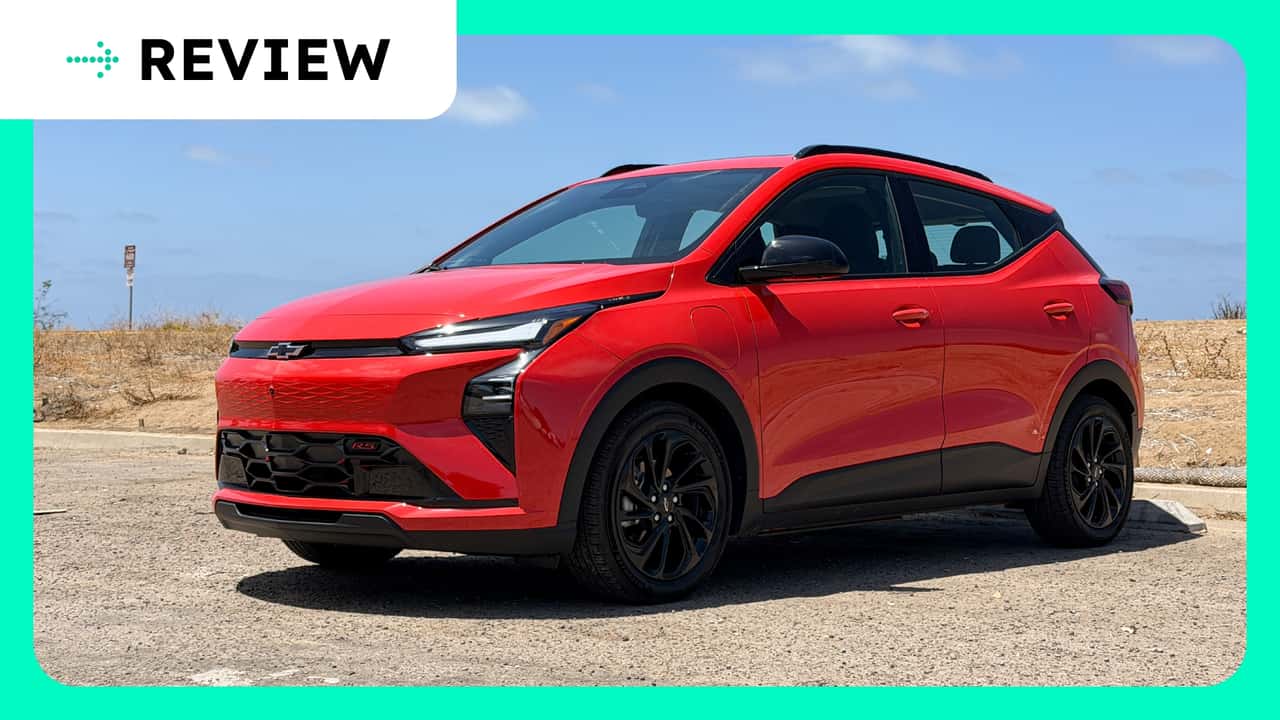



EV evangelists and pundits have begged for more affordable options. We cried when the Chevy Bolt went away, and cheered when General Motors announced it was coming back. It arrived earlier this year to great reviews.
The sales results speak for themselves: We’re delusional.
Chevy sold just 4,224 Bolts in the first six months of the year. The company moved 16,249 examples of the more expensive Equinox EV, for example. And while it wasn’t on sale until January, with volume deliveries coming later, it’s hard to imagine this is purely a supply issue. Chevy has already announced the end of Bolt production, with the factory being retooled to produce gas-powered SUVs instead.
WHY LEMONADE?
This story was published in partnership with Lemonade. Lemonade Insurance uses technology to keep things simple and offer lower prices for a wide array of EV drivers. They offer discounts for safe and low mileage driving, and further discounts for drivers of EVs and PHEVs. If you have a Tesla with FSD, you can even get discounts for the miles driven on FSD. Click here to get a quote for your EV today.
*Lemonade and the FSD discount are available in select states, learn more at the link above.
This follows a similar pattern we’ve seen with affordable EVs in this market, from the Nissan Leaf and the first-gen Bolt to the Hyundai Kona EV and Kia Niro EV. None of these cars have matched their more expensive, more opulent siblings on the sales charts in recent years, despite people claiming that EVs are too expensive.
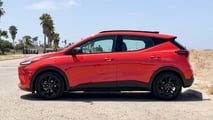
So what gives? I spent a week with the 2027 Chevy Bolt to find out. I liked it, but I’m not surprised that most Americans spurn cars in this segment.
Gallery: 2027 Chevrolet Bolt: Review


They Fixed (Most Of) Its Problems
I am particularly interested in the new Bolt because of what it represents. The previous-generation Bolt was often struck from shoppers’ lists due to its poor charging performance, making it unfit for any rushed road trips. This was the same problem the previous Nissan Leaf faced, along with its outdated charging connector.
But by 2027, both vehicles have competitive, 150-kW peak charging rates. The Bolt now charges quicker than any of the other GM EVs, and while its 262 miles of EPA range still lands on the low side of normal, it’s good enough.
The old Bolt also lacked solid route-planning capabilities and used old technology. The new one gets leftovers from GM’s Ultium bag of bits, with native Google Maps, support for Gemini AI, Apple Music streaming, and even video streaming when parked. Maps and audio services are included for eight years, though after that you’ll need a subscription to keep using them. CarPlay and Android Auto are not available.
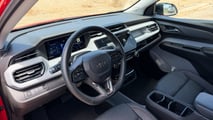
The interior has also grown more practical. There are more cubbies, more shelves, more places to cram your stuff. Everything looks a bit nicer, too.
In fact, GM has systemically addressed most of the reasons that Americans scorn small cars. The Bolt offers Super Cruise and 360-degree cameras and all of the apps you’d expect in a modern, mass-market car. It has plenty of power—210 horses, to be specific—and is instantly responsive. It gets a Tesla-style NACS port and route planning and plug and charge.
It is not slow or under-equipped or behind the times. It is everything you need.
Why Isn’t It More Popular?
The 2027 Bolt starts at $28,995 and includes everything you really need. Super Cruise and leatherette seating costs more, but the base Bolt is the exact kind of practical, simple family hatchback that European and Asian buyers love. Chevy lifted it a bit and started calling it an SUV—as Nissan did with the Leaf—but fundamentally this is a front-wheel-drive economy hatchback.
The interior is solid for its class, but it still feels like an economy car.
It’s a super practical formula. There’s enough leg room out back to comfortably use it as a rideshare vehicle, which makes extra sense considering how cheap it is to run. Its small size makes it hyper efficient, easily delivering nearly 4.0 miles per kWh and requiring no real maintenance besides occasional tire rotations and replacements. It is the definition of reasonable.
But Americans don’t want their cars to be reasonable. They want ‘em big. While Germany is full of Volkswagen Golfs, America is ruled by the Toyota RAV4 and Ford F-150. The best-selling model of just about every brand these days is a compact (really midsize) SUV with all-wheel drive. Delivering family SUV practicality with solid range seems far the cheapest price seems to be a more successful formula.
That’s why—in America—the Equinox EV outperforms the Bolt in the rankings, why the Hyundai Ioniq 5 always outsells the Kona, and why the Ioniq 6 is dead. It’s why the Tesla Model Y was the world’s best-selling vehicle, not the Model 3, and why it was unseated by the Rav4.
That segment is clearly the sweet spot for many car buyers. SUVs above this size class are often too expensive to match their volumes; smaller SUVs and sedans are not as desirable to vast swaths of American consumers.
Chevy markets the Bolt as an SUV, but I consider it a hatchback.
Americans do want more affordable options. But they don’t seem too eager to settle for a sedan or a smaller crossover.
I can see why. Within five minutes of driving, my fiancé called out the Bolt’s Achilles heel. Its seats are thin, narrow, and under-cushioned. Combined with the short wheelbase, it makes the car bouncier and less comfortable than the Equinox or Blazer EVs. It’s less composed over bumps and far less roomy, pushing you against the doors. It’s louder, too, as the wind howls on the highway.
Its entire purpose is to be cheaper than larger, more luxurious options, and it accomplishes that goal. Even with options, you’re spending around $35,000 to get a nice one, with all the tech you’d ever need. That’s a lot less than you’d spend on an equally equipped Equinox EV or Ioniq 5.
But it feels cheaper. You’re packed in tighter, in a less comfortable seat, in an interior with rougher materials. It’s small, and it’s front-wheel-drive. These are perfectly good compromises to make to drive down the price.

The problem is that American buyers don’t seem ready to compromise, at least not yet. Though it’s hard to know how much dealer behavior and automaker production volumes factor in here, it’s clear that car buyers overwhelmingly prefer to buy slightly larger vehicles, and they typically demand all-wheel drive.
I can hardly blame them: I chose a used AWD Blazer EV over a new Bolt because I use it for off-pavement adventures, and love the spacious and comfortable seats for road trips. I could absolutely have made a Bolt work for my lifestyle. But I’m like most Americans: I buy more than I need.
For the smarter among us, the Bolt remains an excellent option. But if you want a new one, act fast. The low-volume hatchback factory is being retooled to build—you guessed it—larger, gas-powered Equinox SUVs.
Related Stories
RECOMMENDED FOR YOU
Used EV Values Are Actually Rising. Why That's Good And Bad News.
Waymo’s New Robotaxi Minivans Are Now Taking Paying Passengers
GM And LG Restart EV Battery Production In Ohio After Seven-Month Shutdown
Tatra's Insane 8x8 Off-Road Truck Goes Electric For The First Time
The 17 Cheapest Electric Cars In 2026 (Updated)
This New App Puts 200,000 EV Chargers Across North America in One Place
Chevy Is Giving Up On The Chinese Market