
Something Doesn’t Add Up About The Rivian R2’s EPA Efficiency Rating
The Rivian R2 and Tesla Model Y have the same official EPA efficiency rating, but the former uses more energy in real-world testing.
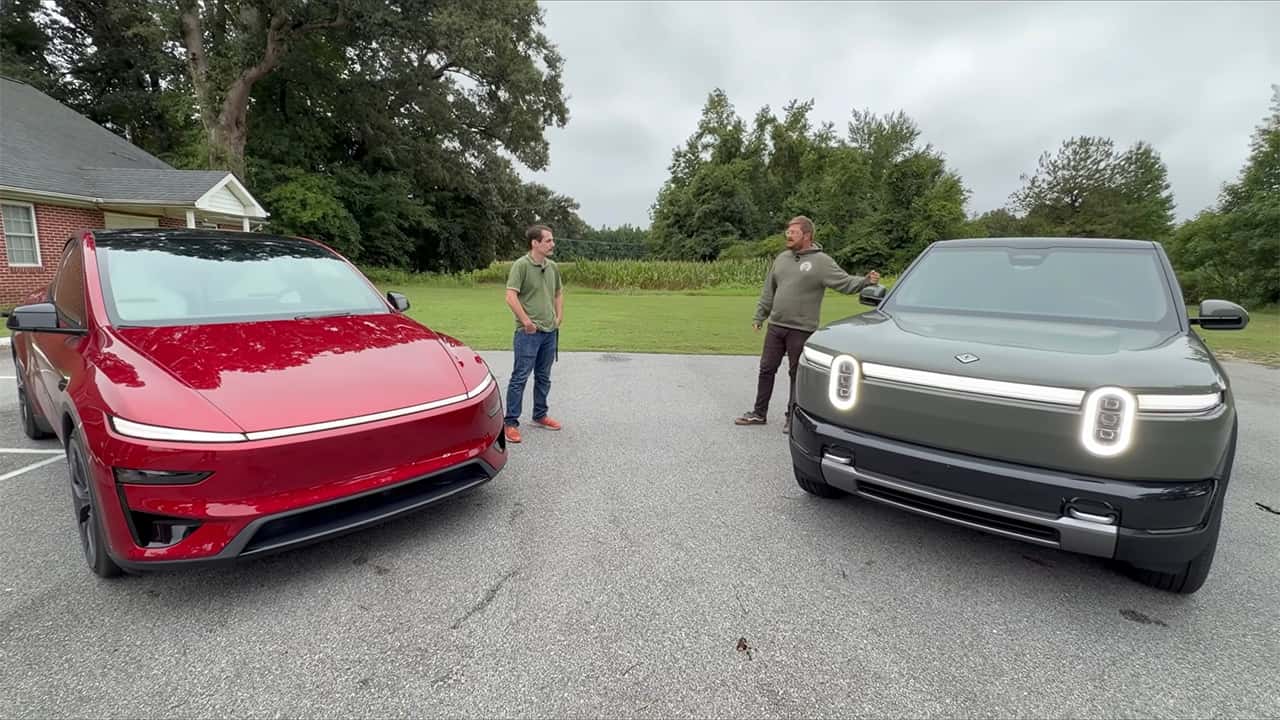

- The R2 and Model Y share an EPA efficiency rating, but their real-world energy use differed widely.
- The R2 lost every part of the comparison, including the low-speed test where the difference should have been smaller.
- Different EPA test procedures may explain why the official ratings look more similar than the cars actually are.
On paper, the Rivian R2 matches the Tesla Model Y’s EPA efficiency numbers. That’s remarkable for the taller, boxier, and heavier R2, but the numbers don’t quite hold up in real-world tests. Side-by-side testing reveals the Rivian uses considerably more juice than the Tesla.
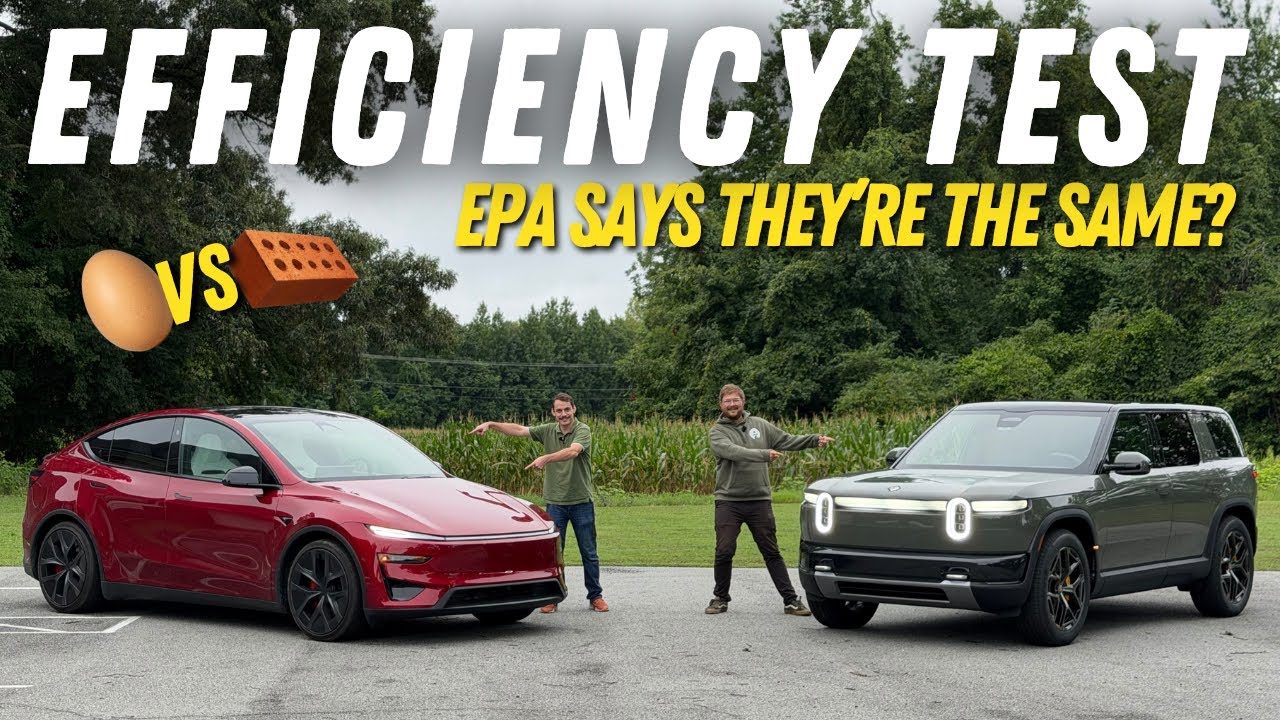
This head-to-head test by Out of Spec Reviews and RivianTrackr lines up the most powerful Performance versions of both models. Officially, they have the same 105 MPGe efficiency rating from the EPA, which is equivalent to an average electricity consumption of 32 kilowatt-hours/100 miles, or 3.125 miles/kWh.
The two testers drove the R2 Performance alongside a Model Y Performance at 50, 60, 70 and 80 mph. Both vehicles had their original tires inflated to the manufacturer-recommended 42 psi, had two occupants, and had their climate control system set to the same temperature. The R2 was set in its most efficient Conserve mode, while the Tesla used Chill mode.

At 50 mph, the R2 consumed 18.4% more energy than the Model Y. At 60 mph, the gap grew to roughly 26%. The Rivian used around 20% more energy during the 70-mph test, although traffic and nearby trucks may have provided an aerodynamic benefit to its upright body.
The biggest difference came at 80 mph when the Model Y’s better aerodynamics and lower weight shone through more. Over a roughly 30-mile route, the R2 used 26.5% more energy. The R2 can mechanically disconnect its front permanent-magnet motor while cruising, allowing it to operate as a more efficient pure rear-wheel-drive EV without spinning the unused motor. The Tesla can’t do this.
The R2 also used around 25% more during a low-speed stop-and-go simulation, even though this kind of driving should have reduced the aerodynamic penalty of its taller, boxier body. However, this doesn’t make the R2 an inefficient EV. It was designed with more of an off-road focus than the Model Y, with more ground clearance and better ability once the tarmac runs out.
The Model Y is also an unusually difficult benchmark. The cheapest version, formerly known as the Standard, recently achieved an exceptional 4.13 miles per kWh in a 70-mph range test. The refreshed version crossover was also the most efficient vehicle in a winter highway group test simulation.
The comparison isn’t definitive since there are limitations to its methodology. The big one is that the testers relied on the energy consumption figures reported by the cars rather than measuring electricity delivered from a charger, and most of the routes were relatively short. The Model Y is undeniably the more efficient of the two EVs, but exactly by how much depends on lots of factors, many of which you can’t control in a test like this.

But questions remain about how two cars with the same EPA efficiency rating were so different in the real world. One explanation could be that the two ratings were produced using different EPA test procedures and correction factors, making the headline figures look directly comparable even though the underlying results may not be.
The hosts even call this an ‘apples-to-oranges’ comparison, saying that the R2 and Model Y appear to have been certified using different EPA testing routes, but without going into detail. While they don’t definitively state this is the reason for the real-world difference, they say the R2 underwent the full five-cycle test, while the Model Y’s figure appears to have been derived from a shorter set of tests with additional submitted data and an EPA correction applied.
RECOMMENDED FOR YOU

This Tesla Model Y Lost 9% In One Year. Its Owner Isn’t Worried
This Chinese Electric SUV Just Recreated Mercedes’ Most Controversial Ad
Tesla Recalls 20,000 Cars Over Uber-Bright Headlights
The Porsche Taycan’s Days May Be Numbered: Report
Rivian R2 Range Tested Until It Died: Here's How Far It Went At 70 MPH
Tesla’s ‘Flying Roadster’ May Debut This Month Alongside A Street Legal Version
Tesla Has To Fix Its Super-Bright Headlights. A New Law Could Change Things For Good.