
Atlanta Woman Gets Into a Car Accident—With a Waymo. Even the Cop Doesn’t Know What To Do: 'Been In His Car For 30 Minutes'
"He said this is his first Waymo accident..."
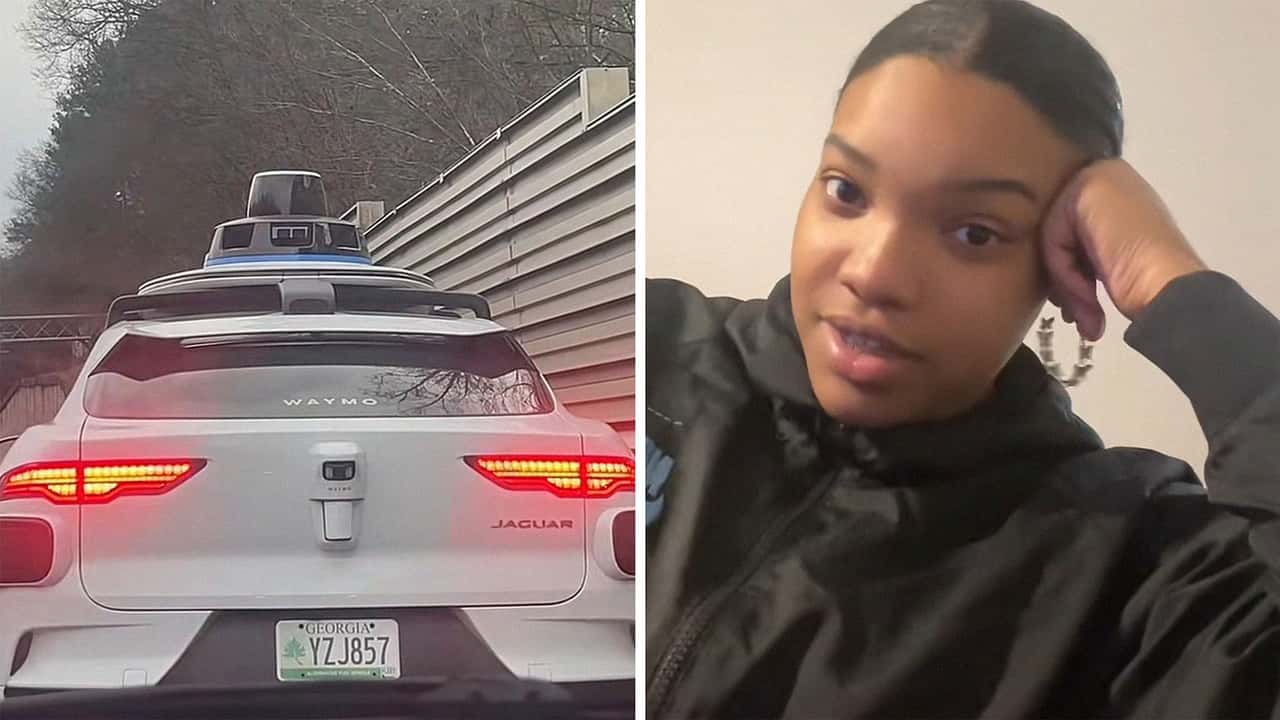

She wasn’t hurt, but she was definitely stuck. A frustrated Atlanta woman took to TikTok while parked on the side of a freeway for an hour after a crash allegedly involving a driverless Waymo, while an officer tried to figure out what the procedure even is.
The viral clip from Destini (@chosendesserts) is a perfect and terrible clash of “present meets future.” It appears that her car and the autonomous taxi vehicle collided last week. Except instead of exchanging insurance info with the other driver and filing a police report at the scene, there was no one for her or law enforcement personnel to talk to.
“They don't even know what to do. The officer has been in his car for 30 minutes,” she says in a TikTok that’s been viewed more than 3.5 million times. “He said this is his first Waymo accident and he don't know what to do either.”
The uncertainty didn’t stop at the roadside. In the comments on Destini’s TikTok, confusion quickly turned into comedy. Viewers joked that she should be “Waymo hurt,” that she’d be waiting “Waymo longer,” predicted she’d get “Waymo money,” and debated whether autonomous vehicles are even allowed on highways. Others insisted she must have rear-ended the car or noted that Waymo vehicles are “covered in cameras” and would be able to prove fault.
The comment section also revealed a deeper misunderstanding about how autonomous vehicle crashes are handled. Many commenters assumed that because no human was driving, there must be no insurance, no liability process, or no clear next steps. In reality, the rules are both more mundane and bureaucratic than the jokes suggest.
Who’s Responsible When There’s No Driver?
Despite the novelty, crashes involving autonomous vehicles are not legally uncharted territory. Waymo carries insurance and liability coverage, according to its publicly stated policies and multiple state regulatory filings.
Waymo maintains commercial auto insurance coverage for its vehicles, similar to ride-hailing companies, and works directly with law enforcement and insurers when incidents occur. In practice, that means police still respond to the scene, assess damage, collect statements, and file a report, just as they would in any other crash. The difference is that instead of exchanging information with another driver, officers must coordinate with the company operating the vehicle—in the case of Waymo, Google parent company Alphabet.
FROM THE TRENDING NEWS DESK
Viral bits from across the social media landscape
Our team of experts tracks what's trending so you don't have to—from viral videos to online debates that have everyone talking.
That coordination can take time, particularly if the responding officer has never handled an autonomous vehicle incident before.
Autonomous vehicles are still relatively rare in most US cities, even as companies expand service areas. While Waymo operates commercial driverless ride-hailing services in cities like Phoenix, San Francisco, Los Angeles, and parts of metro Atlanta, where this accident allegedly occurred, many police departments have limited hands-on experience with them.
According to reporting from multiple outlets, law enforcement training on autonomous vehicles varies widely by jurisdiction. Some departments have formal guidance on how to disable, move, or secure a driverless vehicle after a crash. Others rely on ad hoc coordination with company representatives, often by phone.
In Destini’s case, the officer’s extended time in his cruiser likely involved contacting supervisors or Waymo’s support line to determine next steps, rather than indecision at the scene.
Cameras Don’t Mean Instant Answers
One common refrain in the comments was that the fault should be obvious because Waymo vehicles are equipped with extensive sensors and cameras. That part is true: Waymo vehicles use a combination of lidar, radar, and high-resolution cameras to record their surroundings, and those systems continuously log data.
But that data is not reviewed instantly on the side of the road. As with dashcam footage or telematics data from conventional vehicles, sensor logs typically must be retrieved, analyzed, and contextualized after the fact. Police officers at the scene still rely on physical evidence, witness statements, and standard reporting procedures to document what happened.
The TikTok resonated because it captured an awkward transition point between old systems and new technology. Autonomous vehicles promise fewer accidents overall, and companies like Waymo regularly cite data showing lower crash rates per mile than human drivers.
Still, moments like this highlight the gap between technological capability and institutional readiness. Police departments, insurers, and drivers are still adapting to scenarios in which the “other driver” is software and resolution requires coordination with a corporation rather than an individual.
As autonomous electric vehicles become more common, incidents like this are likely to happen again because the surrounding systems are still catching up. Training, public awareness, and clearer protocols will eventually smooth out these encounters.
For now, though, Destini’s video offers a snapshot of an in-between era: a future-facing vehicle meeting present-day procedures, with the driver, officer, and viewers at home momentarily unsure how it’s all supposed to work.
InsideEVs reached out to Destini via direct message and comment on the clip. We’ll update this if she responds.
Update Jan. 14: Via email, Waymo provided additional context about the incident. The company told InsideEVs that the vehicle involved was operating in Atlanta with an autonomous specialist onboard and was rear-ended by another driver. Waymo said it works with local law enforcement in each market to coordinate responses to incidents involving its vehicles and that crashes involving Waymo generally follow standard reporting and insurance procedures, with differences primarily in how information is exchanged. According to the company, other drivers can share information through multiple channels, including Waymo Rider Support, an insurance contact, or a QR code on the vehicle, without needing to wait at the scene for a company representative to arrive.
RECOMMENDED FOR YOU

Woman Buys Cadillac EV. Then They Offer Her A Deal On EVgo
Drivers Are Not Happy With Their Cars' Screens
"The Motor Is Supposed To Last 1 Million Miles": Man Hits 360,000 Miles On His Model 3. Is That The Norm?
Lucid Cosmos And Earth: Everything We Know About The Tesla Model Y Rivals
"Dealerships Are Shady": Man Says Texas Toyota Dealership Agreed To Sell Highlander Hybrid For $26,900, Then Jacked Up The Price
This Chinese SUV Sold 100,000 Units In Seven Months For A Good Reason
Can Waze Still Track The Police?